The word staff is used everywhere from offices and schools to hospitals, restaurants, and large organizations. You’ll hear it in phrases like “staff meeting,” “staff members,” or “on staff,” yet the meaning can shift depending on context.
Understanding the staff meaning helps you interpret workplace communication clearly and use the term correctly in both formal and everyday situations.
In 2026, as workplaces become more flexible and roles more specialized, the word staff continues to play a central role in how we describe teams, responsibilities, and organizational structure.
This article explains what staff means, how it’s used, and why it remains essential language today.
What Does Staff Mean?
The staff meaning generally refers to a group of people who work for an organization, business, or institution. These individuals perform specific roles that support the operation and goals of that organization.
In simple terms:
Staff means the employees or workers who collectively run or support an organization.
The term is usually collective, focusing on the group rather than a single person.
How Staff Is Used in Everyday Language
In everyday language, staff is commonly used to describe:
- Employees as a group
- Workers in a specific department
- People assigned to support a task or function
Examples include:
- “The staff was helpful.”
- “All staff must attend training.”
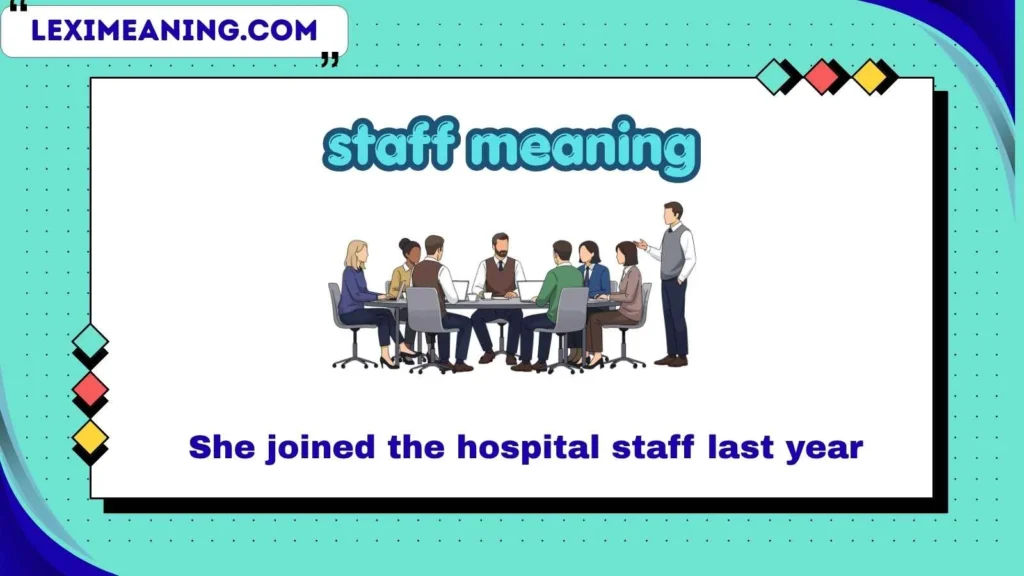
- “She joined the hospital staff last year.”
These uses highlight staff as a collective unit.
Staff vs Employee: Understanding the Difference
While staff and employee are closely related, they’re not always interchangeable.
- Employee refers to an individual worker
- Staff refers to workers as a group
For example, one person is an employee, but many employees together form the staff. This distinction matters in organizational communication.
Staff in Different Work Environments
The meaning of staff stays consistent, but its application changes across industries.
In a school, staff may include teachers, administrators, and support workers.
A hospital, staff includes medical professionals and support services.
In a company, staff may refer to office workers, managers, or operational teams.
In each case, staff represents the people who keep the organization functioning.
Staff Roles and Responsibilities
Staff members are assigned roles based on their skills, experience, and job descriptions. These roles collectively contribute to:
- Daily operations
- Customer service
- Strategic goals
Clear staff roles help organizations run efficiently and reduce confusion.
Staff as a Collective Noun
One important grammatical point is that staff is a collective noun. This means it can be treated as:
- Singular (“The staff is ready.”)
- Plural (“The staff are discussing the plan.”)
Usage often depends on regional language conventions and whether the focus is on the group as one unit or as individuals.
Staff in Management and Leadership Contexts
In management, staff refers to the workforce that leadership oversees. Phrases like:
- Staff supervision
- Staff performance
- Staff development
are common in organizational planning. These terms emphasize growth, support, and accountability within teams.
Staff and Workplace Culture
Staff plays a major role in shaping workplace culture. Attitudes, collaboration, and communication among staff members influence:
- Morale
- Productivity
- Job satisfaction
Healthy staff relationships often lead to better outcomes for both employees and organizations.
Staff in Customer-Facing Roles
In customer-facing environments, staff represents the organization to the public. Friendly and knowledgeable staff can improve:
- Customer experience
- Brand reputation
- Trust and loyalty
This is why many organizations invest heavily in staff training.
Examples of Staff in Real-Life Contexts
Here are common ways staff appears in real-life usage:
“The restaurant staff handled the rush professionally.”
“Office staff will work remotely this week.”
“Support staff play a vital role behind the scenes.”
Each example highlights staff as a collective working toward a shared goal.
Staff in Formal and Informal Communication
Staff works well in both formal and informal contexts.
Formal usage:
“All staff are required to complete compliance training.”
Informal usage:
“The staff here are super friendly.”
Its flexibility makes it one of the most commonly used workplace terms.
Common Misunderstandings About Staff
1: Using Staff to Refer to One Person
Staff refers to a group, not an individual.
2: Confusing Staff With Management
While management may be part of the staff, the terms are not identical.
3: Assuming Staff Only Means Office Workers
Staff applies across industries, including service, education, healthcare, and more.
Staff and Organizational Structure
Organizations often divide staff into categories such as:
- Administrative staff
- Technical staff
- Support staff
These distinctions help clarify responsibilities and reporting structures within the organization.
Staff in Modern Workplaces (2026)
In 2026, staff may include:
- Remote workers
- Hybrid teams
- Contracted support roles
Despite changes in how people work, the term staff still refers to the collective group contributing to the organization’s success.
Staff and Employment Policies
Employment policies often address staff as a group. These policies may cover:
- Workplace conduct
- Benefits
- Leave policies
Clear language around staff expectations helps ensure fairness and consistency.
Staff Development and Training
Organizations invest in staff development to improve:
- Skills
- Performance
- Career growth
Training programs are designed to support staff members at different stages of their professional journey.
Why Understanding Staff Meaning Matters
Knowing the staff meaning helps you:
- Interpret workplace communication
- Use professional language correctly
- Understand organizational dynamics
It’s a foundational term in employment and business contexts.
Staff in Public and Community Settings
Beyond workplaces, staff is also used in:
- Community organizations
- Nonprofits
- Public services
In these settings, staff often work alongside volunteers to serve broader social goals.
Conclusion:
The staff meaning refers to the collective group of people who work together to support an organization’s operations and goals. From offices and schools to hospitals and public services, staff members play essential roles that keep systems running smoothly.
In 2026, as work environments evolve, the concept of staff remains central to how we describe teams, responsibilities, and collaboration.
Understanding this term helps you communicate clearly and appreciate the collective effort behind any successful organization.
👥 Your turn:
When you hear the word staff, do you think of a specific workplace or role? Share how you commonly see it used.

I’m Daniel Brookes, the creator of LexiMeaning.com, where I make words, phrases, and their meanings simple and easy to understand. I’m passionate about clear language and helping readers discover the meaning, usage, and context behind everyday words. Through LexiMeaning.com, I aim to make learning new words simple, useful, and enjoyable.