
The word humanity is used everywhere from global news and ethical debates to everyday conversations about kindness and compassion.
But what does it truly mean? Understanding the humanity meaning goes beyond a dictionary definition. It touches on how people treat one another, how societies function, and how values like empathy and dignity shape the world we live in.
When technology, conflict, and social change move faster than ever, discussions around humanity feel more urgent and personal.
This article explains the meaning of humanity in clear, relatable language, explores how it’s used in real life, and explains why it remains one of the most important concepts in human society.
What Is the Meaning of Humanity?
The humanity meaning has two closely related interpretations.
First, humanity refers to all human beings collectively the human race as a whole.
Second, and more emotionally charged, humanity means the qualities that make us human, such as:
- Compassion
- Empathy
- Kindness
- Moral awareness
- Respect for others
In simple terms:
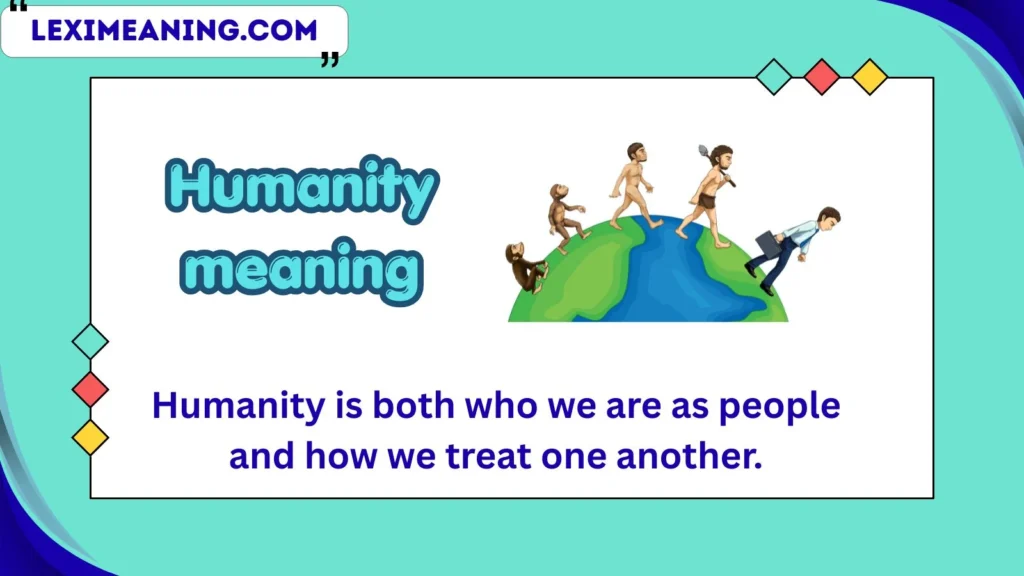
Humanity is both who we are as people and how we treat one another.
These two meanings often overlap in conversations about ethics, justice, and social responsibility.
Where the Concept of Humanity Comes From
The idea of humanity has deep roots in philosophy, religion, and history. Ancient thinkers believed that being human wasn’t just about biology it was about behavior and values.
Across cultures, humanity has been linked to:
- Moral responsibility
- Shared suffering
- Collective progress
This long history explains why the word carries such emotional and ethical weight today.
Humanity as Compassion and Kindness
In everyday language, humanity is most often used to describe kind and compassionate behavior.
For example:
- Showing mercy to someone who made a mistake
- Helping strangers during a crisis
- Treating others with dignity even in conflict
When people say, “That restored my faith in humanity,” they’re referring to moments of kindness that remind them people are capable of good.
Humanity in Times of Crisis
The concept of humanity becomes especially visible during difficult moments.
In times of:
- Natural disasters
- War
- Health emergencies
- Economic hardship
Acts of humanity include:
- Volunteering
- Providing aid
- Protecting the vulnerable
- Choosing empathy over hostility
These moments reveal how humanity can unite people beyond borders or differences.
Humanity vs Inhumanity
Humanity is often discussed in contrast to inhumanity.
Inhuman actions may involve:
- Cruelty
- Dehumanization
- Indifference to suffering
When societies talk about “crimes against humanity,” they refer to actions that violate fundamental human dignity.
This contrast highlights why the humanity meaning is closely tied to ethics and justice.
Humanity in Everyday Life
Humanity isn’t limited to grand gestures it shows up in small, everyday actions.
Examples include:
- Listening without judgment
- Offering patience instead of anger
- Choosing fairness over convenience
These moments may seem minor, but they shape how individuals and communities interact daily.
Humanity and Moral Responsibility
A key part of humanity is recognizing responsibility toward others.
This includes:
- Acknowledging shared existence
- Understanding the impact of one’s actions
- Acting with conscience rather than self-interest
In this sense, humanity is not passive it requires intention and awareness.
How Humanity Is Used in Language and Media
In media and public discourse, humanity often appears in phrases like:
- “An appeal to humanity”
- “A loss of humanity”
- “Acts of humanity”
These expressions emphasize emotional connection and ethical judgment rather than legal or technical definitions.
Understanding the humanity meaning helps interpret these phrases accurately.
Humanity in Philosophy and Ethics
Philosophers have long debated what defines humanity.
Key ideas include:
- Rational thought
- Emotional awareness
- Moral reasoning
- Capacity for empathy
Modern ethical discussions focus less on perfection and more on accountability and compassion.
Humanity in a Technological World
As technology becomes more advanced, questions about humanity grow more complex.
Debates around humanity often involve:
- Artificial intelligence
- Automation
- Digital communication
- Loss of human connection
People increasingly ask how to preserve empathy, ethics, and dignity in a world driven by efficiency and data.
Why Humanity Still Matters
Despite progress, the world continues to face:
- Conflict
- Inequality
- Environmental challenges
In this context, humanity matters because it:
- Encourages cooperation
- Promotes understanding
- Supports peace and resilience
Humanity acts as a moral compass when systems and policies fall short.
Common Misunderstandings About Humanity
Mistake #1: Thinking Humanity Means Weakness
Compassion and empathy require strength, not weakness.
Mistake #2: Believing Humanity Is Automatic
Being human doesn’t guarantee humane behavior—humanity is a choice.
Mistake #3: Assuming Humanity Is Universal
Different cultures express humanity differently, but the core values remain similar.
Humanity and Individual Action
While humanity is often discussed on a global scale, it begins with individual behavior.
One person practicing humanity can:
- Influence others
- Change outcomes
- Create ripple effects of kindness
This is why personal responsibility plays such a crucial role in maintaining humanity.
Humanity as a Shared Identity
Beyond nationality, language, or belief systems, humanity represents a shared identity.
It reminds people that:
- Everyone experiences pain and joy
- No one exists in isolation
- Collective progress depends on mutual respect
This shared identity is especially important in divided or polarized societies.
Is Humanity Idealistic or Realistic?
Some argue humanity is an ideal rather than a reality. In truth, it is both.
Humanity is:
- An aspiration to act better
- A reflection of real choices people make every day
Its presence fluctuates, but it never disappears entirely.
Conclusion:
The humanity meaning goes far beyond the idea of being human by biology alone. It represents compassion, empathy, moral responsibility, and shared dignity. Whether expressed through small acts of kindness or large-scale efforts to protect others, humanity defines how people coexist.
As challenges become more complex and interconnected, humanity remains one of the most powerful forces for connection and change. Understanding it helps us navigate not only global issues, but everyday interactions with greater awareness and care.
🤍 Your turn:
What does humanity mean to you in your daily life? Share your thoughts and let’s reflect together.

I’m Daniel Brookes, the creator of LexiMeaning.com, where I make words, phrases, and their meanings simple and easy to understand. I’m passionate about clear language and helping readers discover the meaning, usage, and context behind everyday words. Through LexiMeaning.com, I aim to make learning new words simple, useful, and enjoyable.