The term BRICS shows up frequently in global news, economic discussions, political analysis, and international relations.
You might hear it mentioned in conversations about world power, emerging economies, or global cooperation but its meaning isn’t always clearly explained.
Understanding the BRICS meaning is important because it represents a group of countries that play a growing role in shaping the global economy and international decision-making.
This article explains what BRICS means, where it came from, how it’s used today, and why it continues to matter updated for 2026.
What Does BRICS Mean?
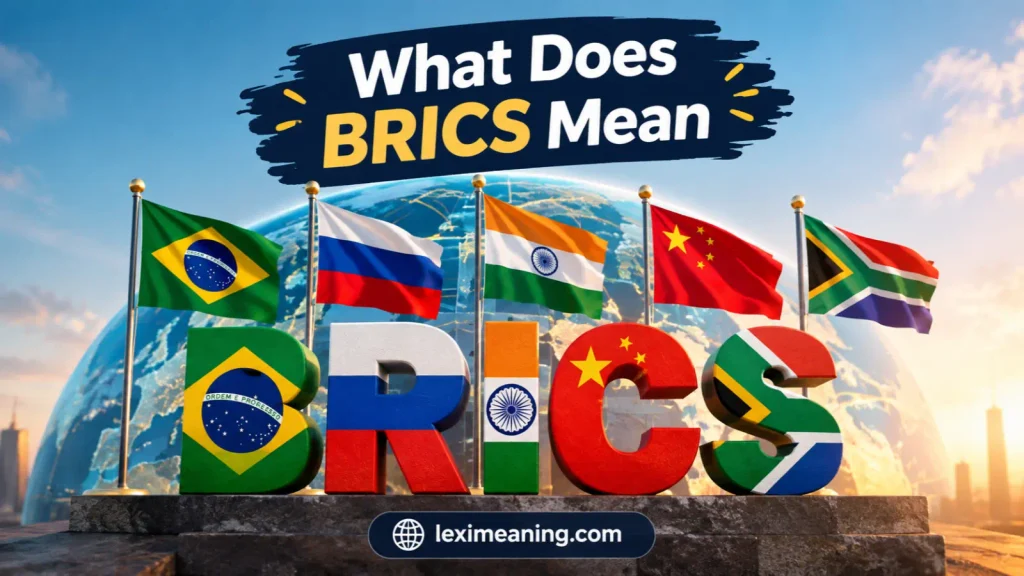
BRICS is an acronym that refers to a group of major emerging economies. The letters originally stood for the first letters of the member countries’ names.
In simple terms, BRICS represents:
- A group of influential countries
- Emerging economic powers
- Nations that cooperate on global issues
People often use BRICS when discussing economic growth, global trade, and international influence.
The Countries Commonly Associated With BRICS
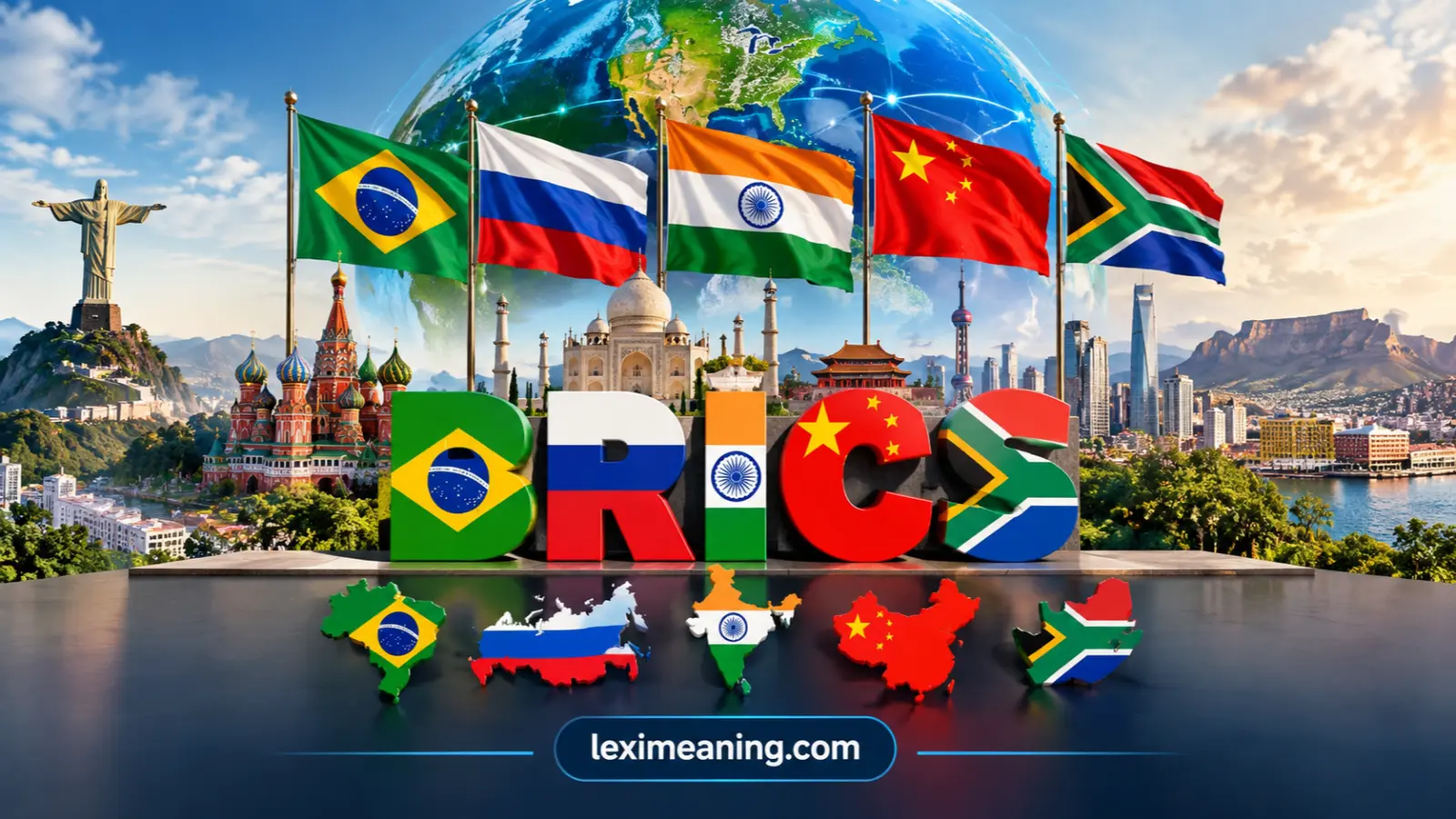
BRICS is widely used to describe a group of large, fast-developing nations that share economic and political interests. The term highlights their collective importance rather than focusing on any single country.
In discussions, BRICS often represents:
- Cooperation between emerging economies
- Shared development goals
- A counterbalance to traditional economic powers
The focus is on collaboration and influence.
Where the Term BRICS Comes From
The term BRICS was originally created to describe countries with rapidly growing economies and increasing global impact. Over time, it evolved from a financial concept into a recognized political and economic grouping.
As the term gained popularity, it became associated with:
- International meetings
- Economic cooperation
- Diplomatic coordination
Today, BRICS is more than just an acronym—it’s a global concept.
BRICS Meaning in Global Economics
In economic discussions, BRICS refers to:
- Large consumer markets
- Expanding industrial capacity
- Increasing influence on global trade
Examples include:
- “BRICS economies are growing rapidly.”
- “Global markets are watching BRICS closely.”
The term often appears in forecasts, reports, and financial analysis.
BRICS Meaning in Politics and International Relations
In political contexts, BRICS is used when talking about:
- Global governance
- International cooperation
- Diplomatic alignment
For example:
- “BRICS countries held a summit.”
- “The BRICS bloc issued a joint statement.”
Here, BRICS signals collective political presence.
How BRICS Is Used in News and Media
In news coverage, BRICS often appears in discussions about:
- Shifts in global power
- Economic alliances
- International summits
Examples include:
- “BRICS leaders met to discuss trade.”
- “The role of BRICS in global affairs is expanding.”
The term helps summarize complex international dynamics.
Examples of BRICS in Real-Life Sentences
Economic Example
“BRICS nations are driving global growth.”
Political Example
“The BRICS group discussed cooperation.”
Media Example
“Analysts are tracking BRICS influence.”
Each example shows how the term is used broadly rather than technically.
Why BRICS Is Considered Important
BRICS matters because it represents:
- A shift in economic influence
- Collaboration outside traditional power centers
- Growing voices in global decision-making
The term highlights how global leadership is becoming more diverse.
BRICS vs Traditional Economic Groups
BRICS is often compared to older economic groupings.
While traditional groups may represent long-established economies, BRICS emphasizes:
- Growth potential
- Development trajectories
- Emerging influence
This distinction explains why the term attracts attention.
Common Misunderstandings About BRICS
BRICS Is a Single Organization
The BRICS is a grouping, not a single governing body.
BRICS Members Always Agree
Like any group, members have different priorities.
BRICS Is Only About Economics
It also involves political dialogue and cooperation.
Why Context Matters When Understanding BRICS
To fully understand BRICS usage, consider:
- Whether the discussion is economic or political
- Whether it’s about cooperation or comparison
- Whether the tone is analytical or descriptive
Context shapes how the term is interpreted.
BRICS Meaning in Modern Usage (2026)
In 2026, BRICS remains relevant because:
- Emerging economies continue to grow
- Global power structures are shifting
- International cooperation is evolving
The term is now firmly embedded in global discourse.
How BRICS Is Used in Academic and Professional Writing
In formal writing, BRICS is often used to:
- Group countries analytically
- Compare economic trends
- Discuss geopolitical influence
Its use signals a focus on global systems rather than individual nations.
Why Understanding BRICS Meaning Is Useful
Knowing the BRICS meaning helps you:
- Follow international news
- Understand economic discussions
- Interpret political commentary
- Engage in global conversations
It’s a key term in understanding the modern world.
BRICS as a Symbol of Global Change
Beyond its literal definition, BRICS often symbolizes:
- A multipolar world
- Shifting influence
- New centers of growth
That symbolic meaning explains its lasting impact.
BRICS in Public Discussion
Today, BRICS appears in:
- News articles
- Policy debates
- Educational materials
- Public commentary
Its use reflects growing interest in global balance and cooperation.
BRICS Full Form
- BRICS stands for Brazil, Russia, India, China, and South Africa.
- The name BRICS represents five major emerging economies working together globally.
- BRICS is an international grouping formed by leading developing nations.
- Each letter in “BRICS” represents the first letter of a member country’s name.
- BRICS is a powerful economic alliance bringing together major emerging economies.
BRICS Currency
- The BRICS currency refers to the idea of a common currency for trade among BRICS nations.
- A BRICS currency could potentially reduce reliance on the US dollar in international trade.
- BRICS has discussed alternatives to the dollar, but there is no official single BRICS currency in use.
- The concept of a BRICS currency is linked to stronger financial cooperation among member countries.
- A common BRICS currency remains a major topic in discussions about the future of global finance.
🤔BRICS Headquarters
- BRICS does not have a permanent headquarters like many traditional international organizations.
- BRICS operates through cooperation among its member countries rather than from one fixed headquarters.
- The BRICS chairmanship rotates among member countries, with the host country leading activities.
- BRICS summits and official meetings are held in different member countries.
- Instead of one headquarters, BRICS relies on rotating leadership and cooperation between member nations.
BRICS Meaning in English
- In English, BRICS refers to a group of major emerging economies cooperating on global issues.
- BRICS means an international grouping focused on economic, political, and development cooperation.
- The term BRICS represents countries seeking greater cooperation and influence in the global economy.
- BRICS describes a partnership of emerging economies working together on shared interests.
- Simply put, BRICS means a group of influential emerging nations joining forces on international matters.
Conclusion:
The BRICS meaning refers to a group of major emerging economies that collaborate and influence global economic and political discussions. While it began as a descriptive acronym, it has grown into a widely recognized term representing change in global power dynamics.
In 2026, BRICS continues to matter because it reflects how the world economy and international relationships are evolving. Understanding the term helps you better navigate global news and discussions with clarity and context.
💬 Do you usually hear about BRICS in economic news or political discussions?
Share your thoughts in the comments!
