The word recess is one of those everyday terms that seems simple until you realize it has several very different meanings. You might associate it with school playgrounds, economic news, or even architectural design.
Depending on where and how it’s used, recess can describe a break, a slowdown, or a physical space.
Understanding the recess meaning is helpful because context completely changes what the word refers to. This article explains all the major uses in clear, practical language, with real-life examples and modern relevance.
What Does Recess Mean?
At its core, recess means a pause, break, or temporary withdrawal from normal activity. The idea of stepping back either physically or metaphorically connects all of its uses.
In everyday language, recess can refer to:
- A scheduled break
- A period of reduced activity
- A space that is set back or hollowed
Which meaning applies depends entirely on the situation.
Recess Meaning in School and Education
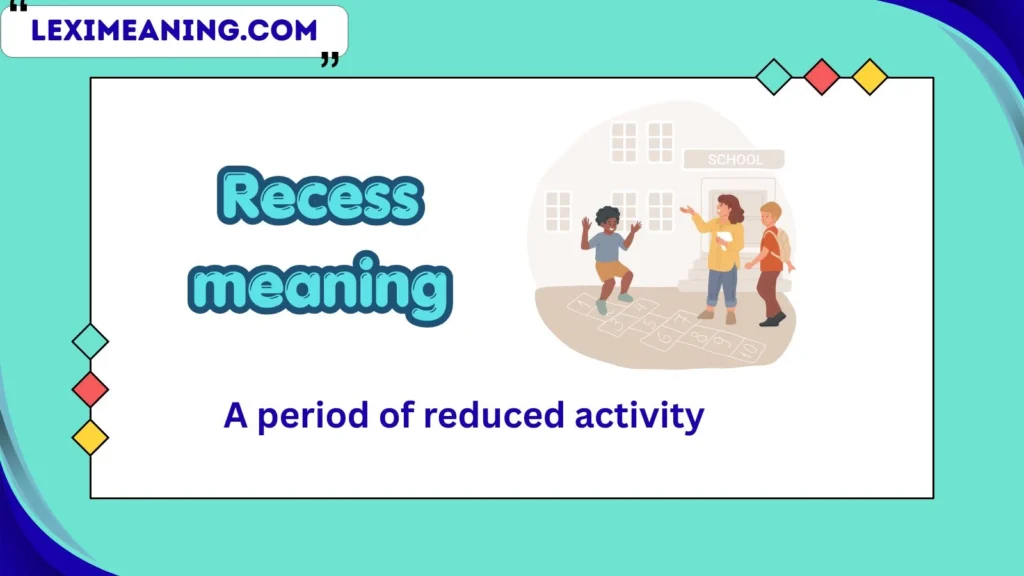
The most familiar meaning of recess is related to school life.
In this context, recess refers to:
- A break from classroom learning
- Time set aside for play, rest, or socializing
During recess, students typically:
- Go outside or to a common area
- Play games or talk with friends
- Recharge mentally and physically
This kind of recess is especially associated with younger students, but the idea of taking breaks applies to all ages.
Why Recess Is Important for Students
Recess isn’t just free time it supports:
- Physical movement
- Social interaction
- Mental focus after returning to class
Educators often note that students return from recess more attentive and ready to learn, which is why it remains a valued part of the school day.
Recess Meaning in Economic and Business Contexts
In economics, recess takes on a very different meaning.
Here, recess refers to:
- A period of economic decline
- Reduced business activity
- Slower growth and spending
This type of recess is often discussed in news reports, financial analysis, and policy discussions. It describes a downturn rather than a complete collapse.
For example:
- “The industry entered a recess after demand dropped.”
- “Spending slowed during the economic recess.”
Recess vs Recession: Clearing the Confusion
Recess and recession are related but not identical.
- Recess refers to a slowdown or pause
- Recession is a formally defined, broader economic downturn
While people sometimes use them interchangeably in casual conversation, recession has a more specific technical meaning.
Recess Meaning in Architecture and Design
In design and construction, a recess refers to a space set back from the surrounding surface.
Examples include:
- A recessed doorway
- A recessed shelf
- A wall indentation
In this sense, recess describes physical depth rather than time or activity.
Recess as a Legal or Government Term
In government or legal settings, recess can refer to:
- A temporary break in official proceedings
- A pause in sessions or hearings
For example:
- “The court went into recess.”
- “The assembly took a recess before voting.”
Here, the word signals a temporary stop, not an ending.
Examples of Recess in Everyday Conversations
School Context
“The kids are excited for recess today.”
Workplace or Meeting Context
“Let’s take a short recess before continuing.”
Economic Context
“The market experienced a brief recess last year.”
These examples show how one word adapts to very different situations.
Common Misunderstandings About Recess
Recess Only Means School Breaks
While common, this is only one of several meanings.
Recess Always Means Something Negative
Not true. In schools and meetings, recess is positive and restorative.
Recess and Recession Are the Same
They’re related, but not interchangeable in formal usage.
Why Context Is Critical for Understanding Recess
Because recess appears in education, economics, law, and design, context is essential.
To understand the meaning, ask:
- Is this about time or space?
- Is it about rest or decline?
- Is it formal or casual?
The surrounding words usually make the meaning clear.
Recess Meaning in Modern Life
Recess continues to be relevant because:
- Breaks are increasingly valued for productivity
- Economic cycles remain part of global discussion
- Flexible language adapts across fields
Whether physical or metaphorical, recess reflects the idea that pauses are sometimes necessary.
Recess and the Importance of Breaks
Across all meanings, one theme remains consistent: recess represents a pause.
That pause can:
- Restore energy
- Signal transition
- Allow adjustment before moving forward
This is why the concept remains useful across so many areas of life.
Why Understanding Recess Meaning Is Useful
Knowing the recess meaning helps you:
- Interpret news and reports accurately
- Understand school and workplace language
- Follow legal or formal discussions
- Use the word confidently in conversation
It’s a small word with broad application.
Using Recess Correctly in Conversation
To use recess naturally:
- Match it to the correct context
- Avoid confusing it with recession
- Use it for pauses, not endings
Good examples:
- “Let’s take a recess and come back refreshed.”
- “The program went into a brief recess.”
Conclusion:
The recess meaning changes with context, but the core idea stays the same: a temporary pause, break, or step back. Whether it’s children playing outside, lawmakers pausing a session, or analysts discussing slower economic activity, recess signals a moment of interruption not a full stop.
Understanding how the word works across different settings helps you communicate clearly and interpret conversations with confidence. Recess remains a reminder that breaks of all kinds are a natural and often necessary part of progress.
💬 When you hear the word “recess,” what’s the first meaning that comes to mind?
Share your thoughts in the comments!

I’m Daniel Brookes, the creator of LexiMeaning.com, where I make words, phrases, and their meanings simple and easy to understand. I’m passionate about clear language and helping readers discover the meaning, usage, and context behind everyday words. Through LexiMeaning.com, I aim to make learning new words simple, useful, and enjoyable.