
You’ve probably heard the word duo used to describe musical partners, best friends, superhero teams, or even app features.
It’s short, familiar, and widely used but what does it actually mean? Understanding the duo meaning helps you interpret everyday language, pop culture references, and social dynamics more clearly.
In 2026, duo continues to be a popular term because collaboration, partnership, and teamwork are more visible than ever.
This article explains the meaning of duo in simple, human-friendly language, shows how it’s used in different contexts, and explores why pairs often feel so powerful and memorable.
What Does Duo Mean?
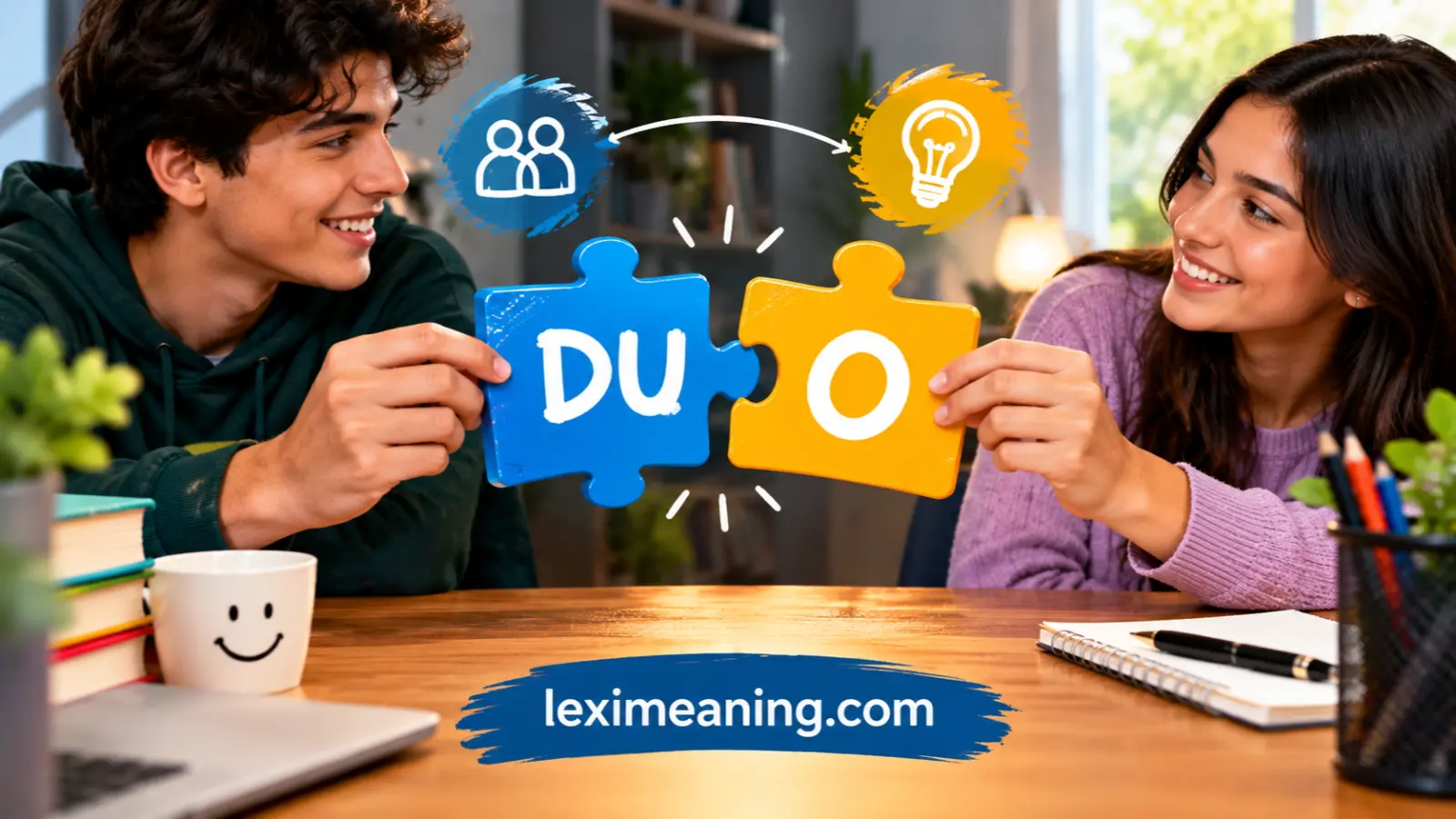
The duo meaning refers to a pair of two people or things that are connected, work together, or are grouped as a unit.
In simple terms:
A duo is a pair that functions together.
A duo can describe:
- Two people
- Two performers
- Two characters
- Two objects that work as a set
The key idea is togetherness, not just the number two.
Where the Word Duo Comes From
The word duo comes from Latin, where it simply meant “two.” Over time, it entered many languages and became especially common in English to describe pairs that have a relationship or shared purpose.
Its Latin roots explain why the word feels formal enough for writing but casual enough for everyday speech.
How Duo Is Used in Everyday Language
In daily conversation, duo is often used to highlight partnership.
Examples include:
- “They make a great duo.”
- “The comedy duo was hilarious.”
- “This skincare duo works really well together.”
In these cases, duo emphasizes cooperation and balance rather than just quantity.
Duo in Music and Entertainment
One of the most common uses of duo is in entertainment.
In music and performance, a duo refers to:
- Two singers
- Two musicians
- Two performers sharing the spotlight
Famous duos often stand out because of:
- Chemistry
- Complementary skills
- Distinct personalities
The success of a duo usually depends on how well the two individuals balance each other.
Duo in Film, TV, and Fiction
In storytelling, duos are everywhere.
They often appear as:
- Hero partnerships
- Best-friend teams
- Comic relief pairs
A strong duo dynamic can drive a story by creating contrast, conflict, or emotional depth. Think of one character being serious while the other is playful—the balance keeps audiences engaged.
Duo in Sports and Competition
In sports, duo refers to pairs who compete or perform together.
Examples include:
- Tennis doubles partners
- Figure skating pairs
- Tag-team competitors
In these cases, success depends on coordination, trust, and shared strategy.
Duo in Technology and Products
In modern usage, duo is also common in branding and product descriptions.
You might see:
- App feature duos
- Product bundles
- Tool combinations
Here, duo suggests that two items work better together than alone, emphasizing convenience and efficiency.
Why Duos Are So Appealing
There’s a psychological reason duos are memorable.
Pairs often feel:
- Balanced
- Relatable
- Easier to follow than large groups
Two-person dynamics allow for contrast without complexity, which makes duos especially effective in communication, storytelling, and design.
Duo vs Pair: Is There a Difference?
While similar, duo and pair aren’t always interchangeable.
- Pair is more neutral and functional
- Duo often implies a relationship or collaboration
For example:
- A pair of shoes
- A musical duo
Duo usually suggests intention and connection, not just quantity.
Duo vs Team
A team usually involves more than two people, while a duo focuses on a close partnership.
Duos often feel:
- More personal
- More equal
- More focused
This makes the word especially popular in creative and social contexts.
Real-Life Examples of Duo Usage
Seeing the word in context helps clarify the duo meaning.
Examples:
- “The detective duo solved the case.”
- “That actor-director duo works well together.”
- “This cleaning duo makes chores easier.”
Each example highlights cooperation and shared purpose.
Common Misunderstandings About Duo
1: Thinking Duo Only Applies to People
Duo can also describe objects, tools, or features.
2: Assuming Duo Means Identical
Duos often work because of differences, not similarities.
3: Believing Duo Is Informal Slang
Duo is a standard, widely accepted word used in formal and casual contexts.
Duo in Social Media and Modern Culture
In 2026, duo is commonly used online to describe:
- Creator partnerships
- Influencer collaborations
- Iconic friend pairings
Social media thrives on recognizable pair dynamics, which keeps the word duo relevant and popular.
Why Duo Still Matters in 2026
Modern life values collaboration, and duo captures that perfectly.
It reflects:
- Partnership over isolation
- Shared effort
- Complementary strengths
Whether in work, creativity, or relationships, duos represent efficiency and connection.
How to Use the Word Duo Correctly
To use duo effectively:
- Apply it to two connected elements
- Emphasize cooperation or balance
- Avoid using it for unrelated items
Correct example:
“The designer-developer duo launched a successful product.”
Incorrect example:
“I bought a duo of random items.” (Lacks connection)
Duo as a Symbol of Balance
Symbolically, duos often represent:
- Harmony
- Mutual support
- Equality
That symbolism is one reason duos are so common in stories and branding.
Duo Compared to Similar Words
Related words include:
- Pair
- Couple
- Partnership
Duo stands out because it feels purposeful and collaborative rather than purely descriptive.
Duo Meaning Friends
- Two friends who share a close bond and are often seen or mentioned together.
- A pair of friends who make a great team and enjoy spending time together.
- Two besties working or hanging out side by side as a memorable pair.
- A friendship between two people who complement each other naturally.
- Two friends who are better together, whether for fun, support, or shared adventures.
🤔Duo Meaning in English
- Duo means two people or things that are together as a pair.
- A duo is a pair of two people who perform, work, or appear together.
- The word “duo” describes two individuals forming a team or pair.
- Duo simply means a group of two, especially when they share a common activity.
- In English, “duo” refers to two connected people or things viewed as a pair.
Duo Meaning in Chat
- In chat, “duo” usually means two people teaming up or doing something together.
- Someone may call you a “duo” when you and another person are always together online.
- In texting, “duo” can describe a two-person team, pair, or close friendship.
- “Duo” in chat often gives the idea of two people who make a strong pair.
- When someone says “we’re a duo,” they usually mean the two of you are a team or inseparable pair.
Conclusion:
The duo meaning refers to two people or things working together as a connected unit. More than just a number, duo implies cooperation, balance, and shared purpose.
In 2026, duos remain powerful across music, media, work, and everyday life because they highlight how collaboration often leads to better outcomes than going it alone.
Understanding the word helps you appreciate partnerships both small and impactful wherever they appear.
🤝 Your turn:
What’s your favorite duo from pop culture, real life, or work? Share your thoughts and examples.

I’m Daniel Brookes, the creator of LexiMeaning.com, where I make words, phrases, and their meanings simple and easy to understand. I’m passionate about clear language and helping readers discover the meaning, usage, and context behind everyday words. Through LexiMeaning.com, I aim to make learning new words simple, useful, and enjoyable.