If you’re a parent, student, or educator, you may have heard the term IEP mentioned in school meetings, emails, or educational documents.
It often comes up when discussing learning differences, support services, or special education but it can feel overwhelming if you’re unfamiliar with the system.
Understanding the IEP school meaning is essential because it explains how schools provide structured, legally supported help to students who need it.
Inclusive education and individualized learning are more important than ever. This article explains what an IEP means in school settings, how it works, who qualifies, and how it supports students academically and emotionally.
What Does IEP Mean in School?
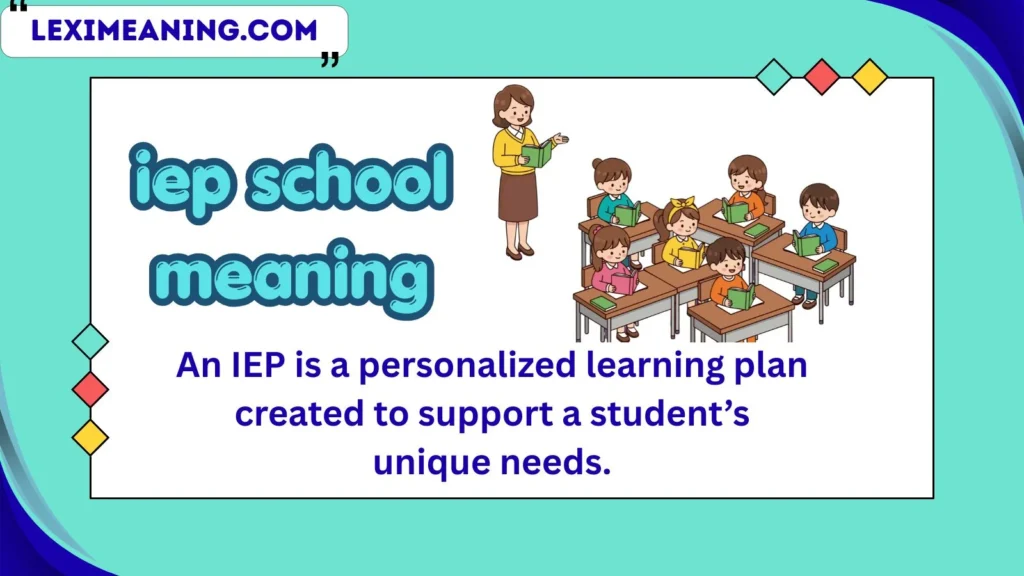
The IEP school meaning refers to an Individualized Education Program, which is a formal plan designed to support a student with special educational needs. An IEP outlines specific goals, accommodations, and services tailored to help a student succeed in school.
In simple terms:
An IEP is a personalized learning plan created to support a student’s unique needs.
It is commonly used in public schools and is protected by education law.
Why IEPs Exist in Schools
IEPs exist to ensure that students with learning challenges or disabilities receive equal access to education. The goal is not to lower expectations, but to provide the right support so students can meet academic standards in ways that work for them.
IEPs help schools:
- Adapt teaching methods
- Provide specialized services
- Track progress clearly
Who Qualifies for an IEP?
A student may qualify for an IEP if they have a documented condition that affects learning. This can include:
- Learning disabilities
- Speech or language challenges
- Attention-related difficulties
- Developmental delays
Eligibility is determined through evaluation, not assumptions or labels.
How the IEP Process Works
The IEP process typically involves several steps:
- Identification of learning concerns
- Formal evaluation by specialists
- Eligibility determination
- Development of the individualized plan
- Regular review and updates
This process is collaborative and involves educators, specialists, and families.
What an IEP Includes
An IEP is a detailed document that may include:
- Academic goals
- Classroom accommodations
- Specialized instruction
- Support services
Each part is designed to address the student’s specific educational needs.
IEP and Classroom Accommodations
Classroom accommodations are a major part of many IEPs. These adjustments help students access the curriculum without changing learning expectations.
Examples may include:
- Extra time on tests
- Modified assignments
- Preferential seating
- Assistive tools
These supports help students demonstrate their abilities more effectively.
IEP vs 504 Plan: Understanding the Difference
Many people confuse IEPs with 504 plans, but they are not the same.
An IEP:
- Includes specialized instruction
- Is more detailed
- Is used when learning is significantly impacted
A 504 plan:
- Focuses mainly on accommodations
- Does not usually include specialized teaching
Both aim to support students, but they serve different needs.
The Role of Parents and Guardians
Parents and guardians play an important role in the IEP process. They:
- Participate in meetings
- Share observations and concerns
- Help advocate for appropriate support
Collaboration between families and schools is key to making the plan effective.
IEPs and Student Progress
An IEP is not static. It is reviewed regularly to:
- Measure progress
- Adjust goals
- Update services
This ensures the plan continues to meet the student’s evolving needs.
IEP in Everyday School Life
In daily school life, an IEP may affect:
- How lessons are delivered
- How assessments are given
- How progress is measured
Many students with IEPs spend most or all of their day in general education classrooms with added support.
Common Misunderstandings About IEPs
Mistake #1: Thinking an IEP Means Lower Ability
An IEP supports learning—it does not define intelligence.
Mistake #2: Assuming IEPs Are Permanent
Some students exit IEPs once they no longer need specialized support.
Mistake #3: Believing Only Severe Disabilities Qualify
IEPs support a wide range of learning needs.
IEPs and Emotional Support
Beyond academics, IEPs can also address:
- Social skills
- Emotional regulation
- Behavioral strategies
This holistic approach helps students succeed beyond test scores.
Why IEPs Matter
Schools emphasize:
- Inclusive education
- Individual learning paths
- Student-centered support
IEPs remain a cornerstone of this approach, helping students learn in ways that respect their strengths and challenges.
How IEPs Support Long-Term Success
When implemented well, IEPs can:
- Build confidence
- Improve academic outcomes
- Encourage independence
They are designed to prepare students not just for school, but for life beyond the classroom.
Is an IEP Only for School?
While the IEP is a school-based plan, the skills and strategies it supports often benefit students outside the classroom as well, including at home and in community settings.
Why Understanding the IEP School Meaning Matters
Knowing the IEP school meaning helps:
- Parents advocate effectively
- Students understand their support
- Educators collaborate better
Clarity reduces fear and empowers informed decision-making.
Conclusion: Understanding the True IEP School Meaning
The IEP school meaning centers on individualized support, equal access, and structured planning for students with learning needs. An IEP is not a label it’s a tool designed to help students succeed academically, socially, and emotionally.
As education becomes more inclusive and personalized, IEPs continue to play a vital role in helping students reach their full potential. Understanding how they work makes the system more accessible for everyone involved.
🎓 Your turn:
Have you experienced the IEP process as a parent, student, or educator? Share your perspective or questions.

I’m Daniel Brookes, the creator of LexiMeaning.com, where I make words, phrases, and their meanings simple and easy to understand. I’m passionate about clear language and helping readers discover the meaning, usage, and context behind everyday words. Through LexiMeaning.com, I aim to make learning new words simple, useful, and enjoyable.