
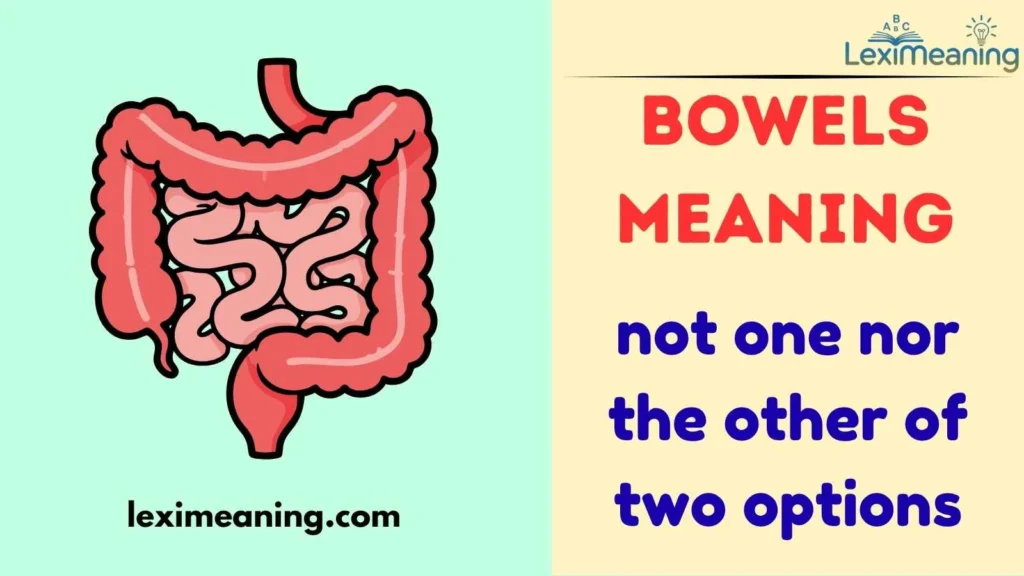
The word bowels is often heard in medical conversations, everyday language, and even older expressions or writing. Because it sounds technical or uncomfortable to some people, its meaning is sometimes misunderstood or avoided altogether. Still, it’s a common and important word with clear uses.
Understanding the bowels meaning helps you interpret health-related discussions, everyday phrases, and written content more confidently. This article explains what bowels means, how it’s used in different contexts, and why context makes a big difference
What Does Bowels Mean?
At its most basic level, bowels refers to the intestines, especially the lower part of the digestive system. It’s commonly used to describe the organs involved in digestion and waste removal.
In simple terms, bowels can mean:
- The intestines
- The digestive tract
- The part of the body involved in bowel movements
For example:
- “The bowels help process waste.”
- “He’s having trouble with his bowels.”
The word is typically used in a plural form.
Bowels Meaning in the Human Body
In a physical sense, bowels are part of the digestive system and play a key role in:
- Absorbing nutrients
- Moving waste through the body
- Eliminating waste
When people talk about bowel health, they are usually referring to how this system is functioning overall.
Bowels Meaning in Everyday Conversation
In everyday language, bowels is often used when discussing:
- Digestion
- Bathroom habits
- Physical discomfort
Examples include:
- “My bowels have been upset.”
- “Regular bowels are important for comfort.”
The word is factual and descriptive, even if it feels slightly formal.
Bowels and Health-Related Language
Bowels frequently appear in health discussions, such as:
- Digestive comfort
- Diet-related conversations
- General wellbeing
People might say:
- “Certain foods affect the bowels.”
- “Stress can impact the bowels.”
In these cases, the word helps describe internal bodily processes clearly.
Bowels Meaning Beyond the Physical Body
Interestingly, bowels has also been used metaphorically, especially in older or literary language.
In these contexts, bowels can refer to:
- The innermost part of something
- A deep interior or core
For example:
- “The bowels of the earth.”
- “Deep in the bowels of the city.”
Here, the word emphasizes depth and interior space rather than anatomy.
Examples of Bowels in Real-Life Sentences
Health Example
“Hydration supports healthy bowels.”
Everyday Example
“He mentioned issues with his bowels.”
Metaphorical Example
“They explored the bowels of the cave.”
These examples show how the word adapts to different contexts.
Why the Word Bowels Is Plural
Bowels is usually plural because it refers to a system of connected organs rather than a single structure. This plural usage has remained consistent over time.
People rarely say “a bowel” in everyday speech unless referring to a specific medical structure.
Bowels vs Similar Terms
Bowels is sometimes confused with related words.
😁Bowels vs Stomach
- The stomach is one organ
- Bowels refer mainly to the intestines
Bowels vs Gut
- Gut is more informal
- Bowels is more formal and medical
Bowels vs Digestive System
- Digestive system is broad
- Bowels refer to a specific part
These differences help clarify meaning.
Why Bowels Can Feel Like an Awkward Word
Some people find bowels uncomfortable because:
- It relates to bodily functions
- It’s often used in medical contexts
- It sounds formal or old-fashioned
Despite this, it remains a clear and widely accepted term.
Bowels Meaning in Writing and Media
In writing, bowels is used when:
- Precision is needed
- A medical or factual tone is required
- Describing interior spaces metaphorically
Writers choose it for clarity rather than emotion.
Common Misunderstandings About Bowels
Bowels Only Means Bathroom Use
It refers to organs and processes, not just elimination.
Bowels Is a Crude Term
It’s actually a neutral and medically accepted word.
Bowels Is Only Used in Medicine
It’s also used metaphorically and in general conversation.
Why Context Matters When Understanding Bowels
To understand bowels correctly, consider:
- Is the discussion about health?
- Is it metaphorical or descriptive?
- Is the tone medical, casual, or literary?
Context determines whether the word is literal or figurative.
Bowels Meaning in Modern Usage
bowels continues to be used because:
- Health awareness is increasing
- Clear language is valued
- Medical information is widely shared
The word remains practical and relevant despite its age.
How to Use Bowels Appropriately
To use bowels correctly:
- Use it in factual or health-related contexts
- Avoid slang misuse
- Be mindful of audience and setting
Good examples:
- “Diet affects the bowels.”
- “The tunnels run through the bowels of the city.”
Why Understanding Bowels Meaning Is Useful
Knowing the bowels meaning helps you:
- Understand health discussions
- Interpret medical writing
- Read older or descriptive texts accurately
- Communicate clearly about the body
It removes confusion and discomfort around the term.
Bowels as a Neutral Descriptive Term
Although it may feel awkward to some, bowels is a neutral word that serves a clear purpose. Avoiding it often leads to vaguer or less accurate language.
Bowels and Body Awareness
Understanding terms like bowels encourages better body awareness and clearer communication about health and wellbeing.
Conclusion:
The bowels meaning primarily refers to the intestines and their role in digestion and waste processing. While most commonly used in health-related contexts, the word can also describe deep interior spaces in a metaphorical sense.
bowels remains a relevant and useful term. Understanding its meaning and proper use helps you navigate medical discussions, everyday language, and written content with confidence.
💬 Do you usually hear the word bowels in health conversations or in writing?
Share your thoughts in the comments!
