
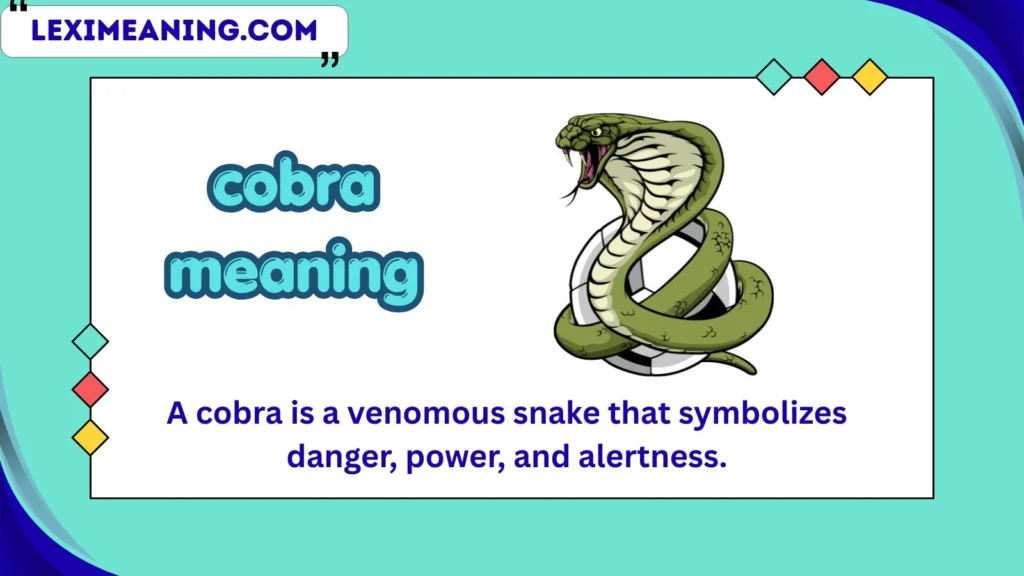
The word cobra instantly creates a powerful image alert posture, flared hood, and a sense of danger mixed with respect.
You’ll see the term used in nature documentaries, mythology, martial arts, pop culture, and even brand names. It carries symbolic, cultural, and metaphorical significance that has evolved over centuries.
This article explains the meaning of cobra in simple terms, explores its cultural roots, and shows how the word is used today.
What Does Cobra Mean?
The cobra meaning primarily refers to a type of venomous snake known for its raised hood and defensive posture. Cobras belong to a group of snakes recognized for their intelligence, speed, and highly effective venom.
In simple terms:
A cobra is a venomous snake that symbolizes danger, power, and alertness.
Beyond biology, the word cobra is often used to represent strength, protection, and controlled aggression.
Origin of the Word Cobra
The word cobra comes from an older term meaning hooded snake. Early explorers and naturalists used the word to describe snakes with the distinctive hood expansion that appears when they feel threatened.
Over time, the shortened word cobra became widely accepted in English and other languages.
Cobra as an Animal in Nature
In nature, cobras are known for:
- Venomous bite
- Defensive hood display
- High alert behavior
They are commonly found in parts of Asia and Africa and play an important role in local ecosystems as predators.
Their ability to remain still and strike quickly contributes to their reputation as dangerous but intelligent animals.
Cobra and Symbolism
Across cultures, cobra symbolism is powerful and layered. Cobras often represent:
- Protection and guardianship
- Power and authority
- Awareness and vigilance
Because cobras strike only when threatened, they are also seen as symbols of controlled strength rather than reckless violence.
Cobra in Ancient Cultures
In ancient cultures, especially in South Asia and Egypt, cobras were revered rather than feared. They appeared in:
- Religious art
- Mythological stories
- Royal symbolism
Cobras were often associated with divine protection and sacred knowledge, reinforcing their role as guardians rather than monsters.
Cobra in Spiritual and Mythological Contexts
Spiritually, the cobra is often linked to:
- Awakening
- Transformation
- Life energy
In mythological symbolism, the cobra’s raised posture is sometimes interpreted as heightened awareness or spiritual readiness.
Cobra as a Metaphor in Language
In modern language, cobra is sometimes used metaphorically to describe a person who is:
- Calm but dangerous
- Highly alert
- Capable of sudden action
For example:
“He stayed quiet in the meeting, like a cobra waiting to strike.”
This usage emphasizes patience and hidden power.
Cobra in Martial Arts and Combat Terminology
The cobra appears in martial arts terminology to describe:
- Quick, precise strikes
- Defensive readiness
- Controlled aggression
Techniques or stances named after the cobra reflect speed and accuracy rather than brute force.
Cobra in Popular Culture
In popular culture, cobra is often used to convey intimidation or strength. It appears in:
- Movie villains
- Sports team names
- Video games
The name cobra is chosen because it instantly suggests danger, dominance, and respect.
Cobra in Branding and Product Names
Many brands use the word cobra to communicate:
- Power
- Precision
- High performance
From vehicles to fitness equipment, cobra branding often appeals to confidence and bold identity.
Common Misunderstandings About Cobra Meaning
Mistake #1: Thinking All Cobras Are Aggressive
Cobras usually act defensively and avoid conflict when possible.
Mistake #2: Assuming Cobra Only Refers to a Snake
The word is also symbolic and metaphorical in many contexts.
Mistake #3: Confusing Cobra With All Venomous Snakes
Not all venomous snakes are cobras, and cobras have unique traits.
Cobra vs Other Snakes in Symbolism
Compared to other snakes, cobras stand out because of:
- Their hooded display
- Their upright posture
- Their cultural symbolism
While snakes often symbolize rebirth or danger, cobras add the element of authority and protection.
Cobra in Modern Conversations
In 2025, cobra is used in:
- Wildlife discussions
- Symbolic storytelling
- Digital media references
Its meaning remains strong because it balances fear with respect—something few animal symbols achieve.
Why Cobra Is Associated With Fear and Respect
Cobras inspire fear because of their venom, but also respect because they:
- Warn before striking
- Maintain control
- Represent balance between danger and restraint
This dual nature makes the cobra especially powerful in symbolic language.
Cobra in Educational and Scientific Contexts
In education, cobra is often used as an example in:
- Biology lessons
- Animal behavior studies
- Ecosystem discussions
Students learn not only about venom but also about survival strategies and animal intelligence.
Why Cobra Meaning Matters
People are drawn to symbols that represent:
- Awareness
- Strength with control
- Personal boundaries
The cobra meaning aligns with these ideas, which is why the word continues to appear in branding, storytelling, and symbolic language.
How Cobra Is Used Correctly in Language
To use cobra correctly:
- Use it literally when referring to the animal
- Use it metaphorically to imply alertness or danger
- Avoid using it casually in sensitive contexts
Correct usage respects both the literal and symbolic power of the word.
Why Understanding Cobra Meaning Is Important
Knowing the cobra meaning helps you:
- Interpret symbolic language
- Understand cultural references
- Use metaphors accurately
It prevents misunderstanding and adds depth to communication.
Conclusion:
The cobra meaning extends far beyond a venomous snake. It represents power, vigilance, protection, and controlled strength. From ancient symbolism to modern language and branding, the cobra continues to command respect rather than simple fear.
As people seek symbols that balance strength and awareness, the cobra remains one of the most enduring and meaningful animal symbols in human culture.
🐍 Your turn:
When you hear the word cobra, do you think of danger, symbolism, or pop culture? Share what comes to mind.

I’m Daniel Brookes, the creator of LexiMeaning.com, where I make words, phrases, and their meanings simple and easy to understand. I’m passionate about clear language and helping readers discover the meaning, usage, and context behind everyday words. Through LexiMeaning.com, I aim to make learning new words simple, useful, and enjoyable.