If you’ve ever wondered why your hair seems to repel moisture, takes forever to get wet, or feels coated instead of hydrated, you may be dealing with low porosity hair.
Understanding the low porosity hair meaning is essential if you want healthier hair, better product results, and less frustration on wash day.
Hair care conversations are more science-backed than ever. Knowing your hair porosity isn’t just a trend it’s a foundation for choosing the right products and routines.
This guide breaks down what low porosity hair really means, how to identify it, how to care for it properly, and what mistakes to avoid, all in clear, practical language.
What Does Low Porosity Hair Mean?
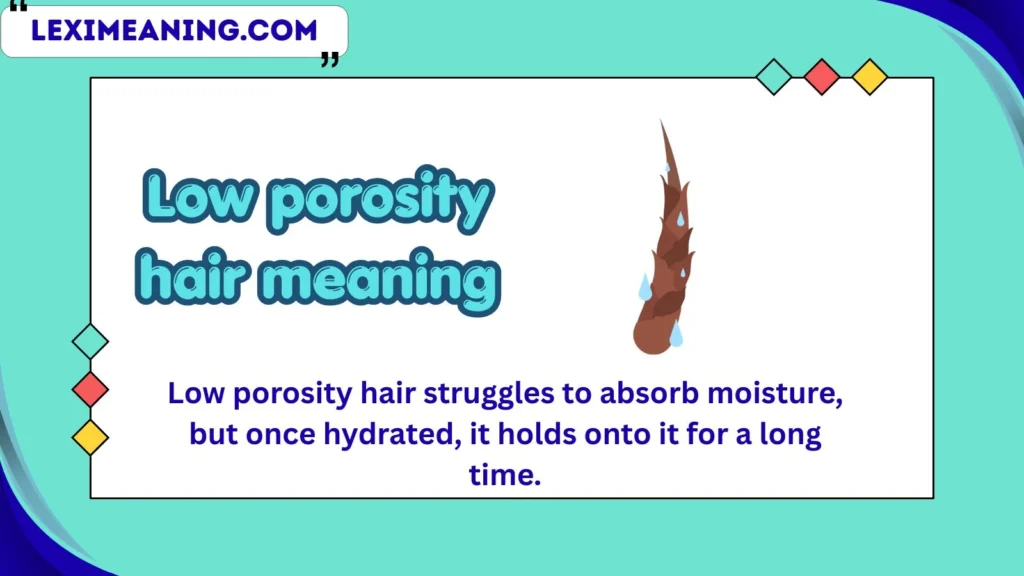
The low porosity hair meaning refers to hair that has a tightly closed cuticle layer, making it difficult for moisture, water, and products to penetrate the hair shaft.
In simple terms:
Low porosity hair struggles to absorb moisture, but once hydrated, it holds onto it for a long time.
Hair porosity is not about how dry or oily your hair is it’s about how your hair absorbs and retains moisture at a structural level.
How Hair Porosity Works (In Simple Language)
Hair strands are covered with tiny overlapping layers called cuticles. These cuticles control how moisture moves in and out of the hair.
With low porosity hair:
- Cuticles lie flat and tight
- Water beads up instead of soaking in
- Products tend to sit on the surface
This structure protects the hair, but it also creates challenges when trying to hydrate it.
Common Signs of Low Porosity Hair
Many people don’t realize they have low porosity hair because it can look healthy on the surface.
You may have low porosity hair if you notice:
- Water beads on your hair before soaking in
- Hair takes a long time to get fully wet
- Products sit on top instead of absorbing
- Hair feels greasy easily but still feels dry
- Product buildup happens quickly
These signs are especially noticeable during washing and styling.
Why Low Porosity Hair Repels Moisture
Low porosity hair repels moisture because the cuticle layers are tightly sealed. This can be genetic or influenced by factors like:
- Minimal chemical processing
- Low heat exposure
- Naturally strong hair structure
While this makes hair more resistant to damage, it also makes hydration more difficult.
Low Porosity Hair vs Other Hair Porosity Types
Understanding the low porosity hair meaning is easier when compared to other porosity levels.
- Low porosity hair resists moisture entry
- Medium porosity hair absorbs and retains moisture easily
- High porosity hair absorbs moisture quickly but loses it fast
Low porosity hair isn’t “bad”it just requires a different approach.
How to Test If You Have Low Porosity Hair
A common at-home method involves observing how your hair reacts to water.
If your hair:
- Floats on water before slowly sinking
- Takes time to absorb moisture
- Dries slowly once wet
These behaviors often point to low porosity hair. While not perfectly scientific, they can offer helpful clues.
Best Ways to Care for Low Porosity Hair
Caring for low porosity hair is all about helping moisture get in without causing buildup.
Effective strategies include:
- Using warm water to open cuticles
- Applying lightweight products
- Layering moisture correctly
- Clarifying regularly to remove buildup
Once moisture enters the hair, low porosity hair does an excellent job of retaining it.
Why Heat Helps Low Porosity Hair
Gentle heat is often beneficial for low porosity hair because it:
- Lifts the cuticle slightly
- Allows moisture and products to penetrate
- Improves absorption during deep conditioning
This doesn’t mean excessive heat styling controlled warmth during treatments can make a big difference.
Product Buildup and Low Porosity Hair
One of the biggest challenges with low porosity hair is buildup.
Because products don’t absorb easily:
- Heavy creams sit on the hair
- Oils create a coated feeling
- Hair may look dull or weighed down
This is why lightweight formulas and regular cleansing are important.
Ingredients That Work Well for Low Porosity Hair
Low porosity hair tends to respond better to:
- Lightweight oils
- Water-based products
- Humectants used sparingly
Products that feel heavy or waxy often worsen buildup instead of improving moisture.
Common Mistakes People Make With Low Porosity Hair
Using Too Much Product
More product doesn’t mean more moisture it often leads to buildup.
Avoiding Clarifying
Skipping clarifying washes traps residue on the hair.
Using Cold Water Only
Cold water keeps cuticles tightly closed, making absorption harder.
Assuming Hair Is Dry When It’s Actually Coated
Low porosity hair can feel dry even when it’s overloaded with product.
Low Porosity Hair and Styling Challenges
Styling low porosity hair can be tricky because products don’t always behave as expected.
Common issues include:
- Curl creams sitting on top
- Styles not lasting
- Hair feeling stiff instead of soft
Using less product and working in sections often improves results.
Why Low Porosity Hair Can Look Healthy but Feel Dry
This is one of the most confusing aspects of low porosity hair.
Because the cuticle is tight:
- Hair reflects light well
- Hair feels smooth externally
- Internal moisture may still be lacking
This disconnect makes targeted care essential.
Low Porosity Hair in Different Hair Types
Low porosity hair can exist across:
- Straight hair
- Wavy hair
- Curly hair
- Coily hair
Porosity is separate from curl pattern, which is why two people with similar hair textures can have very different moisture needs.
Is Low Porosity Hair Rare?
No many people have low porosity hair, especially those who:
- Avoid chemical treatments
- Use minimal heat
- Have naturally resilient hair
It’s common, just often misunderstood.
How Low Porosity Hair Changes Over Time
Hair porosity can change due to:
- Chemical treatments
- Heat damage
- Environmental exposure
Low porosity hair can become more porous if the cuticle is damaged over time, which is why protective care matters.
Why Understanding Low Porosity Hair Matters
Personalized hair care is the focus. Understanding the low porosity hair meaning helps you:
- Stop wasting money on ineffective products
- Reduce frustration
- Build a routine that actually works
Hair care becomes simpler and more effective when it’s tailored to your hair’s structure.
Conclusion:
The low porosity hair meaning comes down to structure, not failure. Low porosity hair has tightly closed cuticles that resist moisture, making hydration more challenging but once moisture is absorbed, the hair retains it beautifully.
With the right techniques, products, and understanding, low porosity hair can thrive. Informed hair care isn’t about trends it’s about knowing how your hair works and treating it accordingly.
💬 Your turn:
Do you think you have low porosity hair? What challenges have you noticed with moisture or product buildup?

I’m Daniel Brookes, the creator of LexiMeaning.com, where I make words, phrases, and their meanings simple and easy to understand. I’m passionate about clear language and helping readers discover the meaning, usage, and context behind everyday words. Through LexiMeaning.com, I aim to make learning new words simple, useful, and enjoyable.