
The word rash is one of those terms that can instantly change meaning depending on how it’s used. You might hear it in a medical context, in news headlines, or describing someone’s behavior and each time, it means something slightly different.
Understanding the rash meaning helps you interpret conversations accurately and avoid misunderstandings, especially when the word carries emotional or health-related weight.
Clear language matters more than ever. This article explains the meaning of rash in simple, everyday terms, covers its different uses, provides real-life examples, and clarifies common confusions so you can use the word correctly and confidently.
What Does Rash Mean?
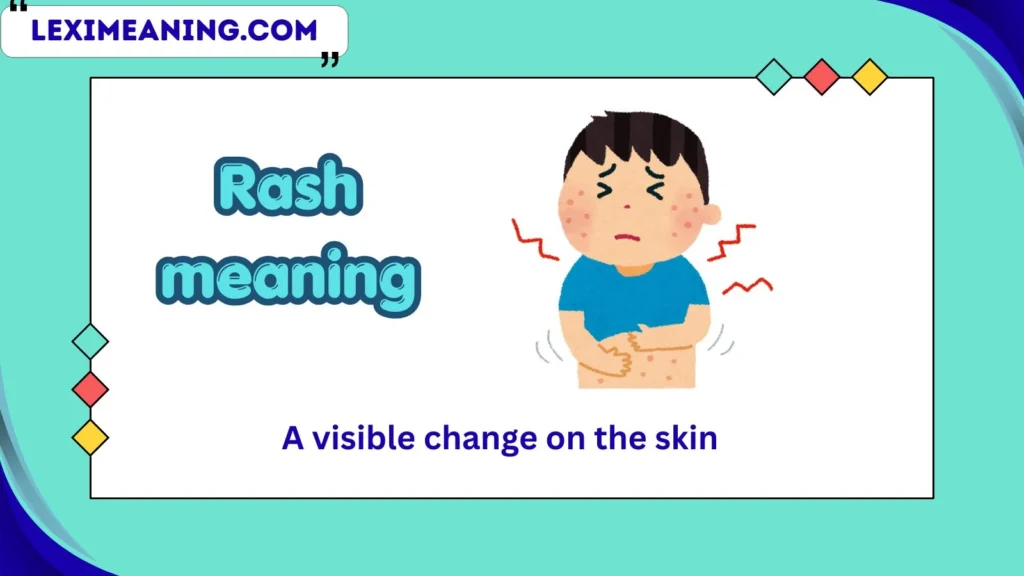
The rash meaning depends on context, but it generally refers to either a skin condition or a behavior that is done too quickly without careful thought.
In simple terms, rash can describe:
- A visible change on the skin
- A reckless or hasty action
The same word functions as both a noun and an adjective, which is why context is essential.
Rash as a Skin Condition
One of the most common uses of rash relates to the skin.
In this sense, a rash refers to:
- An area of irritated or inflamed skin
- Redness, bumps, or itching
- A visible change in skin texture or color
People often use the word casually to describe any unusual skin reaction, even without knowing the exact cause.
Everyday Examples of Rash in Skin Context
Examples you might hear include:
- “I developed a rash after using a new soap.”
- “The heat caused a rash on my arms.”
- “That cream helped clear the rash.”
Here, rash is a physical condition that can vary in severity and appearance.
Rash as a Description of Behavior
Rash is also commonly used to describe impulsive or reckless behavior.
In this context, rash means:
- Acting too quickly
- Making decisions without thinking
- Ignoring possible consequences
For example:
- “It was a rash decision.”
- “He made a rash move without planning.”
- “She regretted her rash response.”
This usage emphasizes lack of caution rather than physical symptoms.
Rash in News, Media, and Writing
In news articles and formal writing, rash often appears when describing:
- Sudden decisions
- Unplanned actions
- Emotional reactions
For example:
“Officials warned against rash actions during the crisis.”
This usage highlights urgency or recklessness rather than intent.
How Context Changes the Rash Meaning
The easiest way to understand rash is to look at the surrounding words.
Ask yourself:
- Is the topic health or skin?
- Is someone’s decision or action being described?
If it’s about health, rash usually refers to the skin.
If it’s about choices or behavior, rash usually means impulsive.
Real-Life Examples of Rash in Sentences
Seeing both meanings side by side helps clarify.
Health-Related Example
“The allergic reaction caused a rash on her hands.”
Behavior-Related Example
“Quitting without a backup plan was a rash move.”
Same word—completely different meanings.
Rash vs Similar Words
Understanding related words helps avoid confusion.
- Rash – impulsive or sudden
- Reckless – careless about danger
- Hasty – too quick, often rushed
- Irritation – discomfort, often skin-related
While these words overlap, rash often implies acting without enough thought.
Common Misunderstandings About Rash
Mistake #1: Thinking Rash Only Refers to Skin
Many people forget that rash also describes behavior.
Mistake #2: Assuming Rash Always Means Severe
A rash can be mild or serious, depending on context.
Mistake #3: Using Rash Instead of Angry
Rash doesn’t mean angry—it means impulsive.
OR Rash as a Noun vs Rash as an Adjective
Rash can function in two ways.
As a noun:
- “She has a rash.”
As an adjective:
- “It was a rash decision.”
Understanding this helps with correct grammar and sentence structure.
Rash in Everyday Conversation
In daily speech, rash is often used casually.
Examples:
- “That was a rash choice.”
- “I’ve got a weird rash—probably nothing.”
- “Don’t do anything rash.”
The phrase “don’t do anything rash” is especially common and means “don’t act impulsively.”
Why Rash Can Sound Serious
The word rash often carries a sense of urgency or concern because:
- It’s associated with health symptoms
- It implies lack of control or foresight
That’s why people use it carefully in both medical and emotional contexts.
Is Rash Formal or Informal?
Rash is considered neutral and works in:
- Casual conversation
- Professional writing
- News reporting
The tone depends on how it’s used, not the word itself.
Why Understanding Rash Matters
Communication moves fast, and misunderstandings can spread just as quickly. Knowing the correct rash meaning helps you:
- Interpret health discussions accurately
- Understand warnings in news or advice
- Communicate more clearly
It’s a small word with big contextual importance.
How to Use Rash Correctly
Before using rash, consider:
- Are you talking about skin or behavior?
- Is the tone descriptive or critical?
- Does the sentence make the meaning clear?
Clarity prevents confusion especially in writing.
Rash in Figurative Language
Writers sometimes use rash metaphorically to describe:
- Emotional reactions
- Sudden decisions
- Uncontrolled responses
This figurative use adds emphasis and urgency to the message.
Conclusion:
The rash meaning depends entirely on context. It can describe a skin condition involving irritation or redness, or it can describe impulsive behavior driven by poor judgment. Both meanings are widely used and accepted in modern English.
Understanding words with multiple meanings like rash helps improve clarity in health discussions, writing, and everyday conversation. Once you recognize the context, the meaning becomes clear and the word becomes much easier to use correctly.
💬 Your turn:
Which meaning of rash do you encounter more often skin-related or behavior-related? Share your thoughts!

I’m Daniel Brookes, the creator of LexiMeaning.com, where I make words, phrases, and their meanings simple and easy to understand. I’m passionate about clear language and helping readers discover the meaning, usage, and context behind everyday words. Through LexiMeaning.com, I aim to make learning new words simple, useful, and enjoyable.