
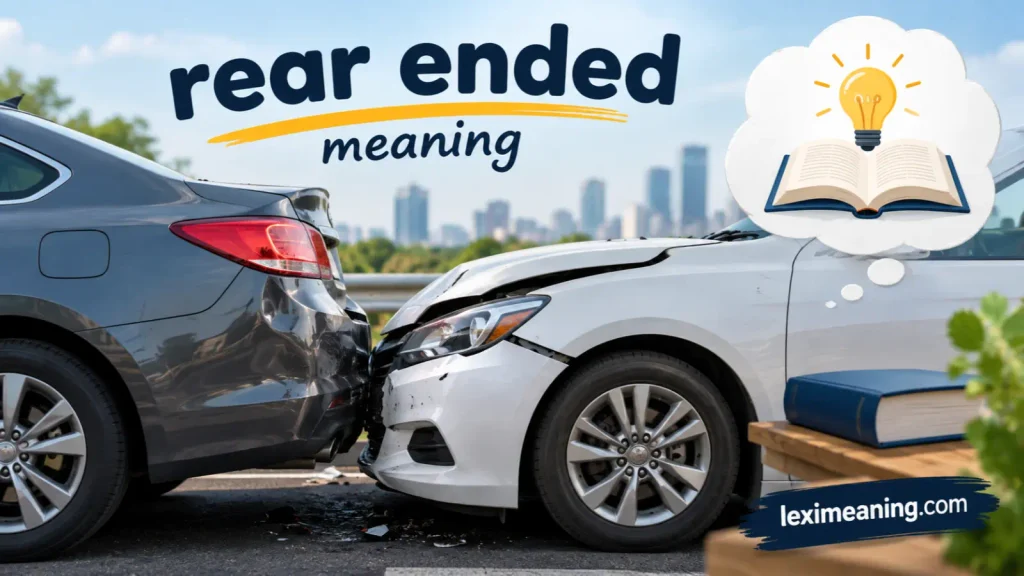
If you’ve ever been in a car accident or heard someone talk about one you’ve likely heard the phrase “rear ended.”
It’s commonly used in everyday conversation, insurance claims, police reports, and legal discussions. But what does it actually mean, and why is it such a common type of accident?
Understanding the rear ended meaning is important because it helps you clearly describe what happened, know who is typically at fault, and understand what steps to take afterward.
This article explains the term in simple, practical language with real-life context, updated for 2026.
What Does Rear Ended Mean?
Being rear ended means that one vehicle crashes into the back of another vehicle. In most cases, the car behind fails to stop in time and hits the rear of the car in front.
In plain language:
- You are rear ended if another vehicle hits you from behind
- The impact usually happens while slowing down or stopped
Examples:
- “I was rear ended at a red light.”
- “Traffic stopped suddenly, and the car behind me rear ended me.”
The phrase describes the direction of impact, not the severity of the crash.
How Rear-End Accidents Commonly Happen
Rear-end collisions are one of the most frequent types of traffic accidents.
Common situations include:
- Stopping at traffic lights
- Slowing down in heavy traffic
- Sudden braking
- Congested highways
In many cases, the driver behind is following too closely or is distracted.
Rear Ended Meaning in Legal and Insurance Contexts
In legal and insurance discussions, the term rear ended has specific implications.
Generally:
- The driver who hits from behind is often considered at fault
- Drivers are expected to maintain a safe following distance
However, fault isn’t automatic in every case. Factors like sudden stops, brake light issues, or road hazards can affect responsibility.
Insurance companies use the term to:
- Classify the type of accident
- Determine liability
- Assess damage claims
Examples of Rear Ended in Everyday Conversations
Casual Conversation
“I got rear ended on my way to work this morning.”
Insurance Claim Example
“My vehicle was rear ended while stopped at a stop sign.”
Police Report Language
“Vehicle A was rear ended by Vehicle B.”
These examples show how commonly the phrase is used across different situations.
Common Causes of Rear-End Collisions
Several factors increase the likelihood of being rear ended.
Frequent causes include:
- Distracted driving
- Tailgating
- Speeding
- Poor weather conditions
- Sudden traffic stops
Modern distractions like mobile phone use remain one of the leading contributors.
Is Being Rear Ended Usually Serious?
Not all rear-end accidents are severe.
They can range from:
- Minor bumper damage
- Low-speed impacts
- Serious crashes causing injuries
Even low-speed collisions, however, can result in neck or back injuries that appear later. That’s why medical evaluation is often recommended after being rear ended.
What to Do If You Are Rear Ended
Knowing what to do after being rear ended can make a big difference.
Common steps include:
- Checking for injuries
- Moving to a safe location if possible
- Calling emergency services if needed
- Exchanging information with the other driver
- Documenting the scene with photos
These actions help protect your health and support insurance or legal processes.
Rear Ended vs Other Types of Accidents
Rear-end collisions differ from other crashes because:
- The direction of impact is from behind
- Liability is often clearer
- They frequently occur at lower speeds
This makes them one of the most studied accident types in traffic safety.
Rear Ended Meaning in Medical Contexts
After being rear ended, people often report symptoms such as:
- Neck stiffness
- Headaches
- Back pain
These symptoms may not appear immediately. Medical professionals often recommend monitoring for delayed discomfort following an accident.
Common Misunderstandings About Being Rear Ended
It’s Always a Minor Accident
Not true. Some rear-end crashes can be serious, especially at higher speeds.
Fault Is Always Automatic
While often assumed, fault depends on circumstances and evidence.
No Pain Means No Injury
Symptoms can appear hours or days later, so early evaluation matters.
Why Understanding Rear Ended Meaning Matters
Knowing the rear ended meaning helps you:
- Describe accidents accurately
- Communicate clearly with insurance companies
- Understand legal and medical advice
- Respond calmly and effectively after a crash
Clarity reduces confusion during stressful situations.
Rear-End Accidents in Modern Driving
In 2025, rear-end collisions remain common despite advances in:
- Driver-assistance systems
- Automatic braking technology
- Collision warnings
While technology helps, attentive driving is still essential.
How to Reduce the Risk of Being Rear Ended
While you can’t control other drivers, you can reduce risk by:
- Using brake lights properly
- Avoiding sudden stops when possible
- Maintaining predictable driving behavior
Defensive driving plays a key role in prevention.
Conclusion:
The rear ended meaning is straightforward: it describes a collision where one vehicle hits the back of another. While often considered routine, these accidents can still lead to damage, injury, and complex insurance claims.
Understanding what the term means, how it’s used, and what actions to take afterward helps you stay informed and prepared. In today’s traffic environment, knowledge is just as important as caution.
💬 Have you ever experienced a rear-end accident, or learned something new about them?
Share your thoughts or questions in the comments.

I’m Daniel Brookes, the creator of LexiMeaning.com, where I make words, phrases, and their meanings simple and easy to understand. I’m passionate about clear language and helping readers discover the meaning, usage, and context behind everyday words. Through LexiMeaning.com, I aim to make learning new words simple, useful, and enjoyable.