The word ye is short, old, and surprisingly confusing. You might see it in classic literature, religious texts, fantasy stories, memes, or even shop signs that say “Ye Olde.”
Is it pronounced yee or the? Is it outdated, poetic, or still correct? Understanding the ye meaning helps clear up centuries of misunderstanding and shows how language evolves over time.
In 2026, interest in historical language, vintage aesthetics, and internet humor has brought ye back into everyday awareness.
This article explains what ye really means, where it comes from, how it’s used today, and why it still matters.
What Does Ye Mean?
The ye meaning depends on context, but it most commonly refers to an old or archaic form of “you” used as a plural subject. In older forms of English, ye was used the way we use you today when addressing more than one person.
In simple terms:
Ye originally meant “you” (plural).
However, the word also appears in other contexts, which has led to widespread confusion.
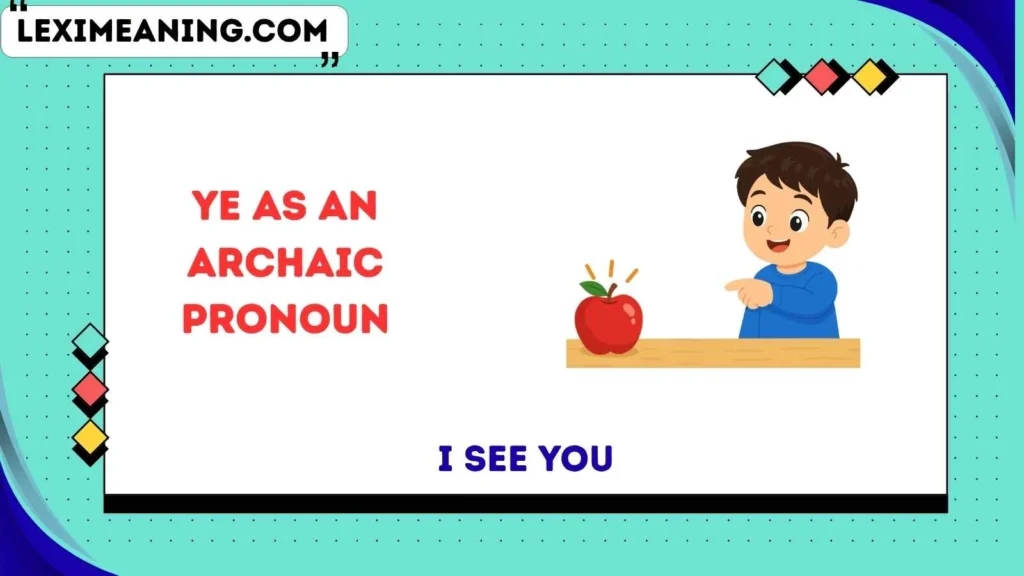
Ye as an Archaic Pronoun
Historically, English used different words depending on:
- Singular vs plural
- Subject vs object
In older English:
- Ye = plural subject (“Ye are welcome.”)
- You = plural object (“I see you.”)
Over time, you replaced ye in most everyday usage, making ye sound old-fashioned today.
Ye in Religious and Historical Texts
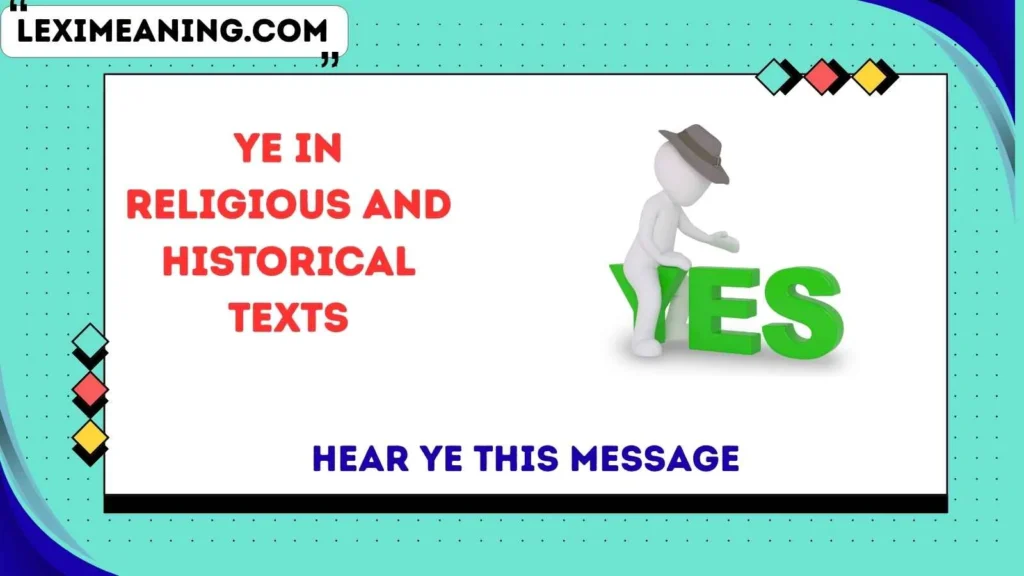
You’ll often see ye in religious texts, especially older Bible translations. In these contexts, ye is used to address groups of people.
Example:
“Hear ye this message.”
Here, ye addresses an audience collectively rather than an individual.
Ye in Classic Literature

Many works of classic literature use ye to reflect the language of their time. Writers used it naturally as part of everyday speech in earlier centuries.
Today, encountering ye in literature signals:
- Historical setting
- Formal tone
- Archaic language
This usage helps establish atmosphere and authenticity.
The “Ye Olde” Confusion
One of the most common misunderstandings of ye comes from the phrase “ye olde.” Many people pronounce this as yee old—but historically, that’s incorrect.
In this case, ye actually represents an old printing substitute for “the.” Early English printing used a character that looked like a “y” to represent the “th” sound.
So “ye olde shoppe” was originally meant to be read as:
“the old shop”
This misunderstanding has persisted for centuries.
Ye in Modern Pop Culture
In modern times, ye appears mostly for stylistic or humorous reasons. It’s often used to:
- Sound medieval or dramatic
- Create a vintage or fantasy tone
- Add humor or exaggeration
You’ll see it in fantasy games, movies, memes, and branding that aims for an old-world feel.
Ye as a Stylistic Choice
In 2026, ye is rarely used in serious everyday communication. Instead, it’s used as a stylistic choice to:
- Imitate historical speech
- Add personality to writing
- Create a playful or dramatic effect
Writers and creators use ye intentionally, not accidentally.
Pronunciation of Ye
The pronunciation of ye depends on meaning:
- When used as an old form of you, it’s pronounced “yee”
- When used in “ye olde,” it was originally meant to sound like “the”
This dual pronunciation is a major reason the word causes confusion.
Examples of Ye in Context
Here are examples that show different uses of ye:
“Ye shall know the truth.”
“Hear ye, hear ye!”
“Welcome to ye olde tavern.”
Each example reflects either historical language or stylistic imitation.
Ye vs You: How Usage Changed
Over time, English simplified. The word you gradually replaced ye in both subject and object positions.
As a result:
- Ye faded out of daily speech
- You became universal
This shift made English easier but left behind linguistic relics like ye.
Common Misunderstandings About Ye
1: Thinking Ye Always Means “The”
That’s only true in specific historical printing contexts.
2: Assuming Ye Is Still Grammatically Correct Today
It’s considered archaic in modern standard English.
3: Pronouncing All Ye as “Yee”
Pronunciation depends on context and origin.
Ye in Fantasy and Role-Playing Language
Fantasy novels, games, and role-playing communities often use ye to:
- Create immersive worlds
- Signal ancient traditions
- Add dramatic flair
This keeps the word alive in creative spaces even if it’s no longer practical.
Why Ye Still Appears in 2026
In 2026, ye remains visible because of:
- Nostalgia for older language
- Fantasy and gaming culture
- Internet humor and memes
- Vintage branding
Its continued use shows how language can survive through style rather than necessity.
Is Ye Formal or Informal?
Today, ye is neither formally correct nor casually normal. Instead, it’s:
- Archaic
- Stylistic
- Intentional
Using it in professional writing without context would feel out of place, but in creative or humorous settings, it works well.
Why Understanding Ye Meaning Matters
Knowing the ye meaning helps you:
- Interpret older texts correctly
- Avoid pronunciation mistakes
- Understand cultural references
- Appreciate language evolution
It turns confusion into clarity.
Ye and Language Evolution
The story of ye highlights how language:
- Changes over time
- Simplifies usage
- Leaves behind traces of its past
Words like ye are linguistic fossils that show where modern English came from.
Old English
- The Old English meaning of “Ye” refers to “you,” especially when speaking to more than one person.
- “Ye” means “you all” in the language of early English speakers.
- In Old English, “ye” was used as a form of address for multiple people.
- Ye = you — a traditional English word once commonly used in conversation and writing.
- The word “ye” carries the sense of “you people” or “you all.”
- “Ye” was an old form of the pronoun “you,” used to address a group.
- In historical English, “ye” could refer to several people being spoken to at once.
- Ye means “you” in an older style of English, giving the word its classic historical feel.
- The Old English usage of “ye” is connected with addressing more than one person.
- “Ye” can be understood as the plural “you” in traditional English usage.
- The word “ye” represents an earlier stage of English pronoun usage.
- Ye was used when directly speaking to a group, much like “you all” today.
- In simple terms, Old English “ye” means “you,” particularly in the plural sense.
- “Ye” is a historical second-person pronoun used to address multiple people.
- The meaning of “ye” can be summarized as “you all” or “you people.”
- Ye gave old English speakers a distinct way to address a group directly.
- In traditional English, “ye” was associated with direct address and the plural form of “you.”
- “Ye” means “you” in an old-fashioned or historical English context.
- The Old English form “ye” helps show how English pronouns have changed over time.
- Ye = you all — a short, memorable meaning that captures its traditional use.
Conclusion:
The ye meaning is rooted in history, not modern grammar. Originally used as a plural form of “you,” ye later became confused with “the” due to old printing styles.
Today, it survives mainly in literature, pop culture, fantasy, and stylistic writing.
In 2026, ye reminds us that language is alive constantly changing, reshaping, and repurposing old words in new ways. Understanding it helps you read, write, and interpret language with greater confidence and insight.
📜 Your turn:
Where have you seen the word ye recently in books, signs, or memes? Share what context made you notice it.

I’m Daniel Brookes, the creator of LexiMeaning.com, where I make words, phrases, and their meanings simple and easy to understand. I’m passionate about clear language and helping readers discover the meaning, usage, and context behind everyday words. Through LexiMeaning.com, I aim to make learning new words simple, useful, and enjoyable.