
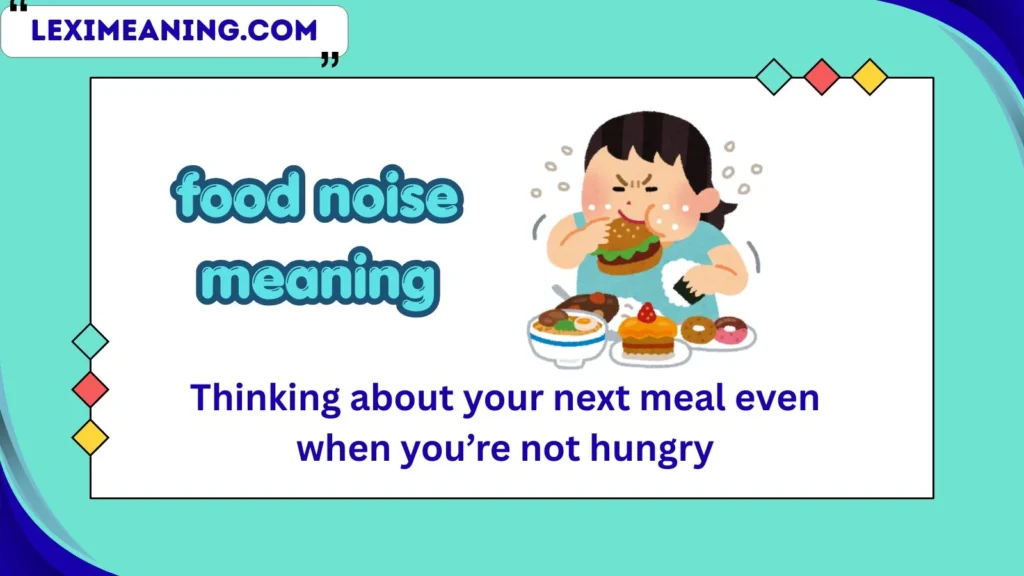
You may have seen the phrase food noise trending on social media, in wellness discussions, or in conversations about eating habits and mental health.
People often use it to describe that constant background chatter in the mind about food what to eat next, when to eat, or whether you should eat at all.
Understanding the food noise meaning matters because it helps put words to an experience many people share but struggle to explain.
While the term is informal, it captures a very real mental pattern that can influence daily choices, mood, and relationship with eating.
This article explains what food noise means, how it shows up, why people talk about it so much today, and how it’s commonly used.
What Does Food Noise Mean?
Food noise refers to persistent, intrusive thoughts about food that run in the background of your mind throughout the day. It’s not just hunger it’s the mental preoccupation with eating, cravings, planning meals, or worrying about food choices.
In simple terms, food noise can look like:
- Thinking about your next meal even when you’re not hungry
- Replaying food-related decisions repeatedly
- Feeling mentally “loud” or busy around eating
For example:
- “I wasn’t hungry, but the food noise wouldn’t stop.”
- “Once the food noise quieted, I could focus better.”
The term emphasizes mental chatter, not physical hunger alone.
Where the Term Food Noise Comes From
Food noise is not a formal medical diagnosis. It emerged from:
- Online wellness communities
- Mental health discussions
- Personal storytelling on social media
People began using it as shorthand to describe the constant mental dialogue around food that didn’t feel voluntary or helpful. The phrase stuck because it’s relatable and descriptive.
Over time, it became a widely recognized way to talk about internal food-related thoughts without clinical language.
How Food Noise Shows Up in Everyday Life
Food noise can vary from person to person, but common experiences include:
- Repeatedly thinking about snacks or meals
- Feeling distracted by cravings
- Mentally negotiating what you “should” eat
- Feeling relief or calm only after eating
It often feels like background static always there, even when you’re busy with other tasks.
Food Noise vs Normal Hunger
A key distinction is that food noise is mental, while hunger is physical.
- Hunger signals physical need for nourishment
- Food noise is ongoing mental focus on food
Someone may experience food noise even after eating a full meal, which is why people describe it as exhausting or distracting rather than simply appetite-related.
Food Noise Meaning in Wellness and Mental Health Conversations
In wellness spaces, food noise is often discussed alongside:
- Diet culture
- Stress and anxiety
- Emotional eating
- Relationship with food
People use the term to explain why eating decisions feel mentally draining or emotionally charged. It helps normalize the experience by showing it’s not just about willpower.
Why Food Noise Has Become a Popular Term
Food noise resonates because:
- Many people are exposed to constant food content
- Diet messaging is everywhere
- Busy lifestyles leave little mental space
The term offers validation. Instead of blaming themselves, people can say, “It’s food noise,” and feel understood.
Examples of Food Noise in Conversation
Casual Conversation
“I wasn’t even hungry, but the food noise was loud today.”
Online Post
“Reducing food noise changed how I think about meals.”
Personal Reflection
“Once the food noise quieted, I felt calmer.”
These examples show how the phrase is used to describe an internal experience, not a behavior.
Common Situations That Can Increase Food Noise
Food noise often becomes more noticeable during:
- High stress periods
- Restrictive eating patterns
- Lack of routine
- Emotional overload
It’s not a personal failure it’s often a response to environment, habits, or mental strain.
Food Noise and Social Media
Social media plays a big role in amplifying food noise.
Constant exposure to:
- Food videos
- Recipes
- Diet advice
- “What I eat in a day” posts
can keep food at the front of the mind, even when it’s not needed. Many people report noticing food noise more during heavy scrolling.
Is Food Noise the Same for Everyone?
No. Some people experience it occasionally, while others feel it constantly. It can change over time and may be influenced by:
- Lifestyle
- Stress levels
- Sleep quality
- Personal history with food
The term is flexible because it describes a spectrum of experiences.
Common Misunderstandings About Food Noise
Food Noise Means You’re Weak
Not true. It reflects mental focus, not lack of discipline.
Food Noise Is Just Cravings
Cravings are part of it, but food noise includes planning, worry, and repetitive thoughts.
Food Noise Is a Medical Diagnosis
It’s a descriptive phrase, not a clinical label.
Why Language Like Food Noise Is Helpful
Having a name for an experience helps people:
- Communicate more clearly
- Feel less alone
- Reduce shame around eating thoughts
The phrase turns something invisible into something understandable.
Food Noise in Modern Language
Food noise is commonly used in:
- Podcasts
- Wellness articles
- Social media captions
- Supportive conversations
Its popularity reflects a shift toward more open, compassionate language around eating and mental health.
How People Talk About Reducing Food Noise
People often describe food noise as something that can:
- Get louder during stress
- Feel quieter during calm or structure
- Change as habits or routines change
Conversations usually focus on awareness and understanding rather than control or restriction.
Why Understanding Food Noise Meaning Is Useful
Knowing the food noise meaning helps you:
- Understand wellness conversations
- Relate to others’ experiences
- Describe your own thoughts more clearly
- Reduce self-judgment
It’s a term rooted in empathy, not criticism.
Food Noise as a Reflection of Modern Life
With constant information, food choices, and messaging, it’s not surprising that many people experience food noise. The term reflects a broader conversation about mental load and emotional wellbeing in everyday life.
Conclusion:
The food noise meaning refers to persistent mental chatter about food that goes beyond physical hunger. It’s a relatable way to describe an experience shaped by stress, culture, and constant stimulation not a personal flaw.
Food noise has become a useful term for understanding how food thoughts affect daily life. By naming it, people gain clarity, compassion, and a shared language for talking about something many quietly experience.
💬 Have you heard the term food noise before, or experienced it yourself?
Share your thoughts or reflections in the comments.

I’m Daniel Brookes, the creator of LexiMeaning.com, where I make words, phrases, and their meanings simple and easy to understand. I’m passionate about clear language and helping readers discover the meaning, usage, and context behind everyday words. Through LexiMeaning.com, I aim to make learning new words simple, useful, and enjoyable.