
The word tailgating is one of those terms that can mean very different things depending on the situation.
You might hear it during a driving lesson, see it mentioned in traffic laws, or hear friends excitedly talk about tailgating before a big game. Understanding the tailgating meaning helps you avoid confusion and in some cases, even avoid danger or fines.
Tailgating is a common topic in both road safety discussions and sports culture. This article explains what tailgating means in each context, how it’s used in real life, common misunderstandings, and why context matters so much.
What Does Tailgating Mean?
The tailgating meaning depends on context, but it generally refers to following very closely or gathering closely behind something.
In simple terms:
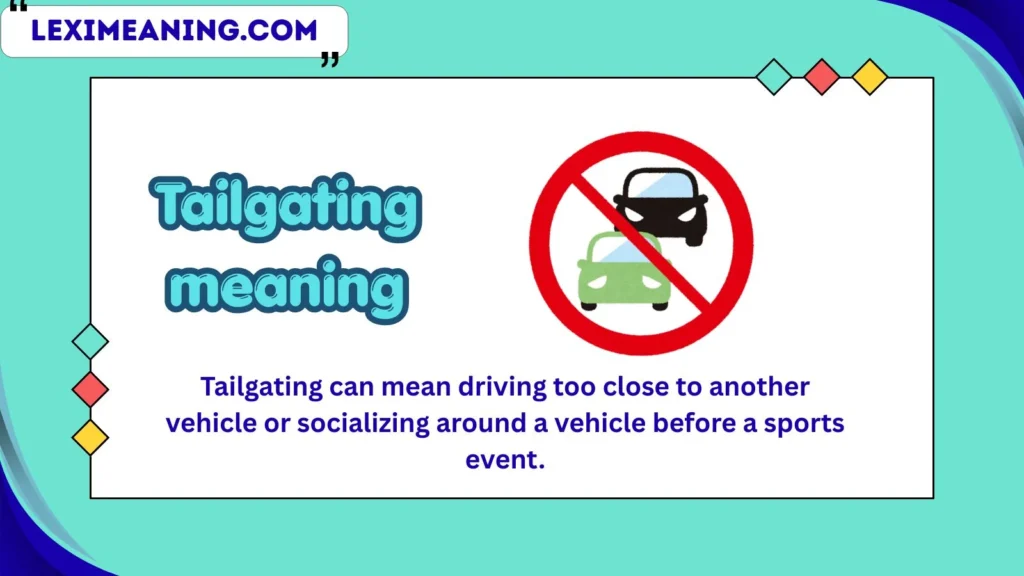
Tailgating can mean driving too close to another vehicle or socializing around a vehicle before a sports event.
The two most common meanings are:
- A dangerous driving behavior
- A social tradition connected to sports events
Both uses are widely accepted, but they carry very different implications.
Tailgating in Driving and Road Safety
In traffic and driving contexts, tailgating means driving too closely behind another vehicle, leaving insufficient space to stop safely.
This behavior is considered dangerous because:
- It reduces reaction time
- It increases the risk of rear-end collisions
- It creates stress for both drivers
For example:
“The driver was fined for tailgating on the highway.”
Here, tailgating refers to unsafe following distance.
Why Tailgating Is Dangerous While Driving
When a vehicle tailgates:
- Sudden braking can cause accidents
- Visibility is reduced
- Aggressive driving behavior may escalate
Road safety experts emphasize maintaining a safe following distance to prevent crashes. In many regions, tailgating can result in tickets, fines, or points on a license.
Tailgating in Sports and Social Culture
In a completely different context, tailgating refers to a social gathering held around vehicles before sporting events, especially football games.
This type of tailgating usually involves:
- Food and grilling
- Music and games
- Friends and fans gathering
- Parking lots near stadiums
For example:
“We’re tailgating before the game starts.”
Here, tailgating is fun, social, and celebratory.
Why It’s Called Tailgating in Sports
The term comes from the tailgate of a truck or car, which people often lower to:
- Sit on
- Prepare food
- Set up drinks or supplies
Over time, the word tailgating became associated with the entire pre-game social experience, not just the vehicle itself.
Real-Life Examples of Tailgating in Context
Driving Example
“Stop tailgating it’s unsafe.”
This clearly refers to following too closely on the road.
Sports Example
“Tailgating starts at 9 a.m. in the stadium parking lot.”
This refers to a planned social event.
Mixed Awareness Example
“Tailgating can be fun but not on the highway.”
Here, the sentence plays on both meanings.
Tailgating Laws and Rules
In many places, tailgating while driving is considered:
- A traffic violation
- A form of aggressive driving
Penalties may include:
- Fines
- License points
- Increased insurance costs
The exact rules vary by region, but the safety principle is universal.
Tailgating vs Safe Following Distance
Tailgating is the opposite of defensive driving.
Safe driving encourages:
- Leaving enough space to stop
- Adjusting distance based on speed and weather
- Staying calm and patient
Tailgating often signals frustration or impatience, which increases risk.
Tailgating Etiquette at Sports Events
In social settings, tailgating has its own unwritten rules:
- Clean up after yourself
- Respect nearby groups
- Follow local regulations
- Be mindful of noise levels
Good tailgating culture focuses on community, not chaos.
Common Misunderstandings About Tailgating
Mistake #1: Thinking Tailgating Always Means Driving
Tailgating can also refer to social events, especially in sports culture.
Mistake #2: Assuming Sports Tailgating Is Disorderly
Many tailgating events are family-friendly and well-organized.
Mistake #3: Downplaying Driving Tailgating
On the road, tailgating is a serious safety issue, not a minor habit.
Why Context Matters With the Word Tailgating
Without context, the word tailgating can be confusing.
Compare:
- “He was tailgating me all the way home.”
- “We’re tailgating before kickoff.”
Same word completely different meaning.
Understanding context prevents misinterpretation.
Tailgating in Media and News
News outlets often use tailgating to describe:
- Traffic accidents
- Road safety campaigns
- Major sports events
The surrounding language usually makes the intended meaning clear.
Why Tailgating Is Still a Relevant Term
- Road safety remains a major concern
- Sports culture continues to thrive
- Shared language evolves across contexts
Tailgating remains relevant because it captures both a risk behavior and a cultural tradition in a single word.
Using the Word Tailgating Correctly
To use tailgating clearly:
- Add context when writing
- Clarify whether it’s about driving or sports
- Avoid assuming the reader knows your intent
This improves communication and avoids confusion.
Conclusion:
The tailgating meaning depends entirely on context. On the road, it describes a dangerous driving behavior that increases accident risk. In sports culture, it refers to a lively social tradition centered around food, friends, and fandom.
Knowing both meanings helps you navigate conversations more accurately whether you’re discussing road safety or planning a game-day meetup. One word, two very different worlds.
🚗🏈 Your turn:
When you hear “tailgating,” do you think of traffic or football first? Share your take!

I’m Daniel Brookes, the creator of LexiMeaning.com, where I make words, phrases, and their meanings simple and easy to understand. I’m passionate about clear language and helping readers discover the meaning, usage, and context behind everyday words. Through LexiMeaning.com, I aim to make learning new words simple, useful, and enjoyable.