
You may have come across the word tendril in biology classes, poetry, nature documentaries, or descriptive writing. It’s one of those words that sounds delicate but carries rich meaning.
Understanding the tendril meaning helps you appreciate not only its scientific definition but also how it’s used metaphorically to describe growth, connection, and subtle influence.
Tendril is still widely used in science, literature, and everyday language. This article explains what a tendril is, how the term is used across different contexts, and why it remains a powerful descriptive word without overcomplicating things.
What Is the Meaning of Tendril?
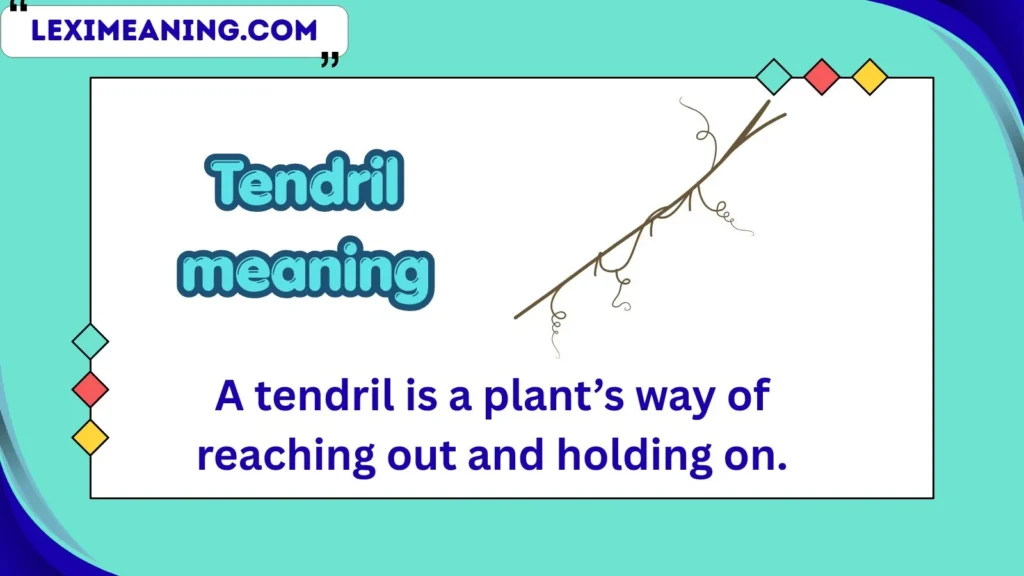
The tendril meaning refers to a thin, curling part of a plant that grows and coils around objects to provide support. Tendrils help plants climb, spread, and stabilize themselves as they grow.
In simple terms:
A tendril is a plant’s way of reaching out and holding on.
Tendrils are most commonly found in climbing plants, where they act like natural hooks or spirals.
Where the Word Tendril Comes From
The word tendril comes from older language roots related to stretching or reaching. This origin fits perfectly with how tendrils behave in nature—they extend outward, searching for something to grasp.
Because of this imagery, the word naturally expanded beyond biology into creative and descriptive language.
Tendril in Botany and Plant Life
In plant biology, tendrils play a crucial role in survival.
They help plants:
- Climb toward sunlight
- Anchor to nearby structures
- Grow without thick stems
Common plants that use tendrils include:
- Grapevines
- Peas
- Cucumbers
- Passionflowers
Without tendrils, many of these plants would struggle to spread efficiently.
How Tendrils Work in Nature
Tendrils are highly sensitive to touch. When they come into contact with an object, they begin to curl around it automatically.
This allows plants to:
- Secure themselves
- Resist wind damage
- Save energy by growing upward instead of outward
This natural efficiency is one reason tendrils are often admired in science and design.
Tendril Meaning in Everyday Language
Outside of botany, tendril is often used metaphorically to describe anything thin, curling, or slowly spreading.
Examples include:
- A tendril of smoke
- A tendril of hair
- A tendril of fog creeping across the ground
In these cases, tendril suggests something that moves gently, subtly, and organically.
Tendril in Writing and Poetry
Writers often use the word tendril to create vivid imagery.
It’s commonly associated with:
- Graceful movement
- Quiet growth
- Subtle connection
For example:
“A tendril of light slipped through the curtains.”
Here, tendril adds softness and visual detail that simpler words might lack.
Symbolic Meaning of Tendrils
Symbolically, tendrils often represent:
- Growth and expansion
- Connection and attachment
- Persistence
- Gentle strength
Because tendrils grow slowly and adapt to their surroundings, they’re often used as metaphors for emotional bonds, ideas spreading, or influence extending over time.
Real-Life Examples of Tendril Usage
Nature Description
“Green tendrils wrapped around the fence.”
Creative Writing
“A tendril of memory surfaced unexpectedly.”
Visual Observation
“Thin tendrils of steam rose from the cup.”
Each example reflects the same core idea: something narrow, curling, and reaching.
Common Misunderstandings About Tendrils
Mistake #1: Thinking Tendrils Are Roots
Tendrils are not roots—they don’t absorb nutrients from the soil.
Mistake #2: Assuming Tendrils Are Weak
Despite their delicate appearance, tendrils can be surprisingly strong.
Mistake #3: Believing the Word Is Only Scientific
Tendril is widely used in literature, art, and everyday descriptions.
Tendril vs Similar Words
Understanding similar terms helps refine meaning.
- Vine – the entire climbing plant
- Shoot – new plant growth
- Branch – thicker and structural
- Curl – general shape without growth meaning
Tendril specifically implies purposeful reaching and attachment.
Why Tendril Is Such a Powerful Descriptive Word
The appeal of the word tendril lies in its balance:
- Delicate but strong
- Slow but persistent
- Small but purposeful
That’s why it’s favored in both scientific explanations and poetic descriptions.
Tendril in Visual Arts and Design
In art and design, tendrils are often used to suggest:
- Organic movement
- Natural flow
- Growth over time
You’ll see tendril-like shapes in:
- Floral patterns
- Decorative borders
- Nature-inspired illustrations
These designs draw directly from how tendrils behave in nature.
Modern Usage of Tendril in 2025
Tendril continues to appear in:
- Environmental writing
- Creative storytelling
- Descriptions of abstract concepts
It remains popular because it conveys motion and connection without force or aggression.
How to Use Tendril Correctly in a Sentence
To use tendril naturally:
- Apply it to thin, curling, or spreading forms
- Use it for gradual movement or growth
- Avoid using it for rigid or fast objects
Correct example:
“A tendril of ivy climbed the wall.”
Incorrect example:
“A tendril of concrete fell.” (Doesn’t fit the imagery)
Why the Tendril Meaning Still Matters
The tendril meaning matters because it captures a natural process that mirrors how many things grow—slowly, quietly, and with intention. Whether describing plants, ideas, emotions, or visuals, the word helps express subtle expansion and connection.
In a world that often focuses on speed and force, tendril reminds us that gentle persistence can be just as powerful.
Conclusion:
The tendril meaning goes beyond botany. While it describes a thin, curling plant structure, it also serves as a metaphor for growth, connection, and quiet strength. From nature to poetry to everyday language, tendril remains a versatile and expressive word.
Its continued use reflects our appreciation for organic processes and subtle movement proof that even the smallest things can have a meaningful impact.
🌿 Your turn:
Where have you noticed tendrils in nature, writing, or art? Share your thoughts and examples.

I’m Daniel Brookes, the creator of LexiMeaning.com, where I make words, phrases, and their meanings simple and easy to understand. I’m passionate about clear language and helping readers discover the meaning, usage, and context behind everyday words. Through LexiMeaning.com, I aim to make learning new words simple, useful, and enjoyable.