
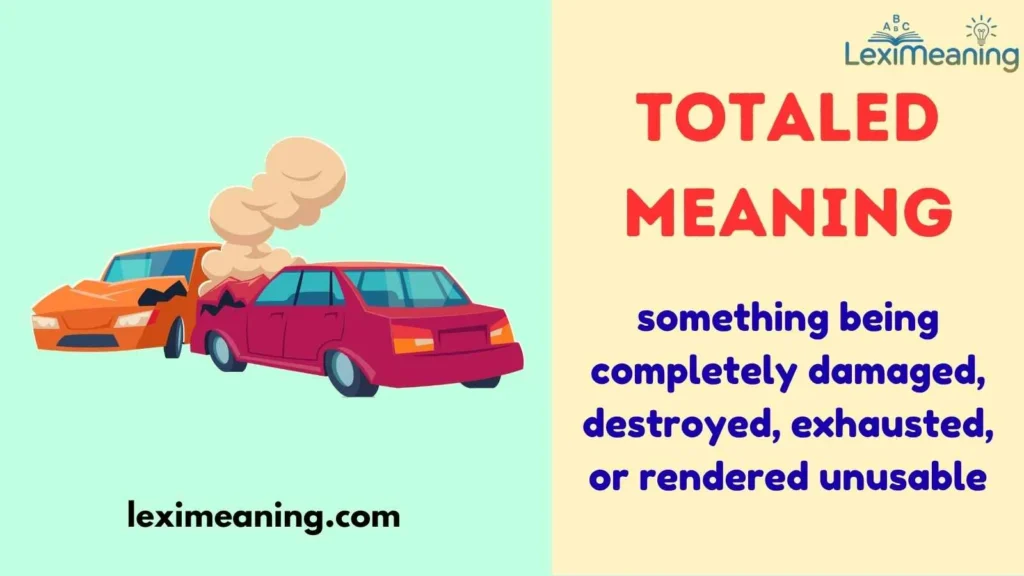
The word totaled is commonly used in news reports, insurance conversations, casual speech, and even emotional storytelling.
You might hear it after a car accident, a long day at work, or a shocking event. But what does it actually mean and how does the meaning change depending on context? Understanding the totaled meaning helps you interpret situations accurately and use the word naturally in everyday communication.
Clear language matters more than ever, especially when words like totaled can describe both physical damage and emotional exhaustion. This article explains what totaled means, how it’s used in different situations, and why it remains a powerful and flexible word.
What Does Totaled Mean?
The totaled meaning refers to something being completely damaged, destroyed, exhausted, or rendered unusable. It suggests that recovery or repair is either impossible or not worth the effort.
In simple terms:
If something is totaled, it’s damaged or worn out beyond practical repair.
The word emphasizes completeness nothing is left intact or functional.
Where the Word Totaled Comes From
Totaled comes from the word total, meaning whole or complete. When something is totaled, the damage or impact is complete rather than partial.
This origin explains why the word often feels final and absolute.
Totaled in Everyday Language
In everyday language, totaled is often used casually to describe exhaustion or overwhelming situations.
Examples include:
- “I’m totally exhausted—I’m totaled.”
- “After the event, everyone was totaled.”
In these cases, totaled doesn’t mean physical damage but extreme fatigue.
Totaled in Accident and Damage Contexts
One of the most common uses of totaled appears in accident scenarios, especially involving vehicles.
For example:
“The car was totaled in the collision.”
This means the damage was so severe that repairing it would cost more than the item is worth.
Totaled in Insurance and Financial Situations
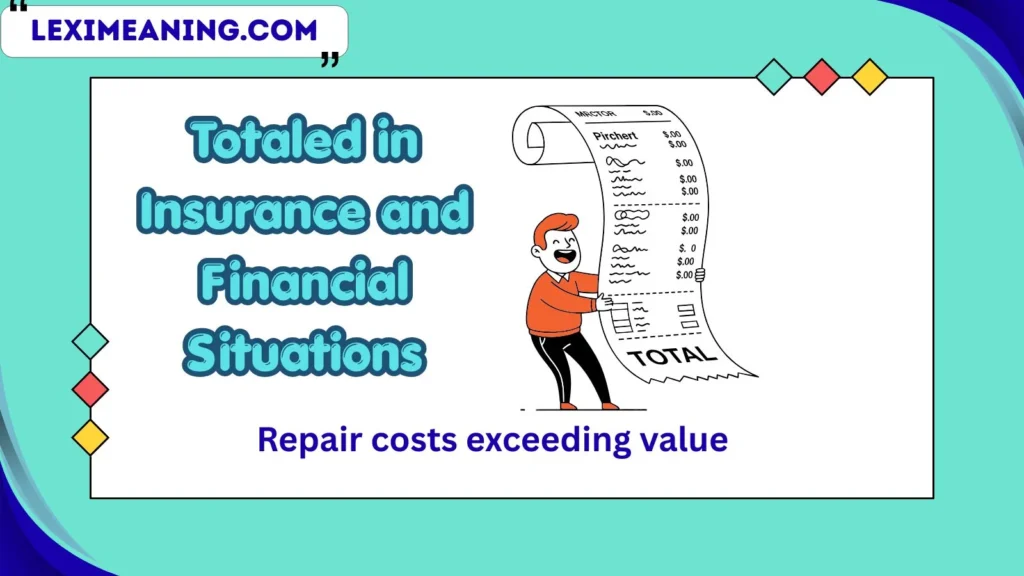
In insurance contexts, totaled refers to items that are not financially viable to repair. Insurance companies often use the term when evaluating damage.
It’s frequently associated with:
- Vehicle damage
- Property loss
- Repair costs exceeding value
This usage carries legal and financial implications.
Totaled as Emotional or Physical Exhaustion
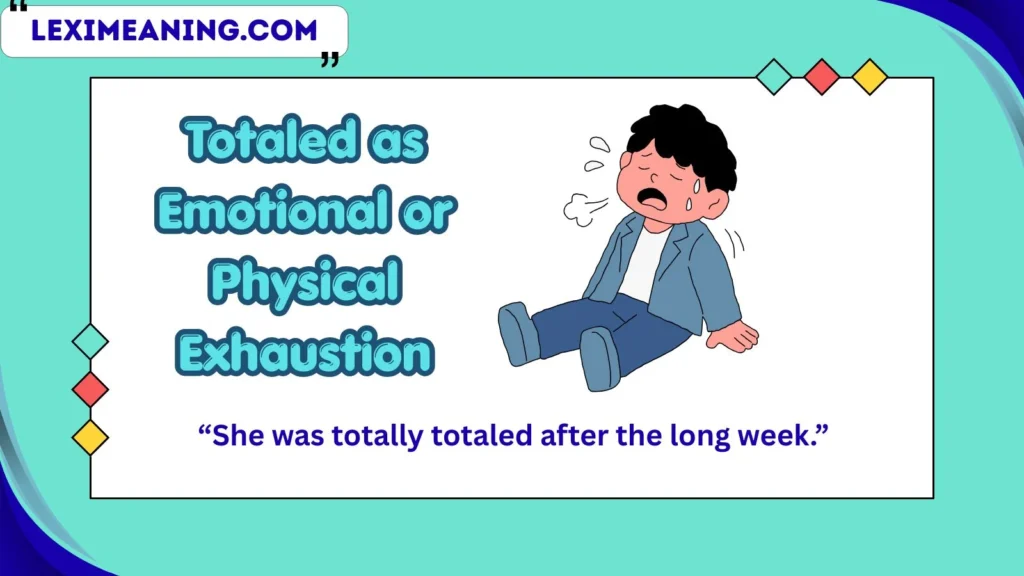
Totaled is also commonly used to describe people who are mentally or physically drained.
For example:
“She was totally totaled after the long week.”
Here, the word expresses intensity rather than literal damage.
Totaled vs Broken: Understanding the Difference
While both words describe damage, they are not the same.
- Broken suggests something can often be fixed
- Totaled suggests it cannot
Totaled implies finality, while broken leaves room for repair.
Examples of Totaled in Context
Here are realistic examples showing how totaled is used:
“The storm totaled several homes in the area.”
“His phone was totaled after falling into water.”
“I’m mentally totaled after that meeting.”
Each example highlights a different type of total damage or exhaustion.
Tone and Connotation of Totaled
Totaled has a strong and dramatic tone. It conveys:
- Severity
- Finality
- Complete impact
Because of this, it’s often used to emphasize seriousness.
Totaled in Media and News Reporting
In media and news reports, totaled is used to describe:
- Accidents
- Natural disasters
- Major losses
It helps audiences quickly understand the extent of damage without technical detail.
Common Misunderstandings About Totaled
Mistake 1: Thinking Totaled Always Means Physical Damage
It can also describe emotional or mental exhaustion.
Mistake 2: Using Totaled for Minor Problems
It’s best reserved for severe or complete situations.
Mistake 3: Assuming It’s Informal Only
Totaled is used in both casual speech and formal reports.
Totaled in Informal vs Formal Use
In informal use, totaled often expresses feeling overwhelmed.
In formal use, it describes irreversible loss or damage.
Understanding the context helps interpret tone correctly.
Why Totaled Is Still Common
totaled remains widely used because:
- It’s concise
- It’s emotionally expressive
- It communicates severity quickly
Whether describing damage or exhaustion, the word remains effective.
How to Use Totaled Correctly
To use totaled accurately:
- Apply it to complete damage or extreme exhaustion
- Avoid using it for small inconveniences
- Let context clarify whether it’s literal or figurative
Correct usage keeps your message clear and impactful.
Totaled in Personal Storytelling
People often use totaled in storytelling to emphasize hardship or intensity.
Example:
“By the end of the journey, we were all totally totaled.”
This adds emotional weight to the experience.
Why Understanding Totaled Meaning Matters
Knowing the totaled meaning helps you:
- Interpret news and reports accurately
- Communicate intensity clearly
- Avoid exaggeration or confusion
It’s a powerful word that works best when used precisely.
Conclusion:
The totaled meaning refers to something being completely damaged, destroyed, or exhausted beyond practical recovery. Whether used to describe a wrecked car, storm damage, or extreme fatigue, the word conveys finality and seriousness.
Totaled remains a versatile and expressive term that bridges formal reporting and everyday conversation. Understanding how and when to use it ensures your communication is both accurate and impactful.
💥 Your turn:
Have you heard totaled used more often for accidents or exhaustion? Share how you usually encounter the word.
