
If you’ve been browsing property listings or working with a real estate agent, you’ve likely seen a home marked as “contingent.” For many buyers and sellers, this label creates confusion, hesitation, or even anxiety.
Understanding the contingent meaning in real estate is essential because it directly affects whether a property is still available, how negotiations work, and what risks or opportunities may exist.
In 2025, real estate markets are fast-moving and highly competitive. Knowing exactly what contingent means can help you make smarter decisions, avoid costly misunderstandings, and time your offers more effectively.
This article explains the concept in clear, practical language, with real-world context for both buyers and sellers.
What Does Contingent Mean in Real Estate?
The contingent meaning in real estate refers to a property that has an accepted offer, but the sale is dependent on one or more conditions being met before it can officially close.
In simple terms:
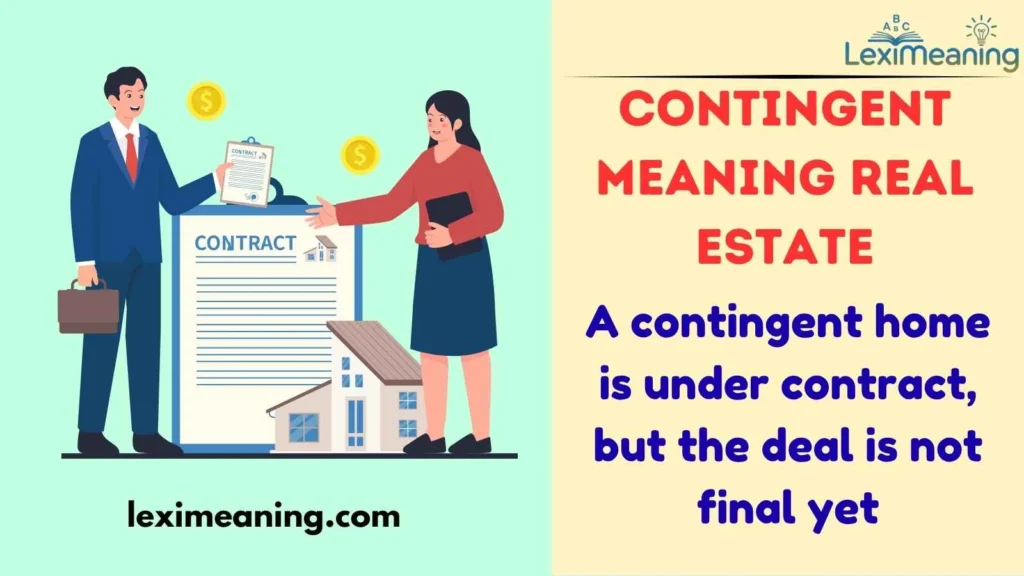
A contingent home is under contract, but the deal is not final yet.
Until the contingencies are satisfied or removed, the transaction can still fall through.
Why Contingent Status Matters
A contingent status signals that:
- The seller has agreed to an offer
- Certain requirements must be completed
- The sale is not guaranteed
This status sits between active and pending and is one of the most important stages in a real estate transaction.
Common Types of Real Estate Contingencies
Most real estate contracts include contingencies to protect both buyers and sellers. These conditions outline what must happen for the deal to proceed.
Home Inspection Contingency
The buyer’s purchase depends on the results of a professional inspection. If major issues are discovered, the buyer may renegotiate or walk away.
Financing Contingency
The buyer must secure a mortgage or loan approval. If financing fails, the contract can be canceled without penalty.
Appraisal Contingency
The home must appraise at or above the agreed purchase price. If it doesn’t, the buyer may renegotiate or exit the deal.
Sale of Another Property Contingency
The buyer must sell their current home before completing the purchase.
These contingencies explain why a contingent listing is not yet a guaranteed sale.
Is a Contingent Home Still Available?
This is one of the most common questions buyers ask.
The answer is: sometimes.
A contingent property:
- Is technically under contract
- May still accept backup offers
- Can return to active status if the deal falls through
Availability depends on the specific terms and how flexible the seller is.
Contingent vs Pending in Real Estate
Understanding the difference helps clarify where a deal stands.
- Contingent means conditions are still in place
- Pending means contingencies have been met and the deal is moving toward closing
Once a property becomes pending, the likelihood of it returning to the market is much lower.
What It Means for Buyers
For buyers, seeing a home marked as contingent can feel discouraging—but it doesn’t always mean the opportunity is gone.
Buyers may:
- Submit a backup offer
- Monitor the listing closely
- Be ready to act quickly if the deal collapses
In competitive markets, backup offers on contingent homes can sometimes succeed.
What It Means for Sellers
For sellers, accepting a contingent offer involves some uncertainty.
While the seller has an agreement in place, they must:
- Wait for contingencies to be resolved
- Continue maintaining the property
- Possibly consider backup offers
Sellers often prefer offers with fewer contingencies because they reduce risk.
Why Deals Fall Through During Contingency
Not all contingent contracts make it to closing. Common reasons deals fail include:
- Failed inspections
- Low appraisals
- Financing issues
- Buyer’s home not selling
This is why contingent does not mean “sold”—it means “in progress.”
Contingent Status in Online Listings
On real estate websites, contingent status helps buyers understand where a property stands in the transaction timeline.
It signals:
- Progress has been made
- The deal is conditional
- There is still uncertainty
For serious buyers, this information helps prioritize which homes to pursue.
How Long Does a Property Stay Contingent?
The length of time varies depending on:
- Type of contingencies
- Local market conditions
- Speed of inspections and approvals
Some properties remain contingent for a few days, while others stay in that status for weeks.
Can You Make an Offer on a Contingent Home?
In many cases, yes.
A buyer can submit a backup offer, which:
- Takes effect if the first deal fails
- Shows serious interest
- May motivate the original buyer to act faster
Backup offers are common in hot real estate markets.
Risks of Buying a Contingent Property
While there can be opportunity, there are also risks.
Buyers may:
- Spend time waiting without certainty
- Miss out on other homes
- Face emotional disappointment
It’s important to balance hope with practicality when pursuing contingent listings.
Benefits of Understanding Contingent Meaning in Real Estate
Knowing the contingent meaning in real estate helps you:
- Interpret listings accurately
- Communicate better with agents
- Manage expectations
- Avoid costly assumptions
This knowledge is especially valuable for first-time buyers.
Contingent Meaning in Real Estate Contracts
In contracts, contingencies act as legal safeguards.
They:
- Protect buyers from unforeseen issues
- Protect sellers from non-serious buyers
- Define timelines and responsibilities
Once contingencies are removed, the deal becomes much more secure.
Why Contingent Homes Still Matter in 2025
In 2025, real estate markets continue to fluctuate based on:
- Interest rates
- Inventory shortages
- Buyer demand
Because of this, contingent homes remain a key opportunity for buyers willing to stay informed and patient.
Common Misunderstandings About Contingent Listings
Mistake1: Thinking Contingent Means Sold
It does not. The deal can still fail.
Mistake2: Ignoring Contingent Homes Completely
Some of these homes return to the market.
Mistake3: Assuming All Contingencies Are the Same
Each contract has unique conditions and timelines.
How Agents Use Contingent Status Strategically
Real estate agents use contingent listings to:
- Signal serious buyer interest
- Manage expectations
- Encourage backup offers
Understanding this strategy helps buyers and sellers navigate negotiations more confidently.
Contingent Meaning Beyond Real Estate
While this article focuses on real estate, the word contingent generally means dependent on certain conditions. This core idea remains consistent across industries.
In real estate, those conditions simply happen to be contractual and financial.
Why Clarity Matters in Real Estate Language
Real estate terminology directly affects decisions involving large financial commitments. Misunderstanding a term like contingent can lead to:
- Missed opportunities
- Poor timing
- Emotional stress
Clear understanding leads to better outcomes.
Conclusion:
The contingent meaning in real estate refers to a property with an accepted offer that depends on specific conditions being met before closing. It represents progress but not certainty. For buyers, contingent homes may still offer opportunity. For sellers, they involve both promise and risk.
In 2025, understanding this term is essential for navigating listings, contracts, and negotiations with confidence. When you know what contingent really means, you’re better prepared to act strategically rather than emotionally.
🏡 Your turn:
Have you ever made an offer on a contingent home, or sold one? Share your experience and what you learned.
