The word giggle instantly brings to mind light laughter, playful moments, and shared joy. You’ll hear it in casual conversation, see it described in books, and even experience it in awkward or nervous situations.
But what does it really mean and why do people giggle instead of laugh? Understanding the giggle meaning helps you interpret emotions, social cues, and tone more accurately in everyday life.
In 2026, communication goes far beyond words. Emotional expression, body language, and even reactions in online chats matter more than ever. This article explains what giggle means, how it’s used, and why it plays such a meaningful role in human interaction.
What Does Giggle Mean?
The giggle meaning refers to a light, often high-pitched laugh that is usually spontaneous and brief. A giggle is typically softer and less controlled than full laughter and is often linked to amusement, shyness, or nervous energy.
In simple terms:
To giggle is to laugh lightly, often without meaning to.
Giggles are commonly associated with:
- Playfulness
- Embarrassment
- Excitement
- Shared humor
Where the Word Giggle Comes From
The word giggle comes from early English terms that mimicked the sound of light laughter. Like many expressive words, it evolved from how the sound itself feels when spoken.
Because of this, giggle has always been connected to informal, emotional, and human reactions rather than deliberate speech.
How Giggle Is Used in Everyday Language
In daily speech, giggle can be used as both:
- A verb (“She started to giggle.”)
- A noun (“That giggle gave her away.”)
It often appears in descriptions of:
- Casual conversation
- Friendly interactions
- Lighthearted moments
Example:
“They couldn’t stop giggling during the movie.”
Giggle vs Laugh: What’s the Difference?
While giggling and laughing are related, they’re not the same.
A giggle is usually:
- Softer
- Shorter
- Less controlled
A laugh is often:
- Louder
- More intentional
- Longer-lasting
Giggles often happen when someone tries not to laugh—and fails.
Giggle as an Emotional Response
A giggle can communicate many emotions without words.
It may signal:
- Amusement
- Nervous laughter
- Attraction
- Discomfort
- Shared understanding
In many social situations, a giggle fills the space when words feel unnecessary or awkward.
Giggle in Social Situations
In social situations, giggling often acts as a social signal.
For example:
- Giggling during introductions can show shyness
- Giggling among friends can strengthen bonds
- Giggling during awkward moments can relieve tension
Because it’s involuntary, a giggle often reveals genuine emotion.
Giggle in Childhood and Development
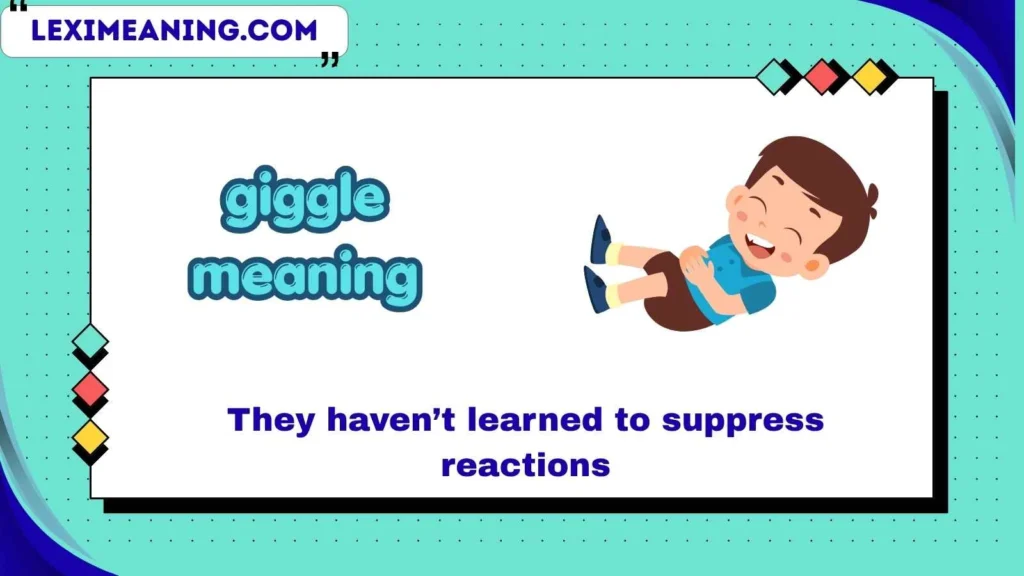
Giggles are strongly associated with childhood behavior. Children giggle easily because:
- They experience emotions openly
- They react spontaneously
- They haven’t learned to suppress reactions
This openness is why giggling is often seen as innocent and joyful.
Giggle in Online Communication
In 2026, giggling isn’t limited to face-to-face interaction. People reference giggles in:
- Online chats
- Text messages
- Social media
Examples include:
- “I giggled at that 😂”
- “That made me giggle ngl”
Even without sound, the idea of a giggle conveys humor and playfulness.
Giggle and Body Language
Giggles are often accompanied by recognizable body language, such as:
- Covering the mouth
- Looking away
- Shrugging shoulders
These physical cues help others interpret the emotion behind the giggle, especially in casual conversation.
Giggle in Professional and Public Settings
In workplace settings, giggling is usually more restrained but still present.
It may appear:
- During informal moments
- In relaxed team interactions
- When easing tension
However, excessive giggling can sometimes be perceived as nervousness or lack of seriousness, depending on context.
Giggle as Nervous Laughter
One common type of giggle is nervous laughter. This happens when someone giggles due to:
- Anxiety
- Embarrassment
- Uncertainty
In these moments, the giggle acts as a coping mechanism rather than a reaction to humor.
Giggle in Literature and Media
Writers often use giggling to:
- Show innocence
- Indicate attraction
- Highlight awkwardness
- Create lighthearted scenes
Because giggles are emotionally expressive, they add depth to characters without long descriptions.
Common Misunderstandings About Giggle
Mistake #1: Thinking Giggles Are Always Happy
Giggles can come from nerves or discomfort, not just joy.
Mistake #2: Assuming Giggling Is Immature
While often linked to youth, adults giggle too—especially in relaxed or social moments.
Mistake #3: Ignoring Context
A giggle means different things depending on tone, setting, and relationship.
Giggle vs Similar Expressions
- Chuckle – quiet, controlled laugh
- Snicker – suppressed, sometimes mocking laugh
- Laugh – general expression of humor
Giggle tends to be lighter and more emotionally revealing than these alternatives.
Why Giggle Is Still Relevant in 2026
In 2026, emotional expression remains central to communication—especially in digital spaces. Giggles, whether real or implied, help convey tone in:
- Social media
- Text messages
- Informal conversations
They soften interactions and make communication feel more human.
How to Use Giggle Naturally
To use the word giggle effectively:
- Use it in informal or descriptive contexts
- Pair it with emotional cues
- Avoid using it in overly formal writing
Example:
“She let out a small giggle before answering.”
Is Giggle Gender-Specific?
No. While stereotypes sometimes associate giggling with femininity, giggles are a universal human response experienced by all genders.
Recognizing this helps avoid outdated assumptions.
Why Understanding Giggle Matters
Knowing the giggle meaning helps you:
- Read social cues
- Understand emotional reactions
- Communicate tone accurately
It’s a small word with significant emotional depth.
Conclusion:
The giggle meaning goes far beyond simple laughter. It represents light laughter, emotional openness, and spontaneous reaction whether from joy, nerves, or shared humor.
From childhood behavior to online chats and casual conversation, giggles play an important role in how people connect.
In 2026, as communication blends physical and digital spaces, understanding subtle expressions like giggling helps make interactions warmer and more authentic. Sometimes, a giggle says what words can’t.
😊 Your turn:
What usually makes you giggle jokes, awkward moments, or shared memories? Share your thoughts.

I’m Daniel Brookes, the creator of LexiMeaning.com, where I make words, phrases, and their meanings simple and easy to understand. I’m passionate about clear language and helping readers discover the meaning, usage, and context behind everyday words. Through LexiMeaning.com, I aim to make learning new words simple, useful, and enjoyable.