
The word porous shows up in science classes, skincare advice, home improvement guides, and even metaphorical conversations about boundaries or systems. Yet many people only have a vague idea of what it actually means.
Understanding the porous meaning helps you interpret information more accurately whether you’re choosing materials, learning about health, or making sense of abstract ideas.
Clarity around everyday vocabulary is essential, especially as information crosses fields and industries. This article explains what porous means in simple language, how it’s used in real life, common mistakes, and why the concept remains relevant today.
What Does Porous Mean?
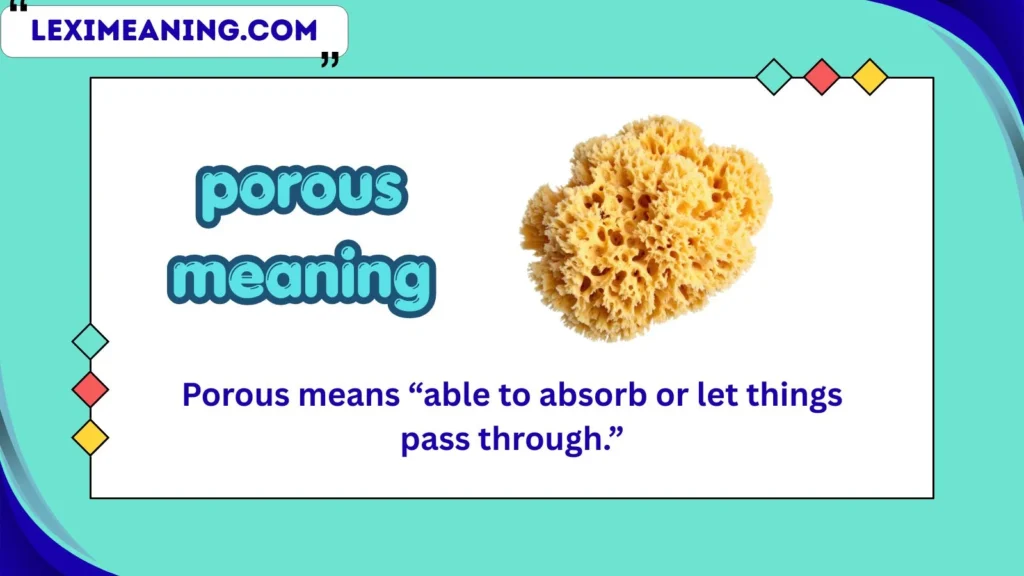
The porous meaning refers to something that has tiny holes or spaces that allow air, liquid, or other substances to pass through.
In simple terms:
Porous means “able to absorb or let things pass through.”
A porous object is not solid all the way through it contains small openings that affect how it behaves.
Where the Word Porous Comes From
The word porous comes from a root meaning passage or opening. This origin explains why the term is strongly associated with absorption, permeability, and movement through material.
Over time, porous expanded beyond physical objects to describe ideas, systems, and boundaries that are easily influenced or penetrated.
How Porous Is Used in Everyday Language
Porous is used in both literal and figurative ways.
You’ll often see it used to describe:
- Materials
- Surfaces
- Skin and hair
- Boundaries or systems
The context usually makes it clear whether the usage is physical or metaphorical.
Porous Materials: Real-World Examples
In the physical world, porous materials are common.
Examples include:
- Sponges
- Wood
- Concrete
- Fabric
- Soil
These materials can absorb water or allow air to pass through because of their internal structure.
Example sentence:
“The sponge is porous, so it soaks up liquid quickly.”
Porous vs Non-Porous: What’s the Difference?
Understanding the contrast helps clarify the porous meaning.
- Porous materials absorb or allow passage
- Non-porous materials resist absorption
For example:
- Porous: wood, stone, cloth
- Non-porous: glass, metal, plastic
This distinction matters in construction, cleaning, and hygiene.
Porous in Science and Education
In science, porous describes materials that allow substances to move through them.
It’s commonly discussed in:
- Chemistry
- Biology
- Earth science
For example:
“Porous rock allows water to filter through underground layers.”
This concept helps explain groundwater movement and filtration.
Porous in Skincare and Beauty
In skincare, porous often describes skin or hair that absorbs moisture easily.
You might hear:
- “Porous hair absorbs products quickly.”
- “Oily skin can still be porous.”
Porosity affects how products behave and how long moisture is retained.
Porous in Home and Construction Contexts
In home improvement, porous surfaces require special care.
Examples include:
- Sealing porous countertops
- Treating porous stone floors
- Protecting porous walls from moisture
Unsealed porous materials can stain or degrade over time.
Porous in a Metaphorical Sense
Porous isn’t limited to physical objects.
Metaphorically, porous can describe:
- Weak boundaries
- Open systems
- Easily influenced environments
Example:
“The system was too porous to prevent misuse.”
Here, porous means vulnerable or insufficiently protected.
Porous Boundaries and Social Use
In social or organizational contexts, porous boundaries suggest:
- Easy movement between groups
- Limited control or restriction
- High interaction or influence
This usage appears often in discussions of policy, security, or culture.
Common Misunderstandings About Porous
Mistake #1: Thinking Porous Means Weak
Porous doesn’t necessarily mean fragile—it means absorbent or permeable.
Mistake #2: Confusing Porous With Broken
Porous materials can be intact and functional.
Mistake #3: Using Porous When “Open” Fits Better
Porous implies absorption or passage, not just accessibility.
How to Use Porous Correctly in a Sentence
To use porous accurately:
- Apply it to materials or systems with openings
- Clarify what passes through
- Avoid using it for solid or sealed objects
Correct examples:
- “The porous fabric allows airflow.”
- “Porous soil helps water reach plant roots.”
Incorrect example:
- “The glass is porous.” (Glass is non-porous)
Porous vs Permeable
These words are related but not identical.
- Porous focuses on the presence of holes
- Permeable focuses on what can pass through
Something can be porous but not very permeable, depending on structure.
Why Porous Matters in Health and Safety
Porosity affects:
- Bacterial growth
- Moisture retention
- Cleanliness
For example, porous surfaces can harbor germs if not cleaned properly, which is why non-porous materials are often preferred in medical and food settings.
Porous and Environmental Science
In environmental contexts, porosity influences:
- Water filtration
- Soil quality
- Pollution spread
Highly porous ground can absorb water but may also allow contaminants to spread more easily.
Porous in Manufacturing and Design
Designers and engineers consider porosity when:
- Choosing materials
- Designing insulation
- Controlling airflow or drainage
Porosity can be an advantage or a drawback depending on purpose.
Why the Word Porous Is Still Relevant in 2025
Porous remains relevant because it applies to:
- Sustainable materials
- Health and hygiene
- Environmental protection
- Infrastructure planning
As industries focus on efficiency and safety, understanding porosity helps people make better decisions.
Porous vs Absorbent: Are They the Same?
Not exactly.
- Porous means having openings
- Absorbent means able to soak up liquid
Most absorbent materials are porous, but not all porous materials are highly absorbent.
Everyday Situations Where Porous Matters
You encounter porosity when:
- Choosing cleaning products
- Buying clothing
- Gardening
- Cooking
- Maintaining a home
Knowing whether something is porous helps you care for it properly.
Can Porous Be Used Positively?
Yes. Porous is neutral it depends on context.
Positive examples include:
- Breathable fabrics
- Water-filtering soil
- Acoustic panels
Negative examples include:
- Stain-prone surfaces
- Security vulnerabilities
The value lies in suitability, not the word itself.
Conclusion:
The porous meaning refers to the ability of a material or system to allow air, liquid, or influence to pass through. Whether used in science, skincare, construction, or metaphorical discussions, porous describes permeability not weakness.
Understanding porosity helps people make informed choices across health, environment, and daily life. Once you grasp the concept, the word becomes a powerful tool for clear communication.
💬 Your turn:
Where have you seen the word porous used recently in science, skincare, or everyday conversation? Share your example!

I’m Daniel Brookes, the creator of LexiMeaning.com, where I make words, phrases, and their meanings simple and easy to understand. I’m passionate about clear language and helping readers discover the meaning, usage, and context behind everyday words. Through LexiMeaning.com, I aim to make learning new words simple, useful, and enjoyable.