The word relationship is used constantly, yet its meaning is often taken for granted. People talk about romantic relationships, family relationships, work relationships, and even relationships with themselves.
Despite how common the word is, it carries deep emotional, social, and psychological significance.
Understanding the relationship meaning is important because relationships shape how we communicate, grow, and experience life.
Whether positive or challenging, relationships influence mental health, identity, and daily decisions. This article explains what a relationship truly means, how it’s used across different contexts, and why it remains one of the most important concepts in human life.
What Does Relationship Mean?
At its core, a relationship refers to a connection, bond, or association between two or more people, groups, or things. It describes how entities are linked, interact, or affect one another over time.
In simple terms, a relationship can involve:
- Emotional connection
- Social interaction
- Mutual influence
- Shared experiences
For example:
- “They have a strong relationship.”
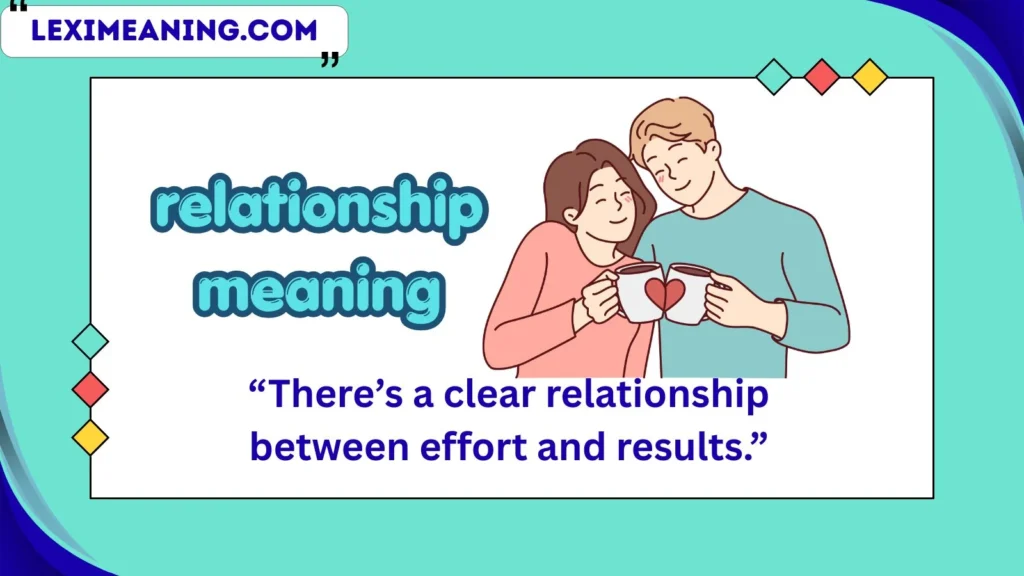
- “There’s a clear relationship between effort and results.”
The meaning depends on context, but connection is always the foundation.
The Origin and Evolution of the Word Relationship
The word relationship developed from terms related to connection and association. Over time, it expanded beyond family ties to include emotional, social, professional, and abstract connections.
Today, relationship is used broadly to describe:
- Human connections
- Social dynamics
- Patterns between ideas or events
Its flexibility is why it appears in nearly every area of life.
Relationship Meaning in Personal and Emotional Contexts
When people hear the word relationship, they often think first of emotional or personal connections.
In this context, relationship refers to:
- Bonds between people
- Emotional closeness
- Ongoing interaction and commitment
Examples include:
- Romantic partners
- Close friendships
- Family connections
These relationships are shaped by trust, communication, and shared values.
Romantic Relationships and Emotional Bonds
Romantic relationships involve:
- Emotional intimacy
- Mutual support
- Shared goals or affection
People may describe their relationship as:
- Healthy
- Complicated
- Long-term
- Casual
The meaning comes from how the individuals involved experience the connection.
Family and Friendship Relationships
Family relationships often involve:
- Long-term connection
- Shared history
- Responsibility or care
Friendships are built on:
- Trust
- Mutual enjoyment
- Emotional support
Both types shape identity and social development.
Relationship Meaning in Social and Professional Life
Relationships aren’t limited to personal life.
In social and professional settings, relationship refers to:
- How people interact at work
- Communication patterns
- Levels of cooperation or trust
Examples:
- “She has a good working relationship with her team.”
- “Networking helps build professional relationships.”
These relationships influence collaboration, success, and workplace culture.
Relationship Meaning Beyond People
The word relationship is also used to describe connections between:
- Ideas
- Events
- Concepts
- Systems
For example:
- “There’s a relationship between diet and energy levels.”
- “The data shows a strong relationship between education and opportunity.”
In these cases, relationship means connection or correlation, not emotion.
Why Relationships Matter in Everyday Life
Relationships matter because they:
- Provide emotional support
- Shape behavior and choices
- Influence wellbeing
- Create a sense of belonging
Strong relationships often contribute to:
- Better mental health
- Higher life satisfaction
- Improved communication
Even challenging relationships teach boundaries and self-awareness.
Healthy vs Unhealthy Relationships
A healthy relationship often includes:
- Respect
- Honest communication
- Mutual effort
- Emotional safety
Unhealthy relationships may involve:
- Control
- Lack of trust
- Poor communication
- Emotional strain
Understanding the difference helps people make better decisions about connection.
Relationship Meaning in Modern Culture (2025)
In 2025, relationships are discussed more openly than ever.
Modern conversations focus on:
- Emotional boundaries
- Communication styles
- Mental wellbeing
- Personal growth
People are increasingly aware that relationships should support—not diminish—individual identity.
Digital Relationships and Online Connections
Technology has changed how relationships form and function.
Digital relationships include:
- Online friendships
- Long-distance connections
- Social media interactions
While these relationships may look different, they still involve:
- Communication
- Trust
- Shared experiences
The definition of relationship continues to expand with technology.
Common Misunderstandings About Relationships
A Relationship Must Be Romantic
Not true. Relationships exist in many forms, including platonic and professional.
All Relationships Should Be Easy
Healthy relationships require effort, communication, and growth.
Relationships Never Change
Relationships evolve as people grow and circumstances shift.
Why Understanding Relationship Meaning Is Useful
Knowing the relationship meaning helps you:
- Communicate more clearly
- Set healthy boundaries
- Navigate social situations
- Understand emotional dynamics
It also helps when reading or listening to discussions across psychology, education, and media.
Relationship and Personal Growth
Relationships often act as mirrors. They reflect:
- Communication habits
- Emotional patterns
- Strengths and challenges
Through relationships, people learn empathy, patience, and self-awareness.
Relationship Meaning in Language and Communication
In everyday language, relationship is used to:
- Describe closeness
- Explain interaction
- Clarify connection
The word adapts easily because it focuses on how things relate, not what they are.
Why Context Matters When Using the Word Relationship
Because relationship has broad meaning, context determines whether it refers to:
- Emotional bonds
- Social interactions
- Professional connections
- Abstract associations
Understanding context prevents misunderstanding.
Relationships as a Core Human Experience
Across cultures and history, relationships have always been central to human life. They shape communities, families, and societies, making the concept universally relevant.
Conclusion:
The relationship meaning centers on connection between people, ideas, or systems. Whether emotional, social, professional, or conceptual, relationships describe how entities interact and influence one another.
Understanding relationships means recognizing their complexity, value, and impact on wellbeing. When approached with awareness and respect, relationships become one of the most powerful forces in personal and collective growth.
💬 What does the word “relationship” mean to you personally?
Share your thoughts in the comments!

I’m Daniel Brookes, the creator of LexiMeaning.com, where I make words, phrases, and their meanings simple and easy to understand. I’m passionate about clear language and helping readers discover the meaning, usage, and context behind everyday words. Through LexiMeaning.com, I aim to make learning new words simple, useful, and enjoyable.