
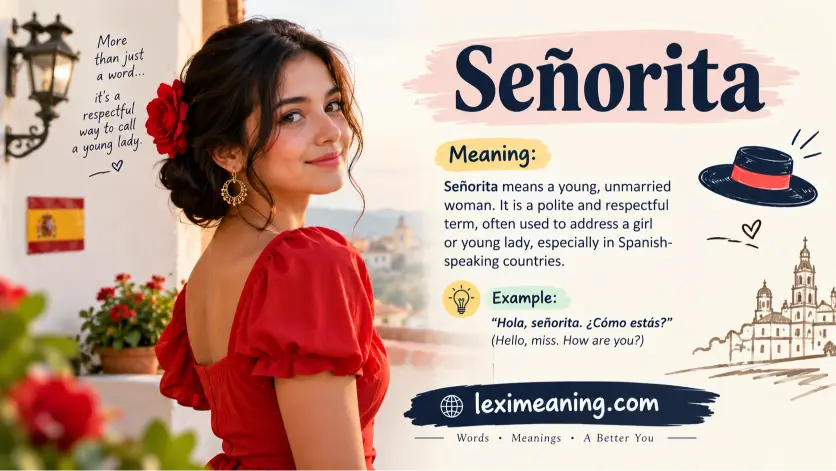
You’ve likely heard the word señorita in songs, movies, conversations, or while traveling in Spanish-speaking countries. It sounds elegant and familiar, but its meaning and proper use are often misunderstood.
Understanding the señorita meaning is important because it reflects language, culture, respect, and social context not just translation.
In 2026, as global communication and cultural awareness grow, knowing how words like señorita are used helps avoid awkward situations and shows cultural sensitivity.
This article explains the meaning of señorita in clear, everyday language, explores how it’s used today, and clears up common misconceptions.
What Does Señorita Mean?
The señorita meaning comes from Spanish and traditionally refers to a young or unmarried woman. In English, it’s often translated as “Miss.”
In simple terms:
Señorita is a polite way to address or refer to a woman, especially a younger one.
It is the feminine form of señor (sir or mister) and historically contrasted with señora, which referred to married women.
Origin and Linguistic Background
The word señorita is derived from señora, with the suffix -ita implying youth or diminutiveness. Originally, it was used to indicate marital status, which was socially significant in earlier times.
Over time, however, language evolved—and so did the meaning and usage of señorita.
How Señorita Is Used in Everyday Language
In daily conversation, señorita is commonly used:
- As a respectful form of address
- To politely get someone’s attention
- In customer service or hospitality
Examples include:
- “Disculpe, señorita.”
- “La señorita necesita ayuda.”
In many cases, it functions similarly to “Miss” in English.
Modern Use of Señorita in 2026
Today, the use of señorita varies depending on region, context, and personal preference. In some Spanish-speaking cultures, the distinction between señorita and señora has become less strict.
Many people now use señorita:
- As a general polite term
- Without focusing on marital status
- In informal or friendly settings
At the same time, some women prefer señora or neutral forms, highlighting changing social norms.
Señorita vs Señora: What’s the Difference?
Traditionally:
- Señorita referred to unmarried women
- Señora referred to married women
In modern usage, the difference is less about marital status and more about:
- Age
- Personal preference
- Cultural norms
In professional or formal settings, señora is often considered safer if you’re unsure.
Cultural Significance of Señorita
The señorita meaning carries cultural weight beyond translation. It can imply:
- Politeness
- Courtesy
- Social awareness
However, misuse can sometimes feel outdated or patronizing, depending on tone and context. That’s why understanding cultural expectations matters.
Señorita in Music, Movies, and Pop Culture
The word señorita has become widely recognized through:
- Music lyrics
- Film dialogue
- Television shows
In pop culture, señorita often conveys:
- Romance
- Charm
- Elegance
Because of this, many non-Spanish speakers associate the word with flirtation or beauty, even though its everyday use is usually neutral and respectful.
Real-Life Examples of Señorita Usage
Seeing the word in context helps clarify its meaning.
Customer Service
“Señorita, su mesa está lista.”
Polite Address
“Perdón, señorita, ¿puedo ayudarla?”
Casual Conversation
“La señorita vive aquí.”
These examples show how the word functions naturally in daily interactions.
Common Misunderstandings About Señorita
Despite its popularity, señorita is often misunderstood.
Mistake #1: Assuming It Always Means “Young Girl”
Señorita generally refers to an adult woman, not a child.
Mistake #2: Thinking It’s Always Flirtatious
Tone matters. In most cases, it’s neutral and respectful.
Mistake #3: Believing It’s Required
Many Spanish speakers are moving toward more neutral or inclusive forms of address.
Is Señorita Considered Old-Fashioned?
In some regions, yes. In others, it’s still common.
The 2026:
- Some people see señorita as charming
- Others prefer not to be labeled by age or marital status
Cultural awareness means paying attention to context and preference.
How to Use Señorita Respectfully
If you’re unsure whether to use señorita:
- Listen to how locals speak
- Consider the setting
- When in doubt, choose a neutral form
Respectful intent matters, but so does cultural sensitivity.
Señorita in Language Learning
For people learning Spanish, señorita is often taught early because:
- It’s commonly used
- It demonstrates polite address
- It helps learners understand social norms
As language learning evolves, learners are also taught when and when not to use it.
Why Señorita Still Matters in 2026
Despite social changes, señorita remains relevant because it reflects:
- Cultural traditions
- Language evolution
- Social awareness
Understanding its meaning helps people navigate communication respectfully in a globalized world.
Is Señorita Appropriate in Professional Settings?
It depends on region and context. In some professional environments, titles are avoided altogether in favor of names or neutral forms.
Using señorita professionally can sometimes feel informal or outdated, so caution is advised.
Conclusion:
The señorita meaning goes beyond a simple translation. It represents language shaped by culture, history, and evolving social values. While traditionally used to refer to unmarried women, its modern usage is more flexible and sometimes debated.
In 2026, understanding señorita helps you communicate more respectfully, avoid misunderstandings, and appreciate how language adapts to changing norms.
🌍 Your turn:
Have you heard señorita used differently depending on culture or context? Share your experience and join the conversation.

I’m Daniel Brookes, the creator of LexiMeaning.com, where I make words, phrases, and their meanings simple and easy to understand. I’m passionate about clear language and helping readers discover the meaning, usage, and context behind everyday words. Through LexiMeaning.com, I aim to make learning new words simple, useful, and enjoyable.