The word roan often appears in descriptions of horses, animals, literature, and even poetry but many people aren’t fully sure what it means. Is it a color? A pattern? A breed?
Understanding the roan meaning helps you interpret descriptive language accurately, especially in writing, art, and animal-related contexts.
As interest grows in precise language and traditional terms, roan continues to be used for its specificity and visual richness. This article explains what roan means in clear, everyday language, shows how it’s used correctly, and explores why it still matters today.
What Does Roan Mean?
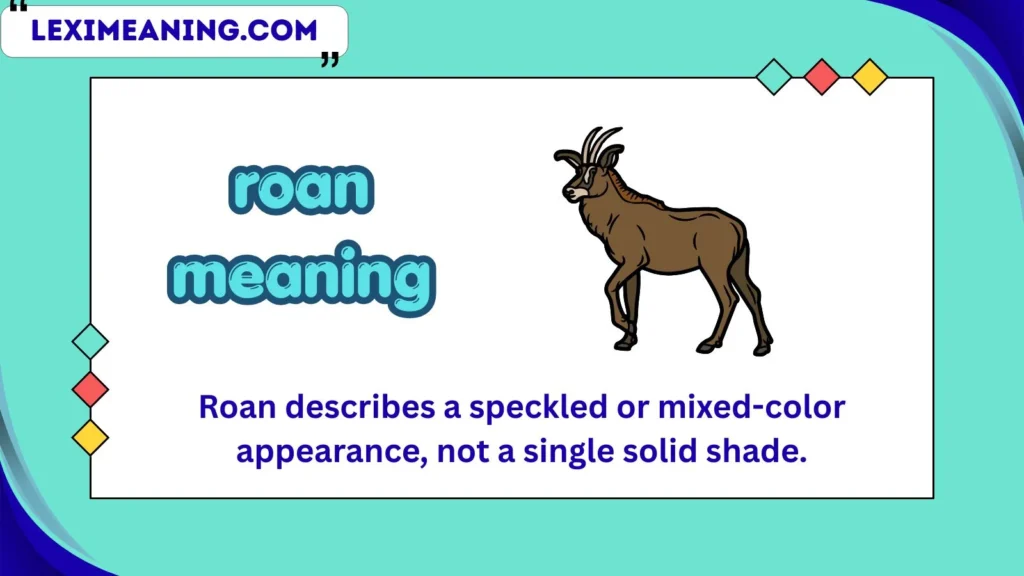
The roan meaning refers to a color pattern created by a mixture of white hairs evenly blended with another solid color, most commonly seen in horses but also used for other animals and materials.
In simple terms:
Roan describes a speckled or mixed-color appearance, not a single solid shade.
A roan coat typically looks:
- Evenly blended
- Softly mottled
- Neither fully white nor fully colored
The base color remains visible, but white hairs are interspersed throughout.
Roan as a Color Pattern in Animals
Roan is most famously associated with horses, but it can also describe:
- Cattle
- Dogs
- Other animals with mixed coats
Common roan variations include:
- Reddish tones mixed with white
- Brown or bay shades mixed with white
- Bluish-gray appearances from black and white hairs
The key feature is even distribution, not patches or spots.
How Roan Differs From Other Color Patterns
Understanding the roan meaning becomes clearer when compared to similar terms.
- Gray – often changes over time and becomes lighter
- Spotted – has distinct patches of color
- Speckled – irregular and uneven
Roan remains consistent and evenly mixed, giving it a distinctive look.
Roan in Literature and Descriptive Writing
Beyond animals, roan appears in literature as a descriptive term.
Writers use roan to evoke:
- Texture
- Subtle color variation
- Natural imagery
For example:
“The roan hills shimmered in the fading light.”
In this metaphorical sense, roan suggests mottled or blended tones rather than uniform color.
Roan in Materials and Objects
Historically, roan has also been used to describe:
- Leather textures
- Aged surfaces
- Mixed-color materials
In bookbinding, for example, roan leather refers to a specific type of soft, durable leather often dyed in muted tones.
Is Roan a Color or a Pattern?
This is a common point of confusion.
Roan is best described as:
- A pattern, not a single color
- A combination of white and another color
People often say “roan horse” rather than naming a specific shade, because the pattern itself is the defining feature.
Examples of Roan Used Correctly
Here are examples that show the roan meaning in context:
Animal Description
“The roan mare stood out in the field with her blended coat.”
Literary Description
“A roan mist settled over the valley at dusk.”
Material Description
“The book was bound in worn roan leather.”
Each example highlights blending rather than uniform color.
Common Misunderstandings About Roan
Mistake #1: Thinking Roan Means Gray
Roan includes white hairs mixed with another color—it’s not the same as gray.
Mistake #2: Assuming Roan Changes Color
Unlike some coats, roan patterns typically remain stable over time.
Mistake #3: Using Roan as a Generic Color Term
Roan is specific and should be used when blending is present.
Why Roan Is a Useful Word
Roan exists because simple color words aren’t always enough.
It allows speakers and writers to:
- Be visually precise
- Describe natural variation
- Avoid vague terms like “mixed”
This precision keeps roan relevant in descriptive language.
Roan in Modern Usage
Roan is most commonly seen in:
- Animal descriptions
- Literature and poetry
- Historical or traditional writing
While not an everyday word, it remains valuable where detail matters.
Is Roan a Formal Word?
Roan is neutral in tone.
It fits well in:
- Descriptive writing
- Educational contexts
- Informative articles
It may sound uncommon in casual conversation, but it’s not outdated or incorrect.
Roan vs Related Descriptive Terms
Roan is often grouped with terms like:
- Dappled
- Mottled
- Flecked
However, roan specifically refers to even mixing, not random markings.
Why Roan Still Matters
As language users seek clarity and accuracy, specific descriptive words remain important.
Roan matters because it:
- Preserves traditional vocabulary
- Enables detailed visual description
- Adds richness to writing
In a world of quick communication, such precision still has value.
Using the Word Roan Correctly
To use roan naturally:
- Apply it where blending is visible
- Avoid using it for solid colors
- Use it descriptively rather than metaphorically unless context is clear
Correct example:
“The animal’s roan coat caught the light.”
Incorrect example:
“The wall was roan blue.” (Unclear and incorrect use)
Roan as a Literary Tool
In creative writing, roan adds atmosphere.
It can suggest:
- Age
- Natural beauty
- Subtle complexity
That’s why it appears often in poetic or pastoral imagery.
Conclusion:
The roan meaning refers to an evenly blended color pattern created by white hairs mixed with another base color. Most commonly used to describe animals, roan also appears in literature and material descriptions where subtle variation matters.
Roan remains a precise and valuable word one that adds clarity and texture to language. Knowing how to use it correctly helps you understand descriptive writing more deeply and express visual detail more accurately.
💬 Your turn:
Have you encountered the word roan in books, animal descriptions, or elsewhere? Share where you’ve seen it used.

I’m Daniel Brookes, the creator of LexiMeaning.com, where I make words, phrases, and their meanings simple and easy to understand. I’m passionate about clear language and helping readers discover the meaning, usage, and context behind everyday words. Through LexiMeaning.com, I aim to make learning new words simple, useful, and enjoyable.