
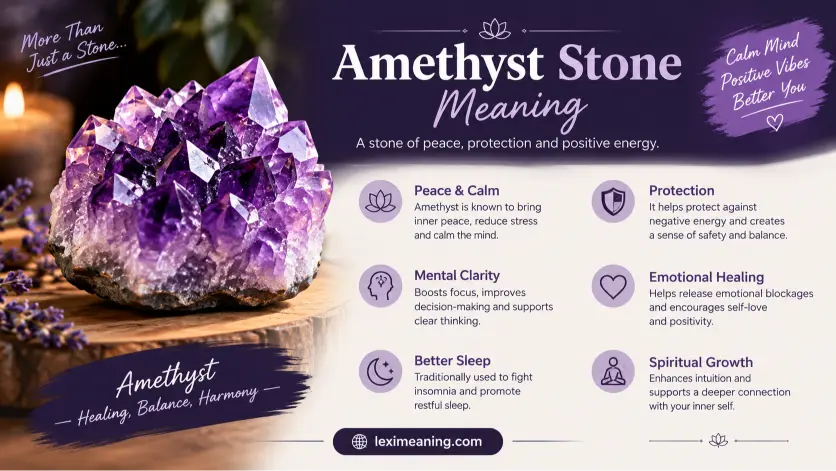
The amethyst stone has fascinated humans for centuries. From ancient crowns and religious artifacts to modern crystal collections and wellness practices, this purple gemstone continues to hold powerful meaning.
If you’ve ever wondered about the amethyst stone meaning, you’re not alone people are drawn to it not just for its beauty, but for what it represents emotionally, spiritually, and symbolically.
In 2026, interest in crystals, mindfulness, and emotional balance is stronger than ever. Amethyst stands out as one of the most recognized and respected stones, associated with calm energy, clarity, and inner strength.
This article explains the meaning of amethyst in simple, grounded language, explores its symbolism, traditional beliefs, and how people use it today.
What Is the Meaning of Amethyst Stone?
The amethyst stone meaning is commonly associated with peace, protection, clarity, and spiritual awareness. For centuries, it has been seen as a stone that helps quiet the mind, balance emotions, and protect against negative influences.
In simple terms, amethyst represents:
- Calmness during chaos
- Mental clarity and focus
- Emotional balance
- Inner strength
Many cultures believed amethyst helped people stay grounded while still remaining spiritually connected.
Historical and Cultural Significance of Amethyst
Amethyst has a long and rich history that contributes to its meaning today.
- It was worn by royalty as a symbol of power and wisdom
- It appeared in religious jewelry and sacred objects
- It was believed to guard against excess and poor judgment
The stone’s purple color has long been associated with:
- Spiritual authority
- Higher consciousness
- Nobility and dignity
This historical background explains why amethyst is still viewed as a stone of depth rather than just decoration.
Spiritual Symbolism of Amethyst
Spiritually, amethyst is often linked to:
- Awareness beyond the physical
- Intuition and inner guidance
- Emotional cleansing
People who work with spiritual practices often see amethyst as a bridge between logic and intuition. It’s believed to help quiet mental noise and encourage reflection rather than reaction.
In many belief systems, amethyst symbolizes:
- Inner peace
- Self-trust
- Protection from negative energy
Emotional Meaning of Amethyst Stone
Beyond spirituality, the amethyst stone meaning is deeply connected to emotional well-being.
Emotionally, amethyst is associated with:
- Stress relief
- Emotional stability
- Letting go of anxiety
Many people describe it as a “soothing presence,” especially during periods of overwhelm or emotional tension. Whether or not you believe in crystal energy, the symbolism itself encourages mindfulness and calm behavior.
Amethyst and Mental Clarity
One of the most common symbolic meanings of amethyst relates to mental clarity.
Traditionally, amethyst was believed to:
- Improve focus
- Reduce mental clutter
- Encourage rational thinking
This association is why the stone often appears in meditation spaces, work environments, and areas meant for quiet thought.
In modern life, amethyst represents slowing down and thinking clearly before reacting.
Amethyst as a Protective Symbol
Across many cultures, amethyst has been viewed as a protective stone.
Symbolically, protection means:
- Shielding against negativity
- Guarding emotional boundaries
- Encouraging self-control
Historically, people believed amethyst helped prevent overindulgence and emotional extremes. Today, that symbolism translates into balance and moderation.
How Amethyst Is Used in Modern Life
In 2026, amethyst is used in many everyday ways—not just spiritual ones.
Common modern uses include:
- Jewelry such as rings and necklaces
- Home décor for calming spaces
- Meditation or mindfulness routines
- Personal reminders of balance and clarity
People often keep amethyst nearby during stressful periods as a symbolic anchor for calm and intention.
Amethyst in Jewelry and Personal Expression
Wearing amethyst jewelry is often about more than style.
For many, it represents:
- Emotional grounding
- Self-awareness
- Personal boundaries
The popularity of amethyst in rings, pendants, and bracelets reflects a desire to carry calm energy throughout the day.
Amethyst and Birthstone Symbolism
Amethyst is traditionally associated with February, but its meaning extends beyond astrology.
As a birthstone, it symbolizes:
- Sincerity
- Peace of mind
- Inner strength
Even for those who don’t follow birthstone traditions, this association reinforces amethyst’s identity as a stone of emotional balance.
Common Misunderstandings About Amethyst
Despite its popularity, there are a few misconceptions.
Mistake #1: Thinking Amethyst Is Only Decorative
While visually striking, its symbolism and cultural meaning are why it remains significant.
Mistake #2: Believing It Guarantees Healing
Amethyst is symbolic and supportive—not a medical solution. Its value lies in intention and reflection.
Mistake #3: Assuming All Amethyst Means the Same Thing
Different people connect with amethyst in different ways, depending on emotional needs and personal beliefs.
Why Amethyst Remains Popular in 2026
In a fast-paced, high-stimulation world, people crave calm and meaning.
Amethyst resonates today because it represents:
- Balance over burnout
- Reflection over reaction
- Awareness over chaos
Its meaning aligns perfectly with modern wellness conversations focused on mental health and emotional resilience.
Amethyst as a Symbol of Self-Control
Historically, amethyst was associated with restraint and clarity of judgment.
Today, that symbolism reflects:
- Emotional maturity
- Thoughtful decision-making
- Calm confidence
Rather than extremes, amethyst represents moderation and self-awareness.
Amethyst in Mindfulness Practices
Many people include amethyst in mindfulness routines as a symbolic object.
It’s often used as:
- A focal point during meditation
- A reminder to breathe and pause
- A visual cue for calm intention
Even without spiritual belief, symbolism can influence mindset and behavior.
Is Amethyst a Powerful Stone?
Power doesn’t always mean intensity.
Amethyst’s strength lies in:
- Subtle influence
- Emotional steadiness
- Quiet clarity
That gentle nature is exactly why so many people feel drawn to it.
Choosing Amethyst With Intention
If you’re drawn to amethyst, consider what it represents to you personally:
- Peace
- Protection
- Balance
- Self-awareness
The meaning of the stone becomes stronger when aligned with intention.
Conclusion:
The amethyst stone meaning goes far beyond its purple beauty. Across history and cultures, it has symbolized calm, clarity, protection, and emotional balance. In 2026, those meanings feel more relevant than ever as people seek grounding in a busy world.
Whether you wear it, display it, or simply appreciate its symbolism, amethyst represents a reminder to slow down, think clearly, and stay connected to your inner calm. Its value lies not in superstition, but in the meaning people choose to carry with it.
💜 Your turn:
What does amethyst symbolize for you peace, clarity, or protection? Share your thoughts and join the conversation.

I’m Daniel Brookes, the creator of LexiMeaning.com, where I make words, phrases, and their meanings simple and easy to understand. I’m passionate about clear language and helping readers discover the meaning, usage, and context behind everyday words. Through LexiMeaning.com, I aim to make learning new words simple, useful, and enjoyable.