
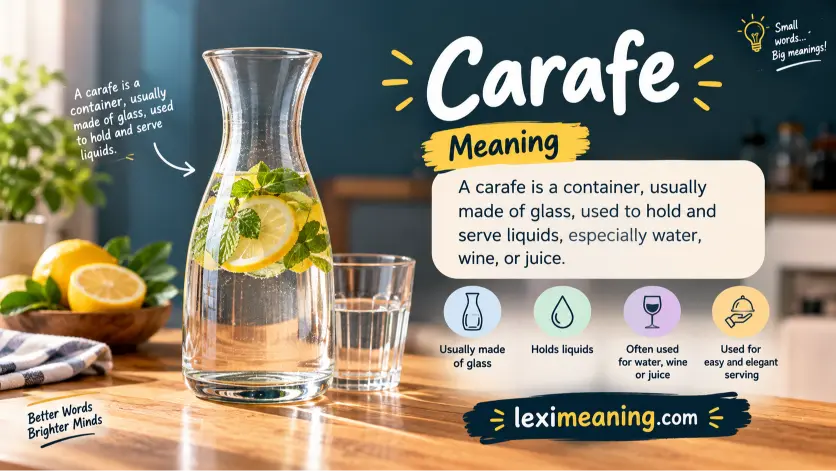
You’ve probably seen the word carafe on restaurant menus, hotel room trays, coffee makers, or kitchenware listings but what does it actually mean? Understanding the carafe meaning helps you make sense of dining etiquette, beverage service, and even modern kitchen design.
In 2026, as people pay more attention to presentation, sustainability, and intentional living, simple items like a carafe are gaining renewed appreciation.
This article explains the meaning of carafe in clear, everyday language, explores how it’s used in different settings, and shows why it remains a practical and stylish vessel today.
What Is the Meaning of Carafe?
The carafe meaning refers to a container used to hold and pour liquids, most commonly water, wine, coffee, or juice. A carafe is usually open at the top and designed for easy pouring.
In simple terms:
A carafe is a serving container for drinks.
Carafes are often made from:
- Glass
- Crystal
- Stainless steel
- Ceramic
They can be plain and functional or elegant and decorative, depending on context.
Origin of the Word Carafe
The word carafe comes from French, which itself traces back to older Mediterranean and Arabic influences. Historically, the term referred to a vessel used for serving water or wine at the table.
Over time, the meaning stayed consistent while the design evolved. This is why carafes still feel classic yet modern at the same time.
How a Carafe Is Commonly Used
Carafes appear in many everyday environments, often without people consciously noticing them.
Common uses include:
- Serving water at restaurants
- Holding wine during meals
- Brewing and serving coffee
- Offering juice or infused drinks
The main purpose is convenience paired with presentation.
Carafe in Restaurants and Dining Settings
In restaurants, a carafe is often placed on the table to:
- Serve water without repeated refills
- Enhance table presentation
- Reduce waste from bottled water
You may hear phrases like:
“Still or sparkling water in a carafe?”
This usage emphasizes shared dining and hospitality.
Carafe vs Pitcher: What’s the Difference?
Although similar, a carafe is not exactly the same as a pitcher.
Generally:
- A carafe is slimmer and more elegant
- A pitcher often has a handle and spout
- Carafes are typically used for table service
Pitchers are more common for large gatherings, while carafes are associated with refined or intentional serving.
Carafe in Coffee and Tea Culture
One of the most familiar modern uses of a carafe is in coffee makers.
A coffee carafe:
- Holds brewed coffee
- Keeps it warm or insulated
- Allows easy pouring
In specialty coffee culture, glass carafes are also used for:
- Pour-over coffee
- Serving multiple cups
- Visual appreciation of the brew
This reinforces the carafe’s role as both functional and aesthetic.
Carafe in Home Kitchens
In home settings, carafes are often used for:
- Water infused with fruits or herbs
- Juice at breakfast
- Iced tea or lemonade
Many people prefer carafes over plastic bottles because they:
- Look cleaner and more elegant
- Are reusable
- Fit easily in refrigerators
In 2025, sustainability and minimalism have made carafes more popular in everyday homes.
Types of Carafes You Might See
Carafes come in many styles, depending on purpose.
Common types include:
- Water carafes
- Wine carafes
- Coffee carafes
- Thermal carafes
Each type serves the same basic function but is designed for different temperature, volume, or presentation needs.
Why Carafes Are Considered Elegant
The design of a carafe emphasizes:
- Simplicity
- Flow
- Balance
Because they’re often handle-less and open-topped, carafes encourage careful, intentional use. This is why they’re associated with fine dining and thoughtful hosting.
Carafe in Hospitality and Hotels
In hotels, you may find a carafe used to:
- Serve water in rooms
- Offer coffee or tea
- Reduce single-use plastics
This aligns with modern hospitality trends focused on sustainability and guest experience.
Common Misunderstandings About Carafes
Mistake #1: Thinking a Carafe Is Only for Wine
While wine carafes are popular, carafes are used for many beverages.
Mistake #2: Assuming Carafes Are Decorative Only
Carafes are designed for practical daily use, not just display.
Mistake #3: Confusing Carafes With Bottles
Unlike bottles, carafes are meant for serving, not storage or sealing.
How to Use the Word Carafe Correctly
When using the word in conversation or writing:
- Refer to it as a serving container
- Use it in dining, beverage, or kitchen contexts
- Avoid using it for sealed containers
Correct example:
“They brought a carafe of water to the table.”
Incorrect example:
“I sealed the carafe and stored it overnight.” (Carafes are usually open)
Why the Term Carafe Still Matters in 2026
In a world that values:
- Sustainable living
- Mindful consumption
- Aesthetic simplicity
The carafe remains relevant. It represents intentional serving rather than disposable convenience, which aligns with modern lifestyle values.
Carafe as a Symbol of Shared Experience
Beyond function, a carafe often symbolizes:
- Shared meals
- Hospitality
- Thoughtful hosting
Pouring from a carafe encourages interaction and connection, which is why it remains a staple at tables worldwide.
Is a Carafe Necessary?
While not essential, a carafe adds:
- Ease of serving
- Visual appeal
- Practical sustainability
Many people find that once they start using one, it naturally becomes part of daily routines.
Conclusion:
The carafe meaning is simple yet meaningful: a container designed to serve drinks with ease, intention, and style. From restaurants and hotels to home kitchens and coffee culture, carafes play a quiet but important role in how we share beverages.
In 2026, the carafe remains a symbol of thoughtful living combining function, elegance, and sustainability in one everyday object. Understanding what it is and how it’s used helps you appreciate why it has stood the test of time.
🥛 Your turn:
Do you use a carafe at home or mostly see them in restaurants? Share how you use (or notice) them in daily life.

I’m Daniel Brookes, the creator of LexiMeaning.com, where I make words, phrases, and their meanings simple and easy to understand. I’m passionate about clear language and helping readers discover the meaning, usage, and context behind everyday words. Through LexiMeaning.com, I aim to make learning new words simple, useful, and enjoyable.