
You’ve probably heard someone described as an optimist maybe as a compliment, maybe as criticism. But what does optimism really mean, and why does it matter so much in everyday life? Understanding the optimism meaning helps explain how mindset influences mental health, decision-making, relationships, and even long-term success.
In 2026, optimism is no longer seen as blind positivity. Instead, it’s recognized as a practical mindset that helps people cope with uncertainty, adapt to challenges, and maintain emotional balance.
This article explains optimism in clear, human language, explores its psychological roots, shows how it appears in real life, and clears up common misconceptions.
What Does Optimism Mean?
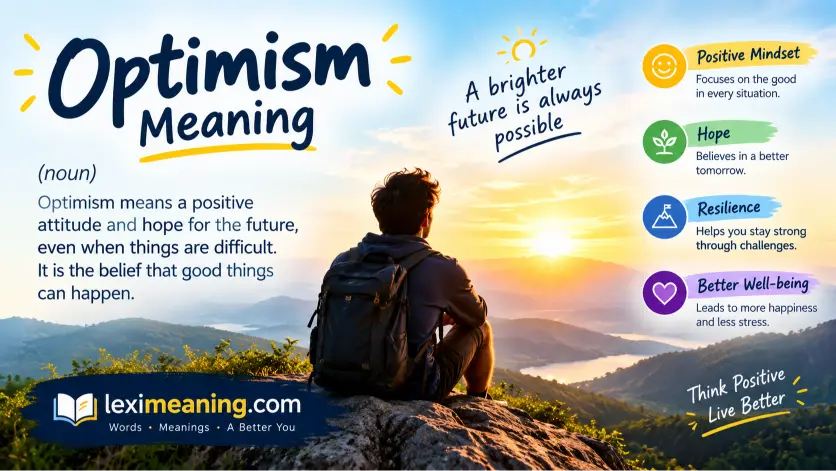
The optimism meaning refers to the tendency to expect positive outcomes or believe that things will improve over time, even when situations are difficult.
In simple terms:
Optimism is the belief that good things are possible, even in challenging circumstances.
Optimism does not mean ignoring problems. Instead, it involves:
- Hopefulness
- Confidence in improvement
- A forward-looking mindset
An optimistic person acknowledges difficulties but believes they can be managed or overcome.
Where the Concept of Optimism Comes From
The idea of optimism has roots in philosophy and psychology. Historically, it was used to describe the belief that the world tends toward positive outcomes.
Over time, optimism became linked to:
- Mental resilience
- Emotional health
- Personal growth
Modern psychology views optimism as a learned mindset rather than a fixed personality trait.
Optimism in Psychology
In psychology, optimism is often studied as part of emotional well-being.
Psychologists describe optimism as:
- Expecting favorable results
- Interpreting setbacks as temporary
- Believing effort can influence outcomes
Research shows that optimistic thinking is associated with:
- Lower stress levels
- Better coping skills
- Improved mental health
This is why optimism plays a central role in therapy, coaching, and self-development.
Optimism vs Pessimism
Understanding optimism becomes clearer when compared to pessimism.
- Optimism focuses on potential solutions
- Pessimism focuses on expected failure
Optimists tend to see setbacks as:
- Temporary
- Specific
- Changeable
Pessimists are more likely to see them as permanent or uncontrollable.
This difference shapes how people respond to challenges.
Real-Life Examples of Optimism
Optimism shows up in everyday situations more often than we realize.
Examples include:
- Believing a job interview will lead to growth, even if you don’t get the role
- Expecting recovery after illness
- Trusting that effort will eventually pay off
In each case, optimism supports persistence rather than denial.
Optimism in the Workplace
In professional settings, optimism is linked to:
- Problem-solving
- Leadership confidence
- Team motivation
Optimistic employees are more likely to:
- Adapt to change
- Handle feedback constructively
- Stay engaged during challenges
This makes optimism a valuable trait in modern workplaces.
Optimism in Relationships
Optimism also plays a role in how people approach relationships.
Optimistic individuals often:
- Assume good intentions
- Communicate openly
- Believe conflicts can be resolved
This doesn’t mean avoiding problems—it means believing they’re worth working through.
Is Optimism the Same as Positive Thinking?
Not exactly.
Positive thinking often focuses on:
- Affirmations
- Avoiding negative thoughts
Optimism, on the other hand, is more grounded. It allows space for:
- Realistic concerns
- Emotional honesty
- Practical planning
Optimism acknowledges reality while maintaining hope.
Healthy Optimism vs Unrealistic Optimism
There’s an important difference between healthy optimism and unrealistic optimism.
Healthy Optimism
- Recognizes challenges
- Encourages effort
- Accepts uncertainty
Unrealistic Optimism
- Ignores risks
- Dismisses warnings
- Avoids responsibility
Healthy optimism is adaptive; unrealistic optimism can be harmful.
Why Optimism Matters in 2026
In 2026, people face:
- Rapid change
- Economic uncertainty
- Mental health challenges
Optimism helps individuals:
- Stay emotionally balanced
- Make long-term plans
- Recover from setbacks
It’s not about pretending everything is perfect—it’s about believing improvement is possible.
Optimism and Mental Health
Optimism is closely linked to mental well-being.
People with an optimistic outlook often experience:
- Lower anxiety
- Reduced feelings of helplessness
- Greater emotional resilience
Mental health professionals encourage optimism because it supports recovery and coping rather than avoidance.
Can Optimism Be Learned?
Yes. Optimism is not just a personality trait—it’s a skill that can be developed.
People can build optimism by:
- Reframing negative thoughts
- Setting realistic goals
- Focusing on progress rather than perfection
- Learning from setbacks
These practices help shift perspective over time.
Common Misunderstandings About Optimism
Mistake #1: Thinking Optimists Never Feel Sad
Optimistic people still experience disappointment and grief—they just don’t stay stuck there.
Mistake #2: Assuming Optimism Is Naivety
Optimism can be informed, realistic, and strategic.
Mistake #3: Believing Optimism Means Ignoring Problems
True optimism involves facing problems with confidence, not avoidance.
Optimism in Daily Decision-Making
Optimism influences how people:
- Take risks
- Plan for the future
- Respond to failure
An optimistic mindset supports thoughtful action rather than fear-based choices.
Optimism and Personal Growth
Personal growth thrives on optimism.
When people believe improvement is possible, they’re more likely to:
- Try new things
- Learn from mistakes
- Persist through discomfort
Optimism fuels long-term development rather than quick results.
🤔Optimism Compared to Hope
Optimism and hope are related but not identical.
- Hope focuses on desire
- Optimism focuses on expectation
Optimism involves confidence that outcomes can improve, while hope reflects emotional longing.
Why Optimism Is Often Misjudged
Some people view optimism as unrealistic because it contrasts with cynicism. However, research consistently shows that optimism supports:
- Better health outcomes
- Stronger relationships
- Higher life satisfaction
Its benefits are practical, not just emotional.
Conclusion:
The optimism meaning centers on expecting positive possibilities while acknowledging reality. It’s a mindset that encourages resilience, adaptability, and emotional strength rather than denial or fantasy.
In 2026, optimism remains essential not because life is easy, but because challenges are inevitable. By understanding and practicing optimism, individuals can navigate uncertainty with confidence and clarity.
🌱 Your turn:
Do you see yourself as optimistic, realistic, or somewhere in between? Share your perspective and experiences.

I’m Daniel Brookes, the creator of LexiMeaning.com, where I make words, phrases, and their meanings simple and easy to understand. I’m passionate about clear language and helping readers discover the meaning, usage, and context behind everyday words. Through LexiMeaning.com, I aim to make learning new words simple, useful, and enjoyable.