You may have encountered the word praxis in academic texts, professional discussions, teaching programs, or even philosophical debates and wondered what it actually means.
At first glance, it sounds abstract or intimidating, but the idea behind it is surprisingly practical. Understanding the praxis meaning helps bridge the gap between theory and real-life action, which is exactly why the term remains relevant in 2026.
In a world that values applied knowledge, skills-based learning, and meaningful action, praxis is more than a buzzword. It describes how ideas come to life through practice.
This article explains the meaning of praxis in clear, human language, explores how it’s used across fields, and shows why it continues to matter in modern education, work, and society.
What Does Praxis Mean?
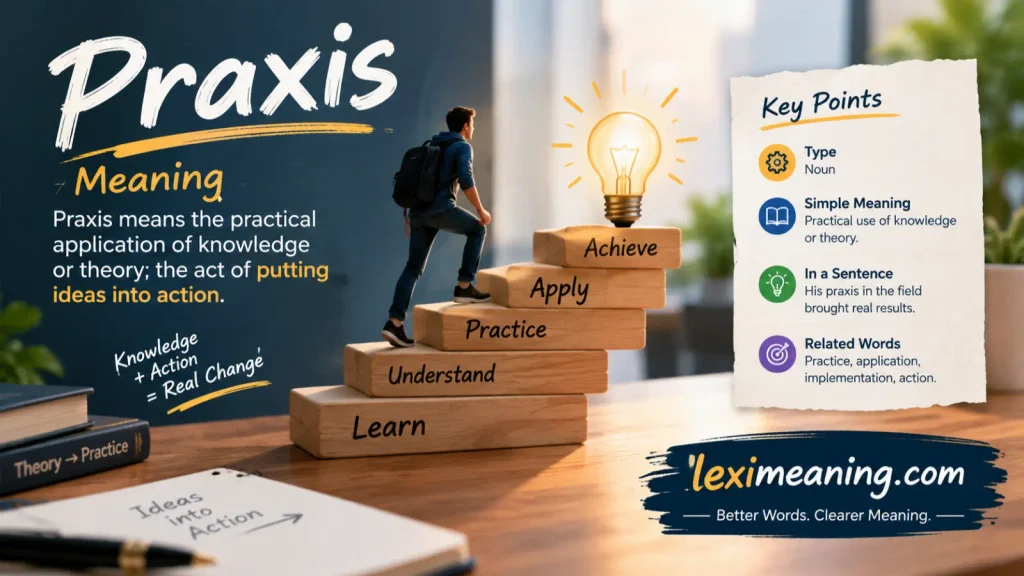
The praxis meaning refers to the process of putting theory, ideas, or knowledge into practice. It emphasizes action that is informed by reflection, understanding, and intention—not just doing something blindly.
In simple terms:
Praxis is where thinking meets doing.
Rather than separating learning and action, praxis connects them. It’s about applying what you know in a thoughtful, purposeful way.
The Origins of the Word Praxis
The term praxis comes from ancient Greek and originally meant action or practice. Philosophers used it to distinguish between:
- Pure thinking or theory
- Practical action rooted in understanding
Over time, the word evolved to describe meaningful action guided by knowledge, values, and reflection. This historical foundation explains why praxis often appears in intellectual and professional contexts today.
Praxis vs Theory: Understanding the Difference
To fully grasp the praxis meaning, it helps to understand how it differs from theory.
- Theory focuses on ideas, principles, and explanations
- Praxis focuses on applying those ideas in real situations
For example:
- Learning about teaching strategies is theory
- Using those strategies effectively in a classroom is praxis
Praxis is not action alone it’s informed action.
How Praxis Is Used in Education
Education is one of the most common areas where praxis appears.
In learning environments, praxis refers to:
- Applying academic knowledge in real-world contexts
- Reflecting on experiences to improve understanding
- Learning through doing, not memorizing
For teachers, praxis means continuously adapting teaching methods based on experience, reflection, and student needs. For students, it means using what they learn beyond exams and textbooks.
Praxis in Professional and Workplace Settings
Outside academia, praxis plays a key role in professional growth.
In the workplace, praxis shows up as:
- Applying training to real tasks
- Learning from experience
- Improving skills through reflection
For example, leadership praxis involves using leadership theories while responding to real people, challenges, and ethical decisions—not just following a manual.
Praxis in Philosophy and Social Thought
In philosophy, praxis often relates to action that changes the world, not just interprets it. Philosophers have used the concept to emphasize:
- Social responsibility
- Ethical action
- Transformative practice
In this sense, praxis is connected to social change, justice, and meaningful engagement with real-world issues.
Real-Life Examples of Praxis
Understanding praxis becomes easier when you see it in action.
Education Example
A student studies communication theory, then uses those principles to improve real conversations and presentations.
Workplace Example
An employee attends a training session, applies the techniques on the job, reflects on what worked, and adjusts accordingly.
Community Example
A group learns about social issues and actively works to address them through informed action.
Each case demonstrates the core idea: knowledge becomes valuable when it’s lived and applied.
Why Praxis Matters in 2026
In 2026, people value skills, adaptability, and applied knowledge more than ever. Praxis matters because:
- Learning is increasingly hands-on
- Careers require continuous growth
- Society values impact, not just ideas
🤔Praxis supports lifelong learning by encouraging reflection and improvement rather than passive consumption of information.
Praxis and Personal Growth
On a personal level, praxis helps individuals grow.
It encourages people to:
- Reflect on their beliefs
- Test ideas in real situations
- Learn from outcomes
- Adjust behavior intentionally
This reflective practice makes praxis a powerful tool for self-development and decision-making.
Common Misunderstandings About Praxis
Because the word sounds academic, it’s often misunderstood.
Mistake #1: Thinking Praxis Is Just Practice
Practice alone isn’t praxis. Praxis requires reflection and understanding behind the action.
Mistake #2: Believing Praxis Is Only for Academia
While common in education and philosophy, praxis applies to everyday life, work, and personal growth.
Mistake #3: Assuming Praxis Is Too Abstract
In reality, praxis is deeply practical—it’s about making knowledge useful.
Praxis in Modern Conversations
You’ll often see the word praxis used in discussions about:
- Teaching methods
- Leadership development
- Social responsibility
- Applied learning
In these contexts, praxis highlights the importance of doing something meaningful with what you know.
How to Use the Word Praxis Correctly
To use praxis naturally:
- Apply it to situations involving theory and action
- Avoid using it as a synonym for routine practice
- Emphasize reflection and purpose
Correct usage shows clarity of thought rather than complexity for its own sake.
Why Praxis Is Not a Trend but a Concept
Unlike buzzwords that fade, praxis has lasted because it describes a timeless idea: knowledge gains value through action. As long as people learn, work, and seek improvement, praxis will remain relevant.
In modern culture, it fits especially well with:
- Skill-based education
- Experiential learning
- Purpose-driven work
Praxis and Meaningful Change
Praxis isn’t just about efficiency—it’s about intention. When action is guided by understanding and reflection, it becomes more ethical, effective, and impactful.
This is why the praxis meaning often appears in discussions about making real, positive change rather than symbolic gestures.
Conclusion:
The praxis meaning centers on turning knowledge into meaningful action. It connects thinking with doing, learning with living, and ideas with impact. Whether in education, work, or personal growth, praxis reminds us that understanding alone isn’t enough what matters is how we apply it.
In 2026, as people seek purpose, adaptability, and real-world relevance, praxis continues to offer a powerful framework for growth and change.
💡 Your turn:
Where do you see praxis in your own life learning, work, or personal goals? Share your thoughts and join the conversation.

I’m Daniel Brookes, the creator of LexiMeaning.com, where I make words, phrases, and their meanings simple and easy to understand. I’m passionate about clear language and helping readers discover the meaning, usage, and context behind everyday words. Through LexiMeaning.com, I aim to make learning new words simple, useful, and enjoyable.