If you drive regularly, you’ve seen yield signs countless times at intersections, roundabouts, highway ramps, and merges. Yet many drivers still hesitate or make mistakes around them.
Understanding the yield meaning in driving is essential because it directly affects road safety, traffic flow, and accident prevention.
As roads become busier and traffic systems more complex, knowing exactly when and how to yield helps reduce collisions and keeps everyone moving safely.
This article explains what yield means in driving, how it works in real situations, common mistakes drivers make, and how to respond confidently behind the wheel.
What Does Yield Mean in Driving?
The yield meaning in driving refers to giving the right of way to other vehicles or pedestrians when required, without necessarily coming to a full stop unless needed.
In simple terms:
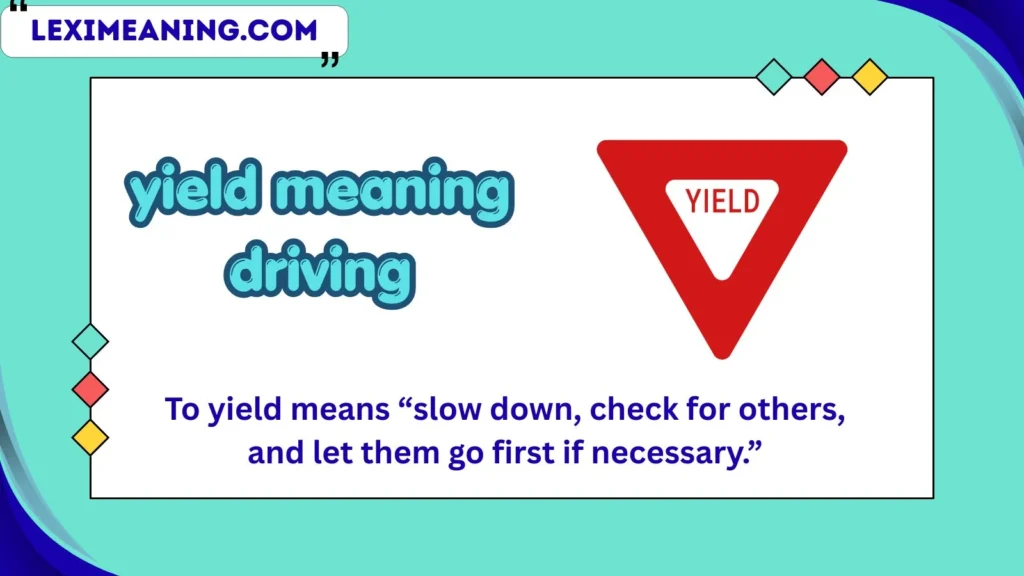
To yield means “slow down, check for others, and let them go first if necessary.”
Yielding requires attention and judgment, not automatic stopping.
How Yield Is Different From Stop
One of the most common confusions involves yield signs and stop signs.
- Yield means slow down and be ready to stop
- Stop means come to a complete halt every time
If no one is approaching, yielding allows you to continue without stopping—while stopping always requires full cessation of movement.
Why Yield Signs Exist
Yield signs are used to:
- Control traffic flow
- Reduce unnecessary stopping
- Improve efficiency at intersections
- Prevent collisions
They help balance movement between roads where traffic volume differs.
What a Yield Sign Looks Like
A yield sign is:
- An upside-down triangle
- Red and white in color
- Clearly marked with the word “YIELD”
This unique shape makes it recognizable even from a distance or at night.
Common Situations Where You Must Yield
Yielding applies in many driving scenarios, including:
- Intersections without traffic lights
- Roundabouts
- Highway entrance ramps
- Pedestrian crossings
- Turning left across traffic
In each case, the goal is to avoid interfering with vehicles or people who already have priority.
Yielding at Intersections
At intersections with yield signs:
- Slow down as you approach
- Look left and right
- Proceed only when the way is clear
If another vehicle is already in the intersection or approaching closely, you must let it pass first.
Yielding at Roundabouts
Roundabouts rely heavily on yielding rules.
Drivers entering a roundabout must:
- Yield to vehicles already inside
- Merge smoothly when there’s a safe gap
This system keeps traffic moving continuously and reduces severe crashes.
Yield Meaning When Merging
When merging onto highways or lanes:
- Yielding traffic must adjust speed
- Vehicles already on the road have priority
Merging safely requires cooperation and awareness from all drivers.
Yielding to Pedestrians and Cyclists
Yielding isn’t just about vehicles.
Drivers must yield to:
- Pedestrians in crosswalks
- Cyclists in bike lanes or crossings
Failing to yield in these situations can result in serious accidents and legal penalties.
Real-Life Examples of Yield in Driving
Intersection Example
A driver slows down at a yield sign and allows cross traffic to pass before continuing.
Highway Example
A car entering the freeway yields to vehicles already traveling at speed.
Pedestrian Example
A driver yields to a pedestrian stepping into a marked crosswalk.
These examples show how yielding promotes safety and predictability.
Common Mistakes Drivers Make With Yield
Mistake #1: Treating Yield Like a Stop
Stopping unnecessarily can disrupt traffic and cause rear-end collisions.
Mistake #2: Not Slowing Down Enough
Yielding requires reducing speed—even if you don’t stop.
Mistake #3: Forcing Your Way In
Assuming others will stop for you defeats the purpose of yielding.
Yield Laws and Traffic Rules
Traffic laws require drivers to:
- Yield when signs or markings indicate
- Yield to pedestrians and emergency vehicles
- Yield when turning left across oncoming traffic
Failure to yield can result in:
- Fines
- Points on your license
- Increased insurance costs
Laws vary by location, but the principle is universal.
Yield vs Right of Way
Right of way means who goes first.
Yielding means:
- Recognizing when you do not have priority
- Allowing others to proceed safely
Yield does not mean surrendering control it means sharing the road responsibly.
Yielding in Bad Weather or Heavy Traffic
In rain, fog, or heavy traffic:
- Increase following distance
- Yield earlier
- Be more cautious
Poor visibility and road conditions make yielding even more important.
Why Yield Is Critical for Road Safety
Yielding reduces:
- Intersection crashes
- Side-impact collisions
- Pedestrian injuries
It promotes:
- Predictable driving behavior
- Smooth traffic flow
- Mutual respect on the road
Many serious accidents occur when drivers fail to yield.
How to Know When You Must Yield
Ask yourself:
- Am I entering another road?
- Is there a yield sign or marking?
- Are other vehicles or pedestrians already moving?
If the answer is yes, yield.
Yield in Driving Tests
Driving exams pay close attention to yielding behavior.
Test evaluators look for:
- Proper speed reduction
- Situational awareness
- Respect for right of way
Incorrect yielding is a common reason for test failure.
Why Understanding Yield Still Matters
Traffic systems include:
- More roundabouts
- Shared roads
- Pedestrian-focused design
Understanding the yield meaning in driving helps drivers adapt to modern road layouts and reduces frustration and accidents.
Yield vs Courtesy
Yielding is not optional politeness it’s a legal and safety requirement.
While courtesy is appreciated, yield rules are mandatory and enforceable.
Conclusion:
The yield meaning in driving is about awareness, patience, and safety. It requires drivers to slow down, observe, and give priority when needed without always stopping. Yielding keeps traffic moving smoothly while protecting drivers, pedestrians, and cyclists.
As roads become more shared and complex, understanding how and when to yield is essential for confident, responsible driving. It’s not about hesitation it’s about smart decision-making.
🚗 Your turn:
Which yield situation do you find most confusing roundabouts, merging, or intersections? Share your experience and let’s clear it up.

I’m Daniel Brookes, the creator of LexiMeaning.com, where I make words, phrases, and their meanings simple and easy to understand. I’m passionate about clear language and helping readers discover the meaning, usage, and context behind everyday words. Through LexiMeaning.com, I aim to make learning new words simple, useful, and enjoyable.