
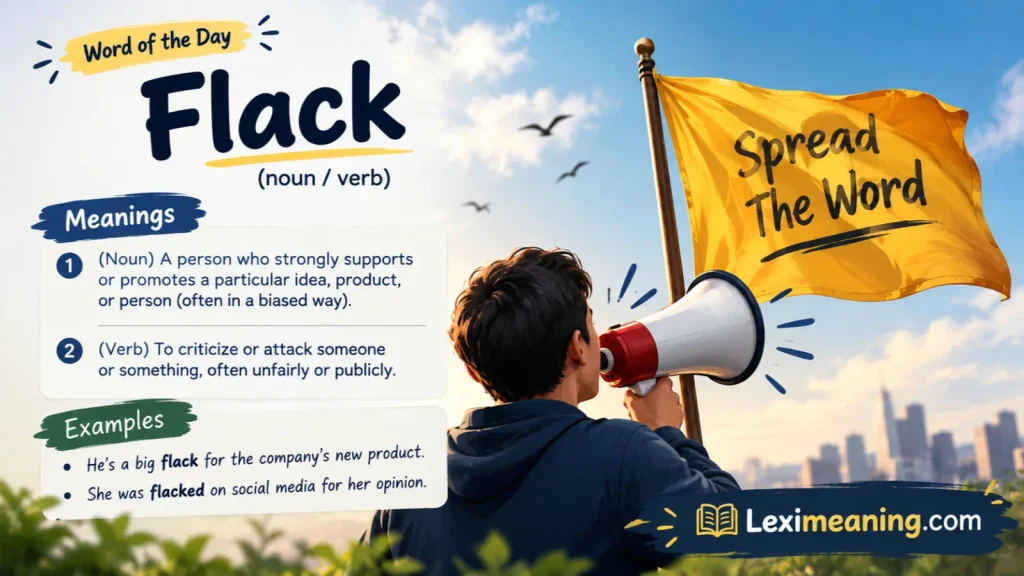
You’ve probably heard someone say they’re “getting flack” for a decision, a post, or a comment online.
The word pops up in news articles, workplace conversations, and social media debates but its meaning isn’t always obvious. Is flack criticism? it is backlash? Is it personal?
Understanding the flack meaning helps you interpret tone correctly, respond appropriately, and use the word naturally in modern communication.
This article explains what flack really means, where it comes from, how people use it today, and common misunderstandings fully updated for 2026.
What Does Flack Mean? (Simple, Clear Definition)
At its core, flack means:
Strong criticism, negative reaction, or hostile feedback—often public and verbal.
When someone says they’re “catching flack,” it usually means they’re receiving pushback or blame for something they said or did.
In everyday use, flack often implies:
- Disapproval
- Complaints
- Public criticism
- Negative attention
💡 Key idea: Flack isn’t always fair—but it’s usually loud.
Where the Word Flack Comes From
The word flack has an interesting origin. It originally referred to anti-aircraft fire used during wartime, particularly loud explosions meant to defend against attacks.
Over time, the term shifted from literal explosions to verbal attacks, which explains why flack feels sharp, sudden, and overwhelming.
💬 Language insight: The explosive origin is why people often say they’re “taking” or “catching” flack—it feels like incoming fire.
How Flack Is Used in Modern Language
In 2026, flack is commonly used in both casual and professional contexts.
You’ll see it used in:
- News commentary
- Workplace conversations
- Online debates
- Social media discussions
The word usually signals external criticism, not internal doubt.
Flack Meaning in Work and Professional Settings
In professional environments, flack often refers to complaints or criticism from others, especially after decisions or announcements.
Examples include:
- Leadership decisions receiving employee pushback
- Companies facing customer complaints
- Public figures responding to criticism
Example sentence:
“The manager got flack for changing the schedule.”
Here, flack implies dissatisfaction rather than constructive feedback.
Flack in Social Media and Online Culture
Online spaces amplify flack quickly.
People receive flack for:
- Opinions
- Posts
- Videos
- Brand decisions
- Public statements
Because of comment sections and viral sharing, flack online often feels more intense than offline criticism.
💡 Modern reality: Online flack can come from strangers, not just people you know.
Examples of Flack in Everyday Sentences
Casual Conversation
“I got flack for leaving early, even though I finished my work.”
Media Example
“The actor faced flack after the interview went viral.”
Online Context
“She knew the post would get flack, but shared it anyway.”
These examples show how flack is tied to reaction, not intent.
Common Misunderstandings About Flack
Even though it’s widely used, flack is often misunderstood.
Misunderstanding #1: Flack Means Friendly Teasing
Flack usually refers to serious criticism, not jokes.
Misunderstanding #2: Flack Is Always Deserved
Flack can be justified—or completely unfair.
Misunderstanding #3: Flack Is the Same as Feedback
Feedback can be constructive; flack is usually negative and emotional.
Flack vs. Criticism vs. Backlash
These terms overlap, but they’re not identical.
- Flack – sharp, vocal disapproval
- Criticism – evaluation, which can be neutral or constructive
- Backlash – widespread negative reaction over time
Flack often happens quickly and emotionally.
Why People Say “Catching Flack”
The phrase “catching flack” is more common than simply saying “flack.”
It suggests:
- Sudden criticism
- Being targeted
- Feeling defensive
This phrasing reinforces the idea of flack as something incoming and external.
Is Flack Always Negative?
Most of the time, yes—but context matters.
Sometimes flack:
- Signals that a message reached people
- Indicates strong engagement
- Shows a topic matters
However, frequent flack can also:
- Discourage participation
- Create stress
- Shut down conversation
How to Respond When You’re Getting Flack
If you’re receiving flack:
- Pause before responding
- Separate useful feedback from noise
- Decide whether engagement is necessary
Not all flack deserves a reply.
💬 Practical tip: Silence can sometimes be the most effective response.
How to Use the Word Flack Correctly
To use flack naturally:
- Use it when referring to criticism from others
- Pair it with actions or statements that caused reaction
- Avoid using it for mild disagreement
Correct usage examples:
- “They received flack for the announcement.”
- “He expected flack but stood by his decision.”
Why the Word Flack Is Still Relevant in 2026
In 2026, public opinion spreads faster than ever. Social platforms, instant reactions, and constant commentary mean flack is almost unavoidable for visible individuals and brands.
The word remains relevant because it captures:
- Speed of reaction
- Emotional tone
- Public pressure
It’s short, expressive, and instantly understood.
Flack in Media, Politics, and Public Life
Flack appears frequently in:
- Political reporting
- Celebrity news
- Corporate announcements
Journalists use it to describe public reaction without taking sides, making it a useful neutral descriptor.
Tone and Emotion Behind the Word Flack
Flack usually carries:
- Tension
- Pressure
- Discomfort
It rarely feels neutral, which is why it’s often paired with words like “faced,” “received,” or “took.”
Conclusion:
So, what does flack really mean? It refers to sharp, vocal criticism or negative reaction often public and emotionally charged. Rooted in the idea of incoming fire, flack captures the feeling of being targeted by disapproval rather than calmly evaluated.
Understanding the flack meaning helps you interpret conversations more accurately, especially in online and professional settings. In a world where opinions travel fast, knowing what flack is and isn’t can help you respond thoughtfully instead of reactively.
💬 Your turn:
Have you ever received flack for something unexpected? Share your experience or thoughts in the comments!

I’m Daniel Brookes, the creator of LexiMeaning.com, where I make words, phrases, and their meanings simple and easy to understand. I’m passionate about clear language and helping readers discover the meaning, usage, and context behind everyday words. Through LexiMeaning.com, I aim to make learning new words simple, useful, and enjoyable.